Wong Nathan D
Heart Disease Prevention Program, Division of Cardiology, C240 Medical Sciences, University of California, Irvine, CA, 92697-4079, USA.
Am J Prev Cardiol. 2020 May 1;1:100008. doi: 10.1016/j.ajpc.2020.100008. eCollection 2020 Mar.
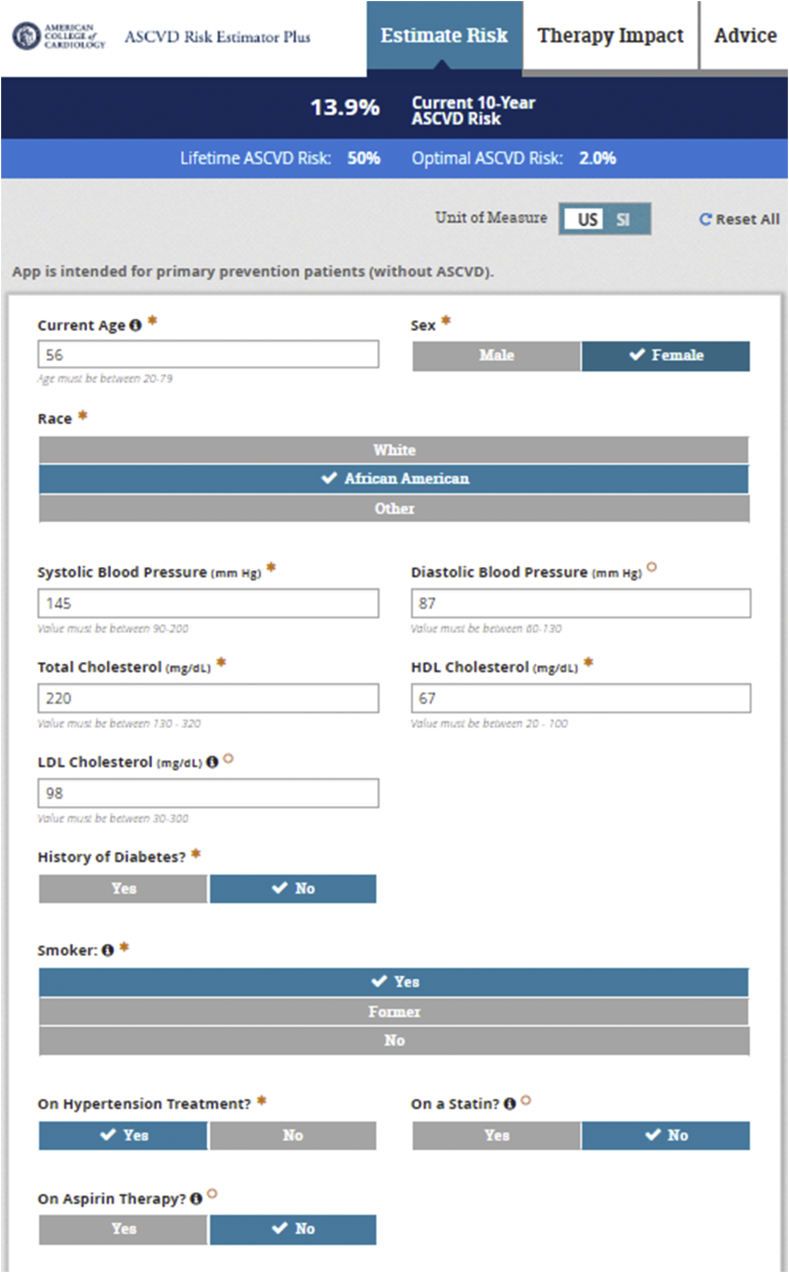
The foundation of preventive cardiology begins with knowing the patient's baseline cardiovascular disease (CVD) risk from which the patient-clinician risk discussion informs on the best ways to lower risk through lifestyle management, as well as a decision about the initiation and intensity of pharmacologic therapy. Global CVD risk assessment involves estimation of cardiovascular risk using a basic panel of risk factors. The Framingham Heart Study championed the first such risk scores, followed by others around the world. Most recently, the Pooled Cohort Equations (PCE) have been recommended in the United States as a starting point in CVD risk assessment. Persons at low (<5%) 10-year risk are generally recommended for lifestyle management only and those at highest (>20%) 10-year risk are recommended for both lifestyle and pharmacologic therapy to reduce risk. Assessing the presence of one or more "risk enhancing" factors is intended to inform the treatment decision in those at borderline (5-<7.5%) or intermediate (7.5-20%) risk, with the use of coronary calcium scores to further refine the treatment decision. Moreover, not all those with ASCVD are treated equal, and recent guidelines provide criteria for identifying those at very high risk. While current techniques best predict long-term risk of CVD events, biomarkers strategies are being developed to predict near-term events, and other imaging techniques such as coronary CT angiography and vascular MRI hold promise to identify vulnerable plaque. Validation and incorporating into clinical practice such state of the art techniques will be vital to moving CVD risk assessment to the next level.
预防心脏病学的基础始于了解患者的心血管疾病(CVD)基线风险,在此基础上,医患之间关于风险的讨论能为通过生活方式管理降低风险的最佳方法提供信息,同时也有助于决定药物治疗的起始和强度。全球CVD风险评估涉及使用一组基本风险因素来估计心血管风险。弗雷明汉心脏研究率先提出了首个此类风险评分,随后世界各地也相继出现了其他评分系统。最近,美国推荐使用合并队列方程(PCE)作为CVD风险评估的起点。一般建议10年风险较低(<5%)的人群仅进行生活方式管理,而10年风险最高(>20%)的人群则建议同时进行生活方式管理和药物治疗以降低风险。评估一个或多个“风险增强”因素的存在旨在为处于临界风险(5-<7.5%)或中度风险(7.5-20%)的人群的治疗决策提供参考,同时使用冠状动脉钙化评分来进一步完善治疗决策。此外,并非所有患有动脉粥样硬化性心血管疾病(ASCVD)的患者都接受相同的治疗,最近发布的指南提供了识别极高风险患者的标准。虽然目前的技术最能预测CVD事件的长期风险,但正在开发生物标志物策略来预测近期事件,而其他成像技术,如冠状动脉CT血管造影和血管磁共振成像,有望识别易损斑块。验证并将这些先进技术纳入临床实践对于将CVD风险评估提升到新水平至关重要。