Department of Molecular Genetics, University of Toronto, Toronto, Ontario, Canada; Program in Developmental and Stem Cell Biology, The Hospital for Sick Children, Toronto, Ontario, Canada; Lunenfeld-Tanenbaum Research Institute at Mount Sinai Hospital, Sinai Health, Toronto, Ontario, Canada.
Program in Developmental and Stem Cell Biology, The Hospital for Sick Children, Toronto, Ontario, Canada.
Mol Cell Proteomics. 2021;20:100128. doi: 10.1016/j.mcpro.2021.100128. Epub 2021 Jul 29.
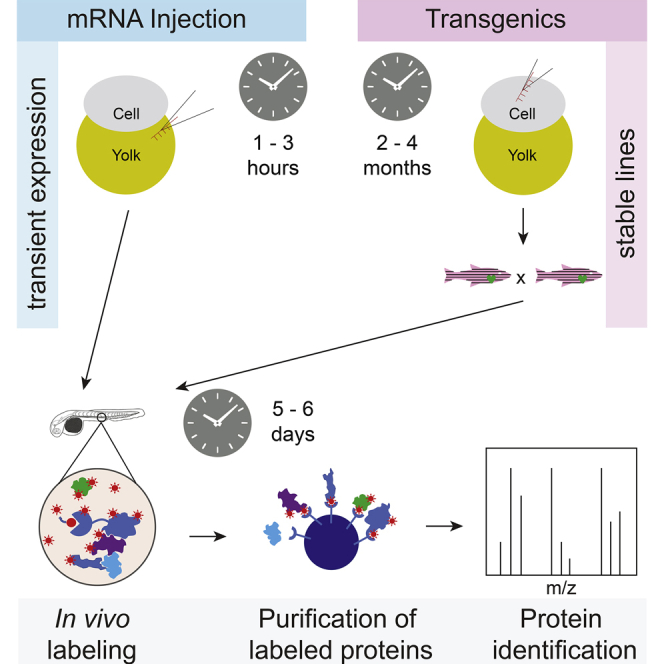
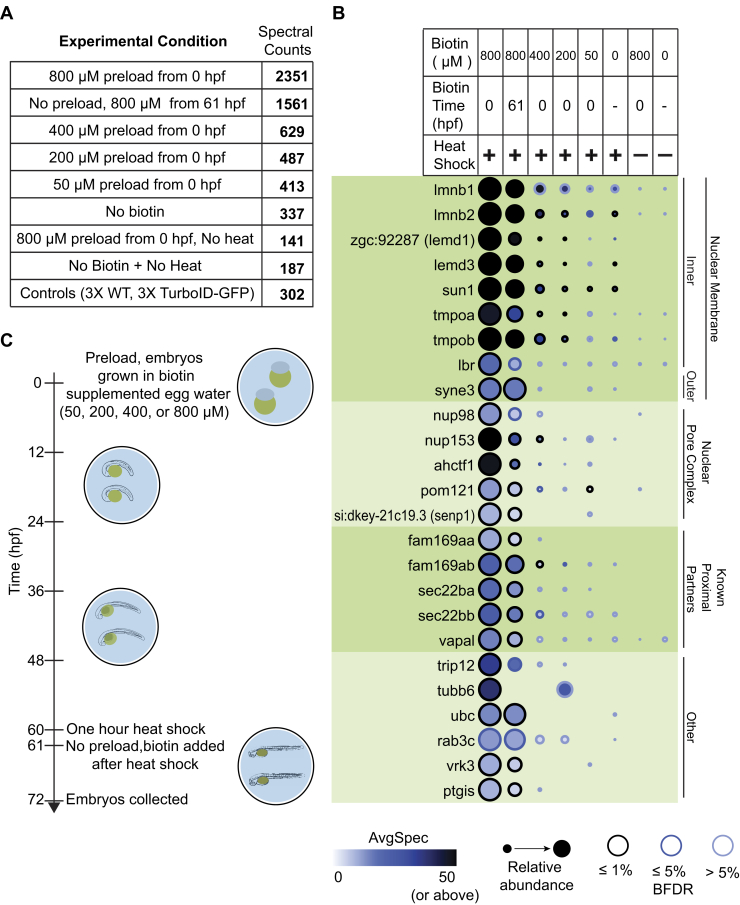
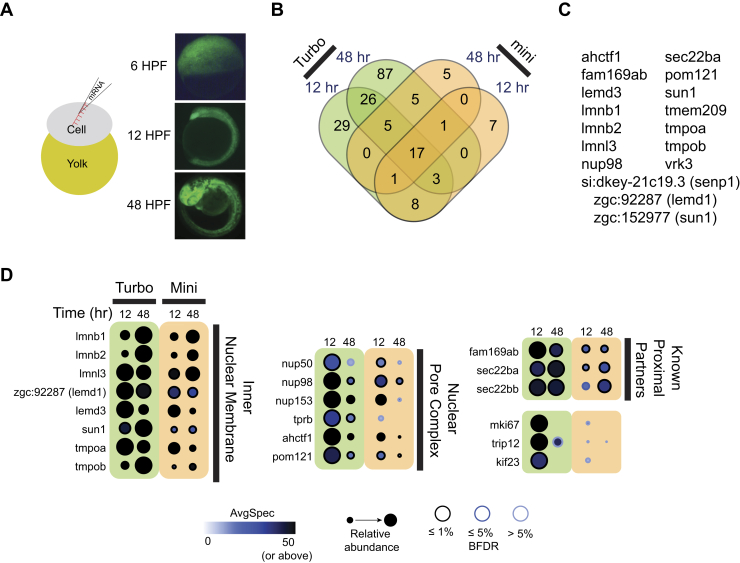
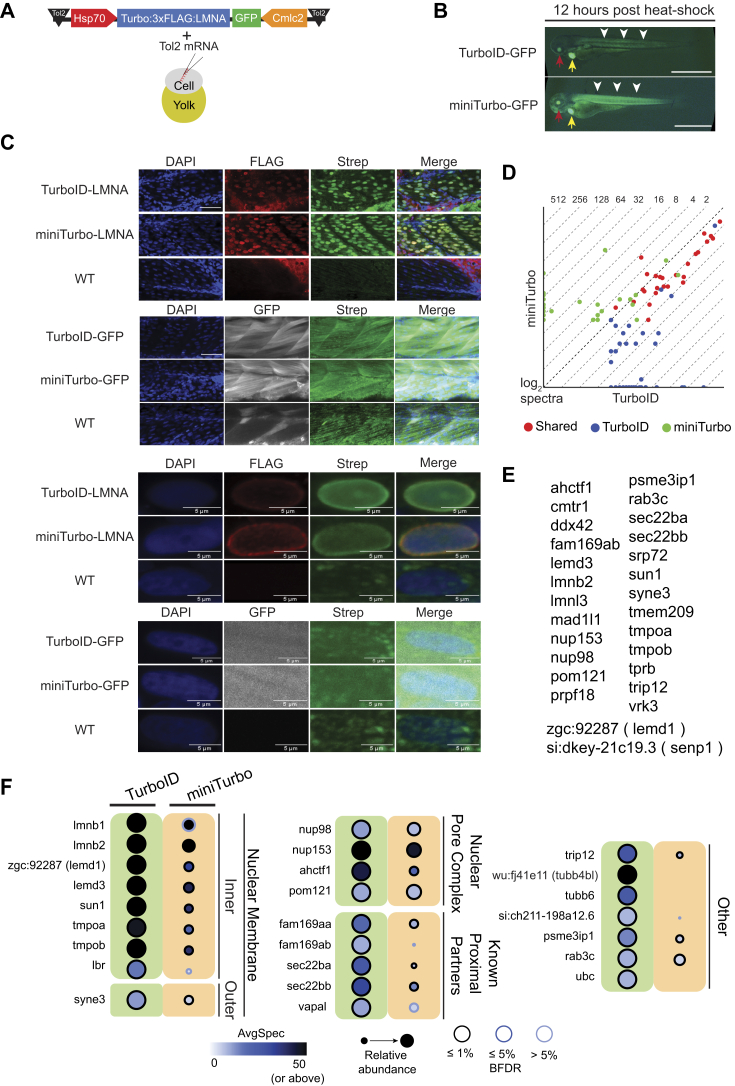
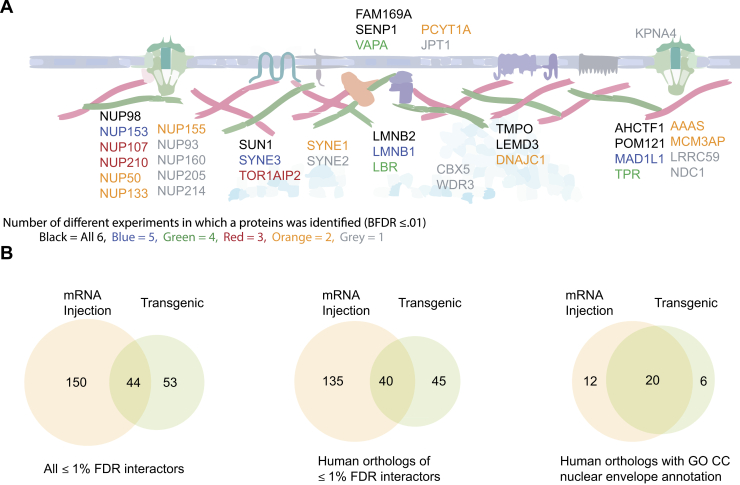
Understanding how proteins are organized in compartments is essential to elucidating their function. While proximity-dependent approaches such as BioID have enabled a massive increase in information about organelles, protein complexes, and other structures in cell culture, to date there have been only a few studies on living vertebrates. Here, we adapted proximity labeling for protein discovery in vivo in the vertebrate model organism, zebrafish. Using lamin A (LMNA) as bait and green fluorescent protein (GFP) as a negative control, we developed, optimized, and benchmarked in vivo TurboID and miniTurbo labeling in early zebrafish embryos. We developed both an mRNA injection protocol and a transgenic system in which transgene expression is controlled by a heat shock promoter. In both cases, biotin is provided directly in the egg water, and we demonstrate that 12 h of labeling are sufficient for biotinylation of prey proteins, which should permit time-resolved analysis of development. After statistical scoring, we found that the proximal partners of LMNA detected in each system were enriched for nuclear envelope and nuclear membrane proteins and included many orthologs of human proteins identified as proximity partners of lamin A in mammalian cell culture. The tools and protocols developed here will allow zebrafish researchers to complement genetic tools with powerful proteomics approaches.
了解蛋白质在隔室中的组织方式对于阐明其功能至关重要。虽然邻近依赖性方法(如 BioID)使关于细胞培养中的细胞器、蛋白质复合物和其他结构的信息量大大增加,但迄今为止,仅有少数关于活体脊椎动物的研究。在这里,我们在脊椎动物模式生物斑马鱼中适应了用于体内蛋白质发现的邻近标记。我们使用核纤层蛋白 A(LMNA)作为诱饵,绿色荧光蛋白(GFP)作为阴性对照,开发、优化和基准测试了早期斑马鱼胚胎中的体内 TurboID 和 miniTurbo 标记。我们开发了 mRNA 注射方案和转基因系统,其中转基因表达受热休克启动子控制。在这两种情况下,生物素都直接提供在卵水中,我们证明 12 小时的标记足以进行猎物蛋白的生物素化,这应该允许对发育进行时间分辨分析。经过统计评分,我们发现每个系统中检测到的 LMNA 的近端伙伴富含核包膜和核膜蛋白,并且包括许多在哺乳动物细胞培养中被鉴定为 lamin A 邻近伙伴的人类蛋白的同源物。这里开发的工具和方案将使斑马鱼研究人员能够将强大的蛋白质组学方法与遗传工具相结合。