Li Fang, Dong Chunxia, Yang Tianyuan, Bao Shilai, Fang Wanping, Lucas William J, Zhang Zhaoliang
State Key Laboratory of Tea Plant Biology and Utilization, Anhui Agricultural University, Hefei, Anhui, 230036, China.
College of Horticulture, Nanjing Agricultural University, Nanjing, 210095, China.
Hortic Res. 2021 Aug 1;8(1):178. doi: 10.1038/s41438-021-00615-x.
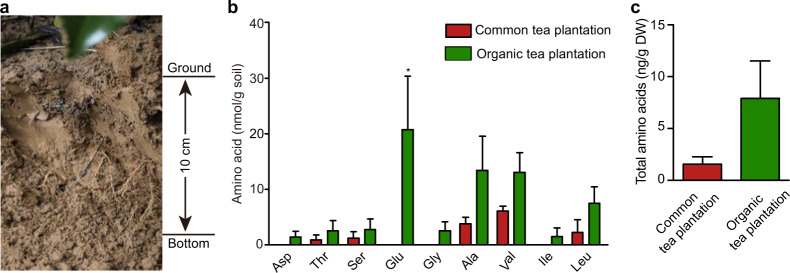
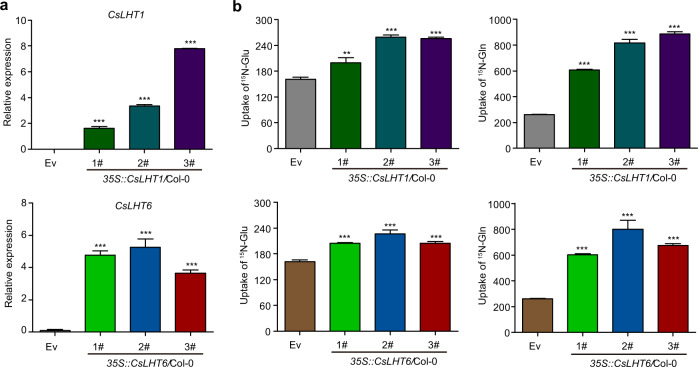
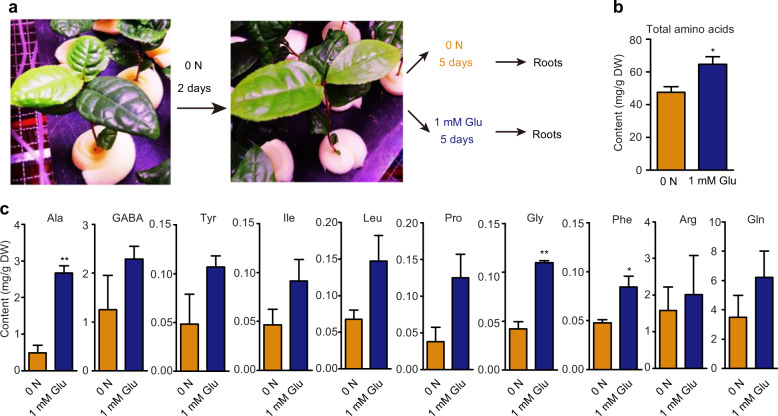
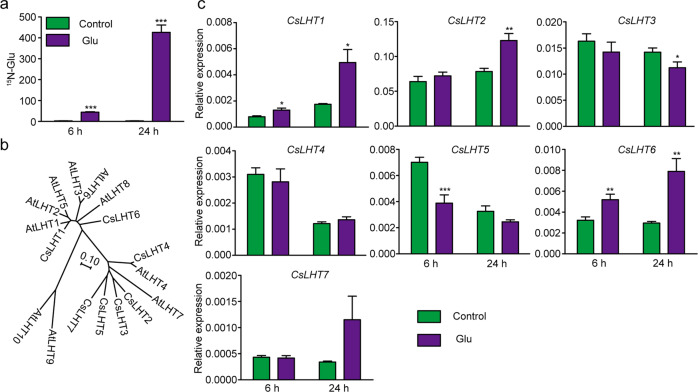
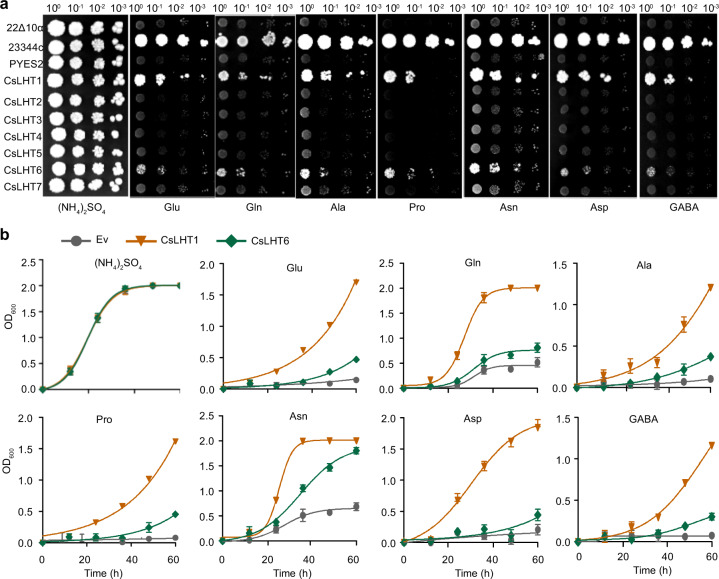
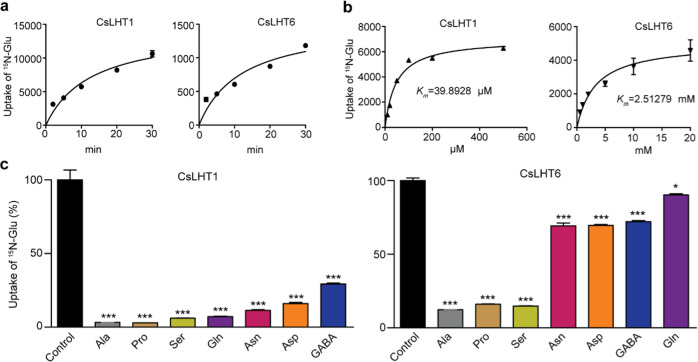
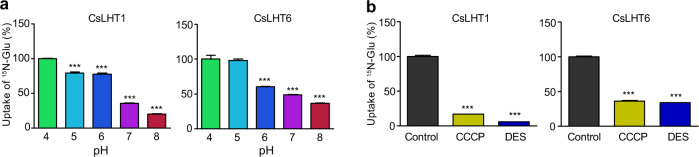
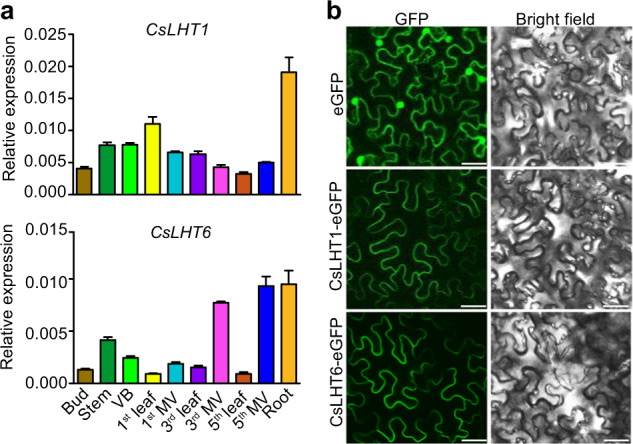
Organic tea is more popular than conventional tea that originates from fertilized plants. Amino acids inorganic soils constitute a substantial pool nitrogen (N) available for plants. However, the amino-acid contents in soils of tea plantations and how tea plants take up these amino acids remain largely unknown. In this study, we show that the amino-acid content in the soil of an organic tea plantation is significantly higher than that of a conventional tea plantation. Glutamate, alanine, valine, and leucine were the most abundant amino acids in the soil of this tea plantation. When N-glutamate was fed to tea plants, it was efficiently absorbed and significantly increased the contents of other amino acids in the roots. We cloned seven CsLHT genes encoding amino-acid transporters and found that the expression of CsLHT1, CsLHT2, and CsLHT6 in the roots significantly increased upon glutamate feeding. Moreover, the expression of CsLHT1 or CsLHT6 in a yeast amino-acid uptake-defective mutant, 22∆10α, enabled growth on media with amino acids constituting the sole N source. Amino-acid uptake assays indicated that CsLHT1 and CsLHT6 are H-dependent high- and low-affinity amino-acid transporters, respectively. We further demonstrated that CsLHT1 and CsLHT6 are highly expressed in the roots and are localized to the plasma membrane. Moreover, overexpression of CsLHT1 and CsLHT6 in Arabidopsis significantly improved the uptake of exogenously supplied N-glutamate and N-glutamine. Taken together, our findings are consistent with the involvement of CsLHT1 and CsLHT6 in amino-acid uptake from the soil, which is particularly important for tea plants grown inorganic tea plantations.
有机茶比源自施肥植物的传统茶更受欢迎。无机土壤中的氨基酸构成了植物可利用的大量氮(N)库。然而,茶园土壤中的氨基酸含量以及茶树如何吸收这些氨基酸在很大程度上仍不清楚。在本研究中,我们表明有机茶园土壤中的氨基酸含量显著高于传统茶园。谷氨酸、丙氨酸、缬氨酸和亮氨酸是该茶园土壤中最丰富的氨基酸。当向茶树投喂N-谷氨酸时,它被有效吸收并显著增加了根中其他氨基酸的含量。我们克隆了七个编码氨基酸转运蛋白的CsLHT基因,发现投喂谷氨酸后,根中CsLHT1、CsLHT2和CsLHT6的表达显著增加。此外,在酵母氨基酸吸收缺陷突变体22∆10α中表达CsLHT1或CsLHT6,使其能够在以氨基酸作为唯一氮源的培养基上生长。氨基酸吸收试验表明,CsLHT1和CsLHT6分别是H依赖性的高亲和力和低亲和力氨基酸转运蛋白。我们进一步证明,CsLHT1和CsLHT6在根中高度表达且定位于质膜。此外,在拟南芥中过表达CsLHT1和CsLHT6显著提高了对外源供应的N-谷氨酸和N-谷氨酰胺的吸收。综上所述,我们的研究结果与CsLHT1和CsLHT6参与从土壤中吸收氨基酸一致,这对生长在无机茶园中的茶树尤为重要。