Jia Li-Ying, Cao Gui-Yun, Li Jia, Gan Lu, Li Jin-Xin, Lan Xin-Yi, Meng Zhao-Qing, He Xin, Zhang Chun-Feng, Wang Chong-Zhi, Yuan Chun-Su
School of Traditional Chinese Pharmacy, China Pharmaceutical University, Nanjing, China.
Institute of Traditional Chinese Medicine, Shandong Hongjitang Pharmaceutical Group Co., Ltd. Jinan, Jinan, China.
Front Pharmacol. 2021 Jul 14;12:698981. doi: 10.3389/fphar.2021.698981. eCollection 2021.
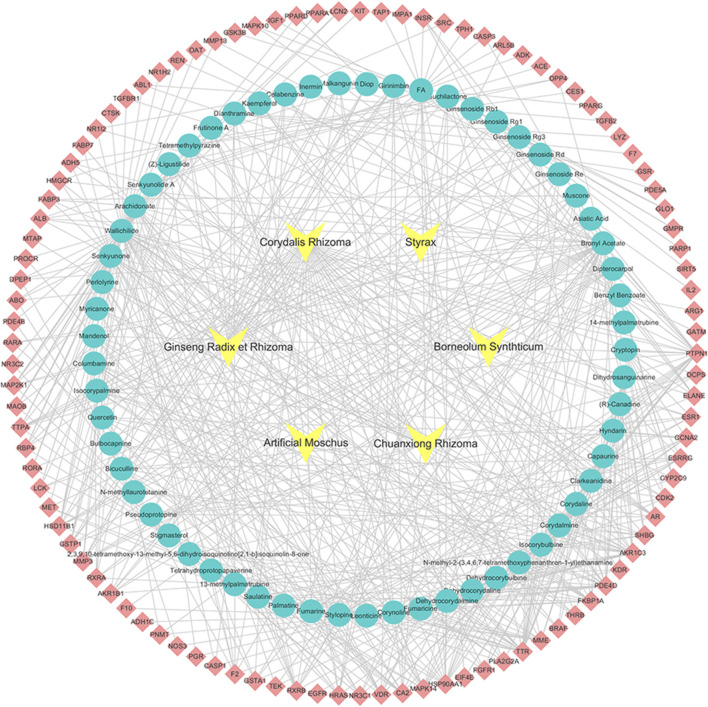
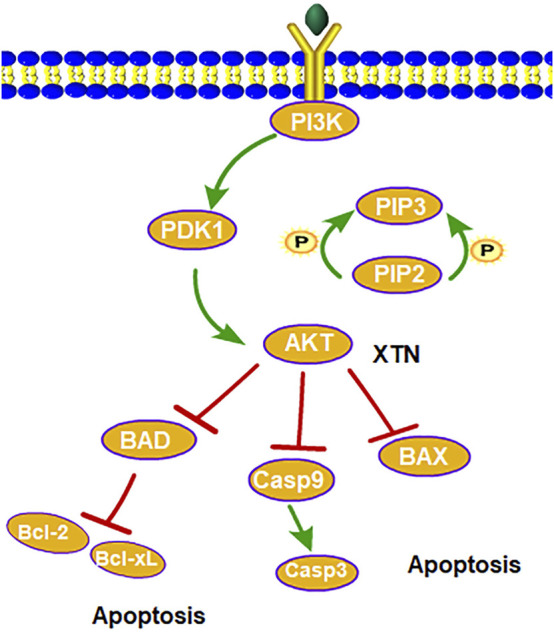
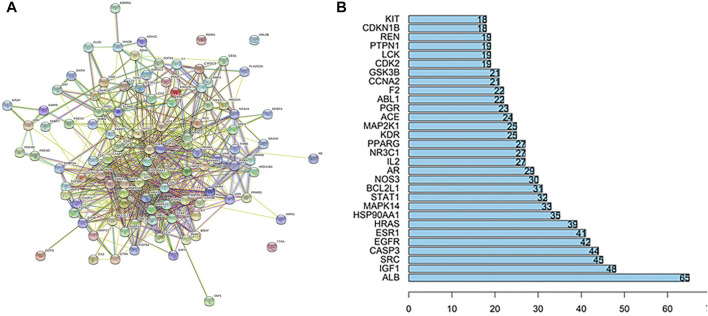
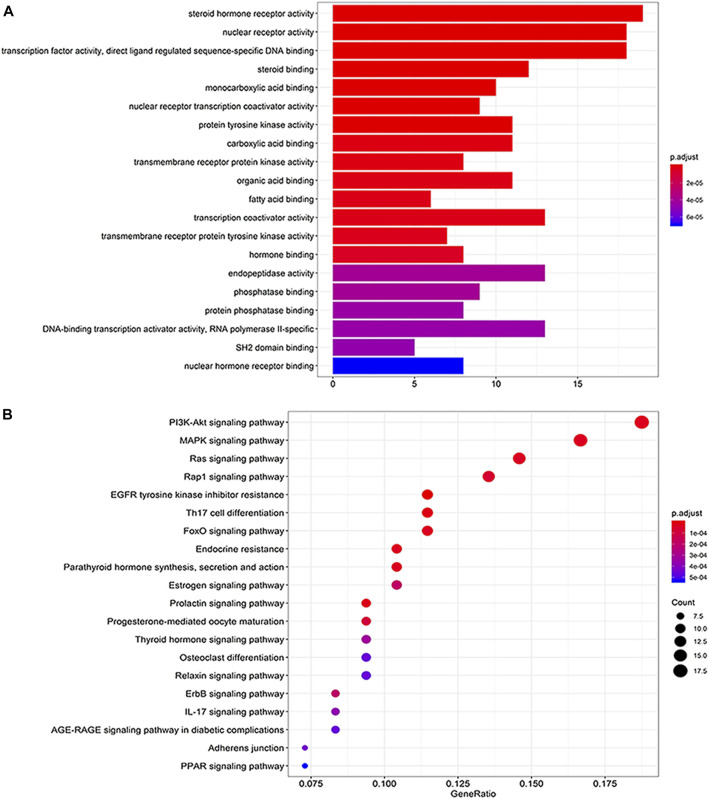
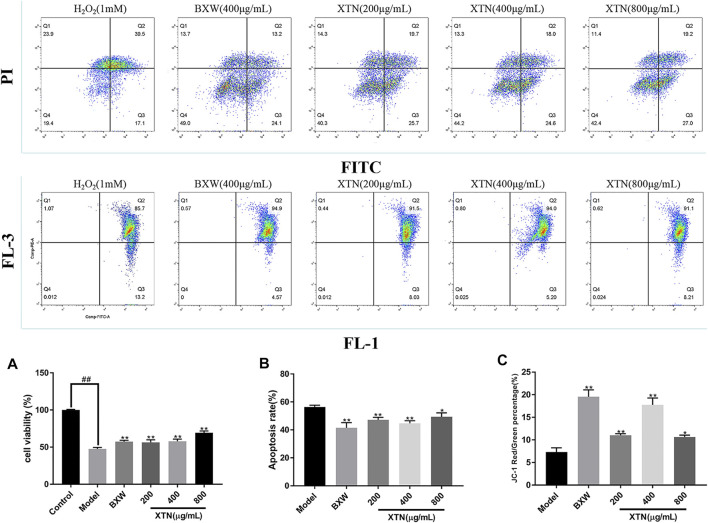
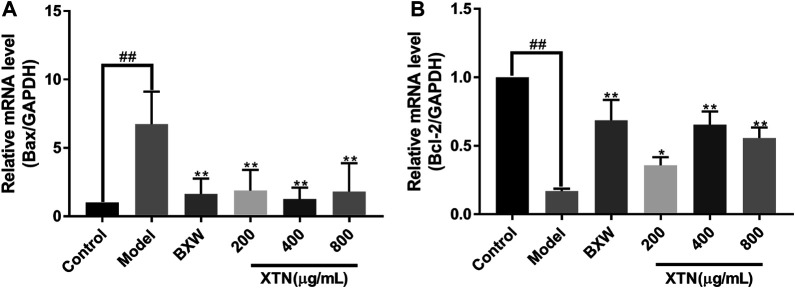
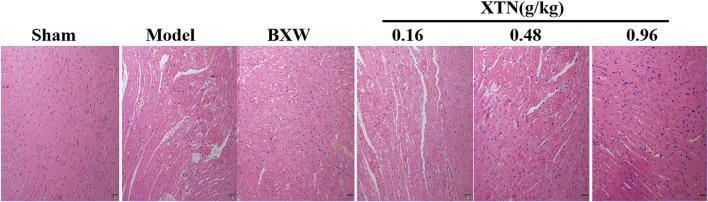
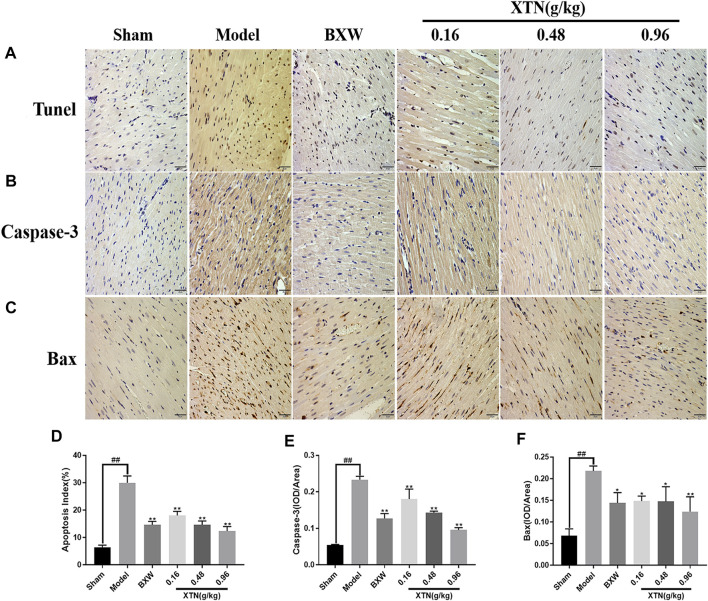
SheXiang XinTongNing (XTN), which is composed of six traditional Chinese herbs, is a commercially available Chinese patent medicine that has been widely used as the treatment of coronary heart disease (CHD). Its mechanisms against coronary heart disease, however, remain largely unknown. This study aimed to investigate the pharmacological mechanisms of XTN against CHD via network pharmacology and experimental evaluation. In this study, GO enrichment and KEGG pathway enrichment were firstly performed for acquiring the potentially active constituents of XTN, the candidate targets related to coronary heart disease, the drug-components-targets network as well as the protein-protein interaction network and further predicting the mechanisms of XTN against coronary heart disease. Subsequently, a series of experiments, specifically MTT assay, flow cytometry and Real-time quantitative polymerase chain reaction analysis, and a succession of experiments, including Tunel staining and immunohistochemical staining were conducted for further verification. Results showed that Bcl-2, IGF1, CASP3 were the key candidate targets which significantly associated with multiple pathways, namely PI3K-Akt signaling pathway and MAPK signaling pathway. It indicated that the potential mechanism of XTN against CHD may be predominantly associated with cell apoptosis. The experimental results showed that XTN treatment remarkably decreased the apoptotic rate and Bax/Bcl-2 ratio of H9c2 cells. Histological results confirmed that XTN not only effectively alleviated oxidative damage caused by myocardial ischemia but inhibited cell apoptosis. Given the above, through the combined utilization of virtual screening and experimental verification, the findings suggest that XTN makes a significant contribution in protecting the heart from oxidative stress via regulating apoptosis pathways, which lays the foundations and offers an innovative idea for future research.
麝香心痛宁(XTN)由六种中药组成,是一种市售的中成药,已被广泛用于治疗冠心病(CHD)。然而,其治疗冠心病的机制仍 largely未知。本研究旨在通过网络药理学和实验评估来研究XTN抗冠心病的药理机制。在本研究中,首先进行基因本体(GO)富集和京都基因与基因组百科全书(KEGG)通路富集,以获取XTN的潜在活性成分、与冠心病相关的候选靶点、药物-成分-靶点网络以及蛋白质-蛋白质相互作用网络,并进一步预测XTN抗冠心病的机制。随后,进行了一系列实验,具体包括MTT法、流式细胞术和实时定量聚合酶链反应分析,以及一系列实验,包括Tunel染色和免疫组织化学染色,以进行进一步验证。结果表明,Bcl-2、IGF1、CASP3是与多个通路,即PI3K-Akt信号通路和MAPK信号通路显著相关的关键候选靶点。这表明XTN抗冠心病的潜在机制可能主要与细胞凋亡有关。实验结果表明,XTN处理显著降低了H9c2细胞的凋亡率和Bax/Bcl-2比值。组织学结果证实,XTN不仅有效减轻了心肌缺血引起的氧化损伤,还抑制了细胞凋亡。综上所述,通过虚拟筛选和实验验证的联合应用,研究结果表明,XTN通过调节凋亡通路在保护心脏免受氧化应激方面做出了重大贡献,为未来研究奠定了基础并提供了创新思路。