Wang Xintong, Wang Zixu, Cao Jing, Dong Yulan, Chen Yaoxing
Neurobiology Laboratory, College of Veterinary Medicine, China Agricultural University, Beijing, China.
Front Pharmacol. 2021 Jul 16;12:708645. doi: 10.3389/fphar.2021.708645. eCollection 2021.
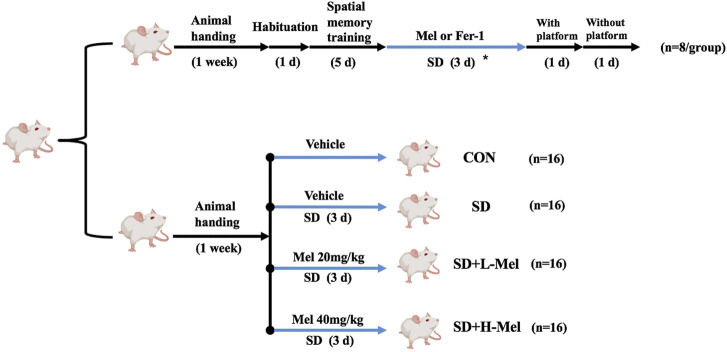
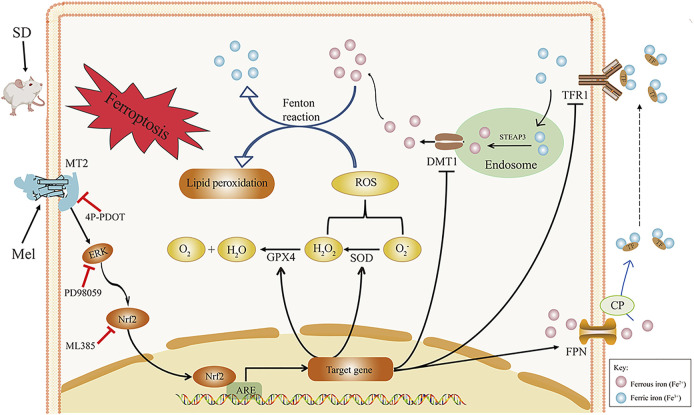
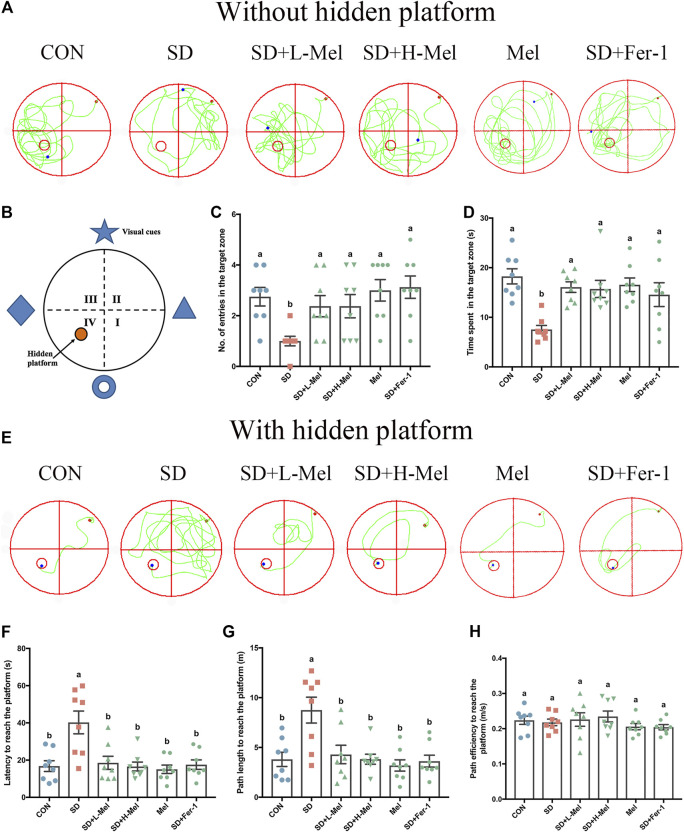
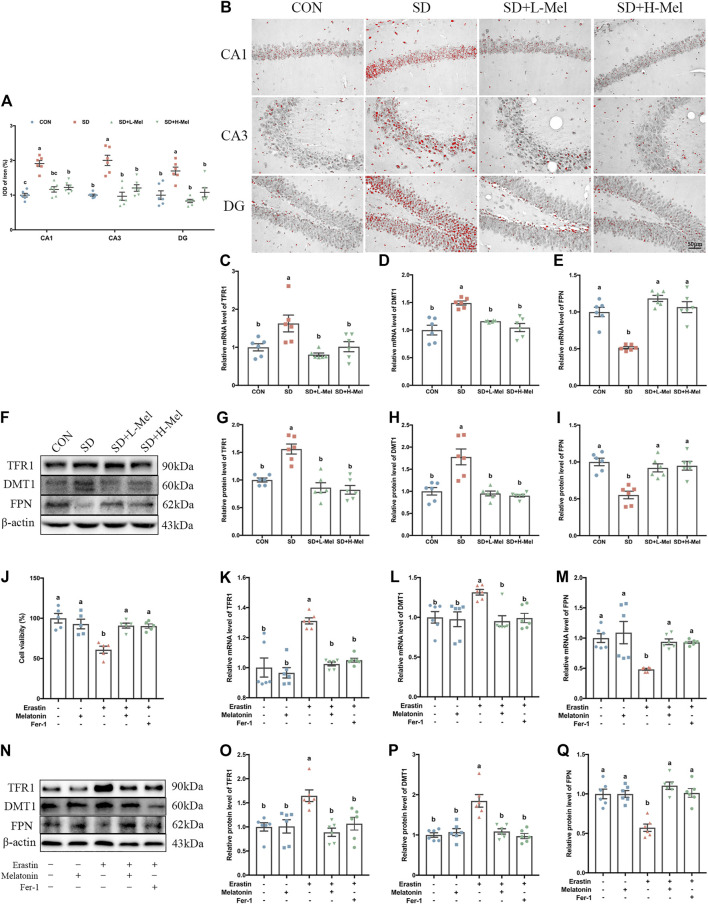
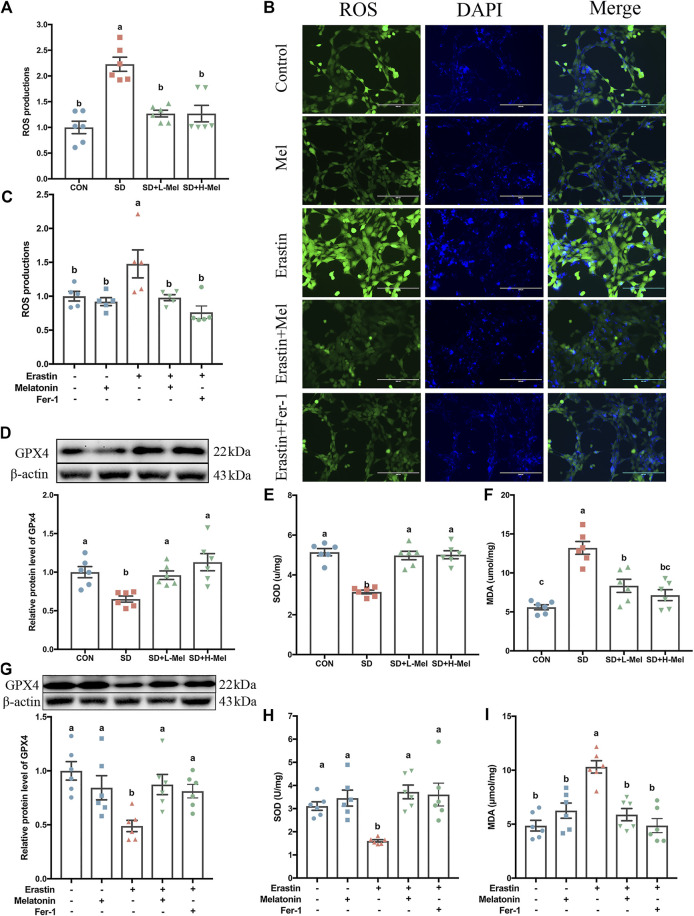
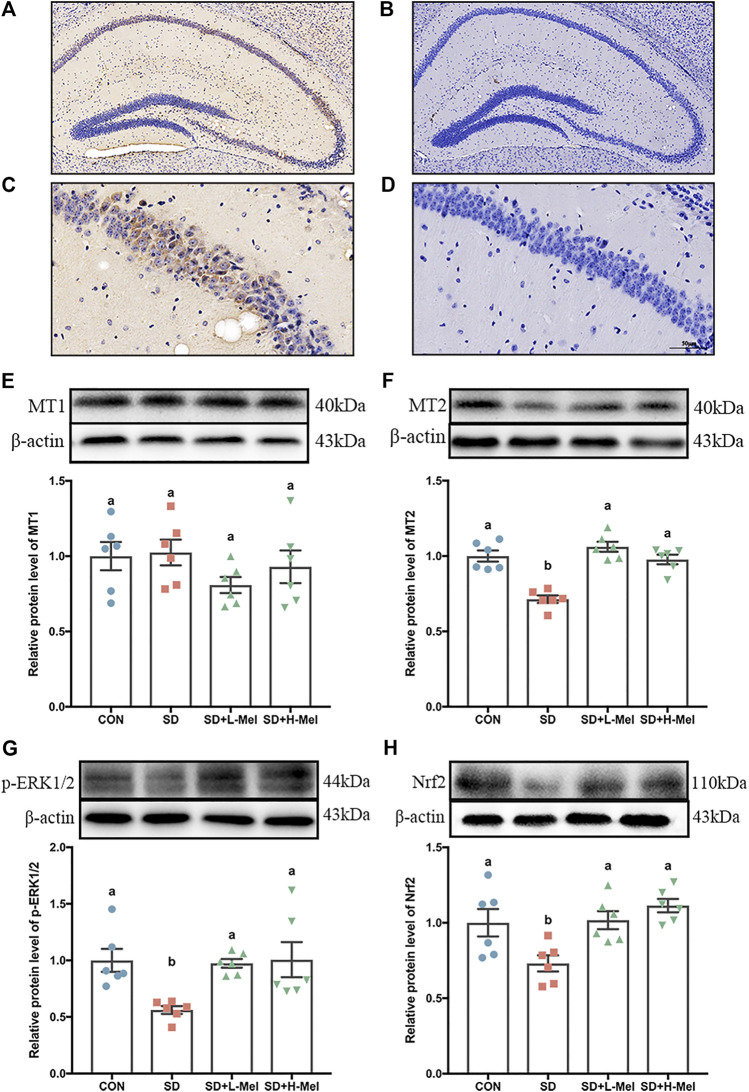
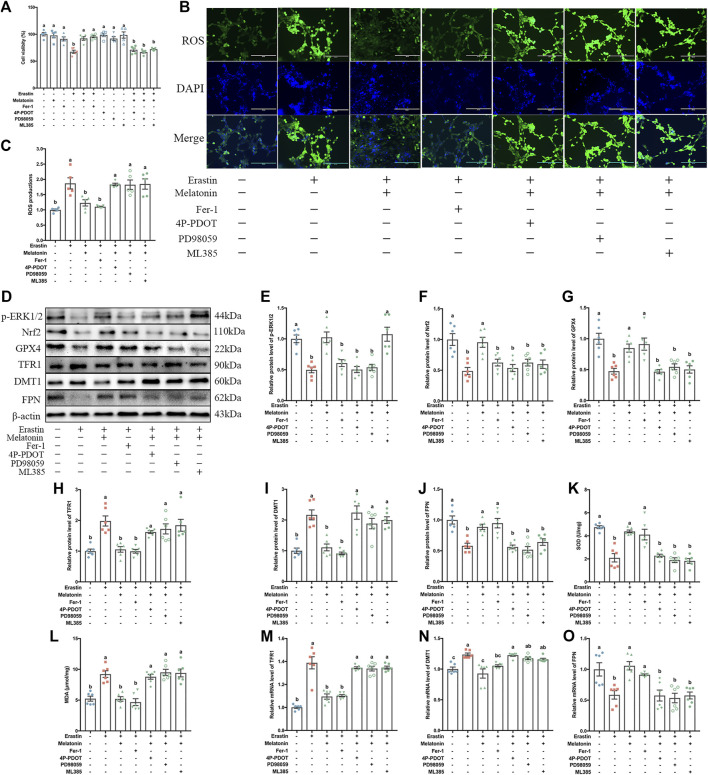
Memory decline caused by insufficient sleep is a critical public health issues and currently lacks effective treatments. This study objective was to explore alleviative effect of melatonin on sleep deprivation (SD)-induced deficiencies in learning and memory. A continuous 72 h SD mouse model, with or without melatonin or Fer-1 supplementation were established. The changes of cognitive function, iron homeostasis, lipid peroxidation and intracellular signal pathways in mice were detected by Morris water maze, antioxidant assay, immunohistochemistry, western blot, RT-PCR and Prussian blue staining. , we treated HT-22 cells with ferroptosis inducer (Erastin) to further explore the specific mechanism of melatonin in ferroptosis. Mice subjected to SD had significantly elevated latency and path length to reach hidden platform, as well as a decrease in number of entries and time spent in the target zone when the hidden platform was removed ( < 0.05). Nevertheless, supplementation with ferroptosis inhibitor (Fer-1) mitigated the memory impairment associated with SD. Further evaluation revealed an up-regulation of intracellular iron accumulation, transferrin receptor 1 and divalent metal transporter 1 expression and ROS and MDA production, and a down-regulation of ferroportin and antioxidant enzyme (GPX4 and SOD) expression in SD mice. SD decreased expression of MT2 receptor rather than of MT1, and inhibited ERK/Nrf2 signaling activation in the hippocampus ( < 0.05). In contrast, the aforementioned SD-inductions were reversed by supplementation using 20 and 40 mg/kg melatonin in SD mice. , melatonin pretreatment reversed Erastin-induced ferroptosis, abnormalities in iron transporter protein and antioxidant enzyme expression and suppression of ERK/Nrf2 signaling in HT-22 cells, however this protective effect of melatonin was blocked by MT2-, ERK- and Nrf2-specific antagonists ( < 0.05). Our finding suggested SD may induce ferroptosis, in turn leading to cognitive deficits. Melatonin alleviated memory loss and hippocampal ferroptosis caused by acute SD through binding to the MT2 receptor to activate ERK/Nrf2 signaling.
睡眠不足导致的记忆衰退是一个关键的公共卫生问题,目前缺乏有效的治疗方法。本研究的目的是探讨褪黑素对睡眠剥夺(SD)诱导的学习和记忆缺陷的缓解作用。建立了连续72小时睡眠剥夺的小鼠模型,分别给予或不给予褪黑素或铁死亡抑制剂Fer-1。通过莫里斯水迷宫、抗氧化测定、免疫组织化学、蛋白质免疫印迹、逆转录聚合酶链反应和普鲁士蓝染色检测小鼠认知功能、铁稳态、脂质过氧化和细胞内信号通路的变化。此外,我们用铁死亡诱导剂(Erastin)处理HT-22细胞,以进一步探讨褪黑素在铁死亡中的具体机制。遭受睡眠剥夺的小鼠在到达隐藏平台时的潜伏期和路径长度显著增加,并且在移除隐藏平台后进入目标区域的次数和停留时间减少(P<0.05)。然而,补充铁死亡抑制剂(Fer-1)减轻了与睡眠剥夺相关的记忆损伤。进一步评估发现,睡眠剥夺小鼠细胞内铁蓄积、转铁蛋白受体1和二价金属转运蛋白1表达上调,活性氧和丙二醛生成增加,铁转运蛋白和抗氧化酶(谷胱甘肽过氧化物酶4和超氧化物歧化酶)表达下调。睡眠剥夺降低了MT2受体而非MT1受体的表达,并抑制了海马体中ERK/Nrf2信号的激活(P<0.05)。相反,在睡眠剥夺小鼠中补充20和40mg/kg褪黑素可逆转上述睡眠剥夺诱导的变化。此外,褪黑素预处理可逆转Erastin诱导的HT-22细胞铁死亡、铁转运蛋白和抗氧化酶表达异常以及ERK/Nrf2信号的抑制,然而褪黑素的这种保护作用被MT2、ERK和Nrf2特异性拮抗剂阻断(P<0.05)。我们的研究结果表明,睡眠剥夺可能诱导铁死亡,进而导致认知缺陷。褪黑素通过与MT2受体结合激活ERK/Nrf2信号,减轻急性睡眠剥夺引起的记忆丧失和海马体铁死亡。