Yao Longping, Wu Jiayu, Koc Sumeyye, Lu Guohui
Department of Neurosurgery, The First Affiliated Hospital of Nanchang University, Nanchang, China.
Department of Neuroscience, Institute of Health Sciences, Ondokuz Mayıs University, Samsun, Turkey.
Front Cell Dev Biol. 2021 Jul 15;9:655819. doi: 10.3389/fcell.2021.655819. eCollection 2021.
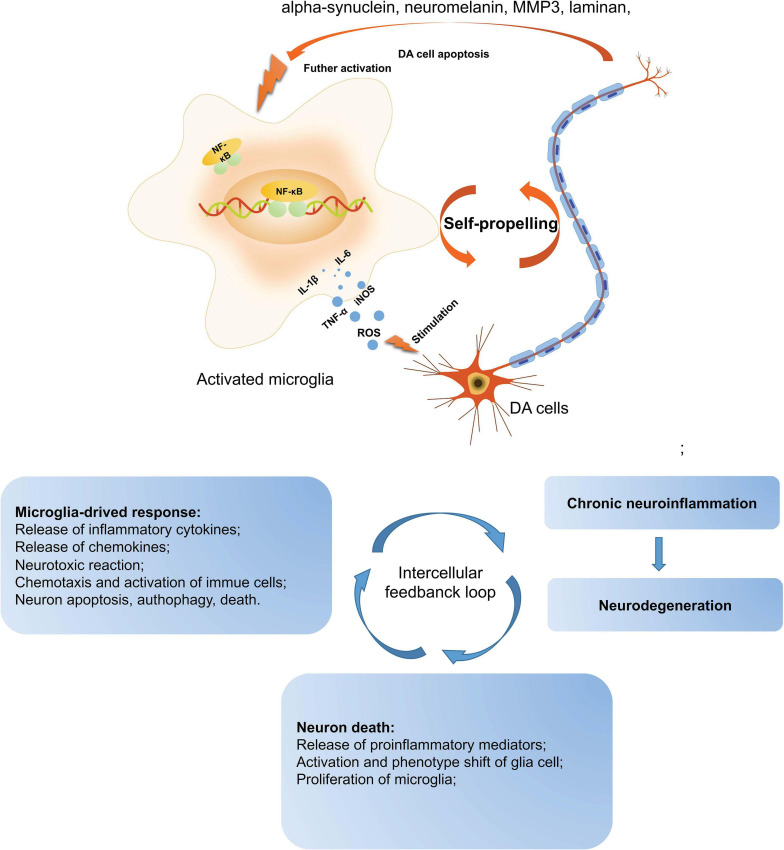
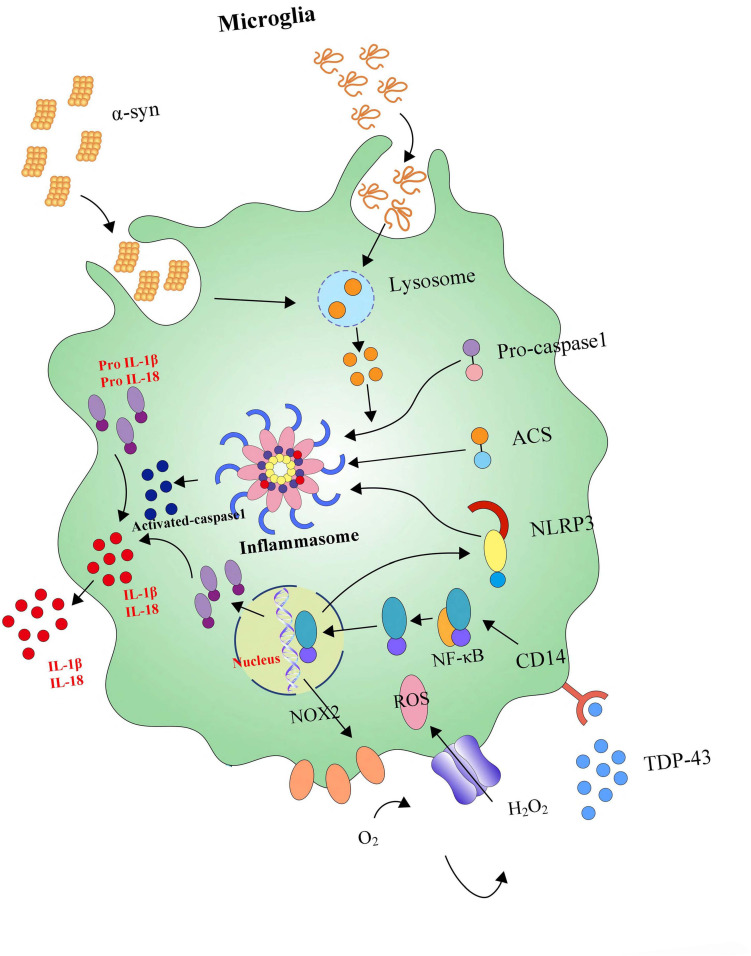
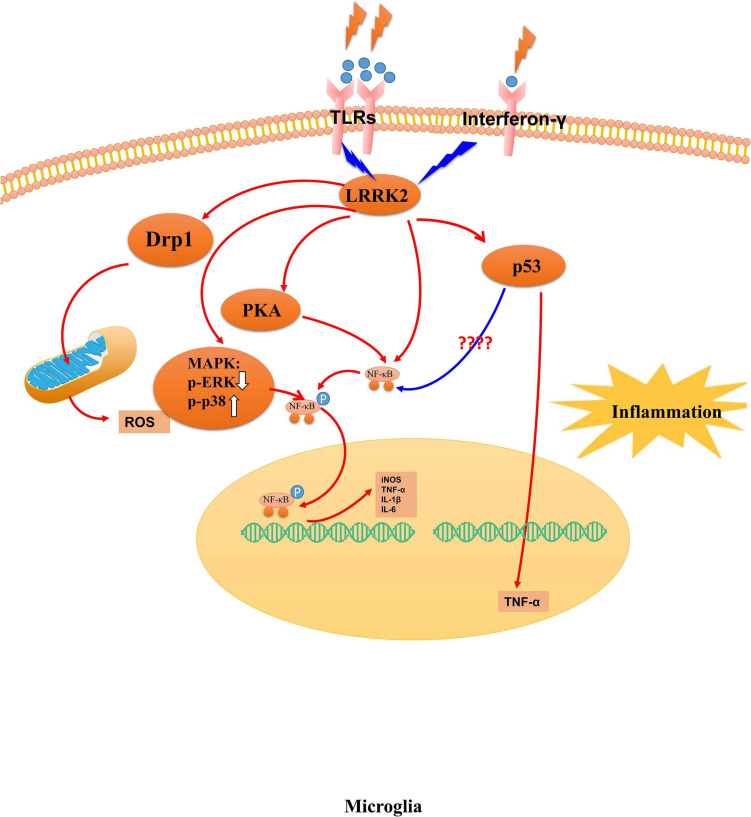
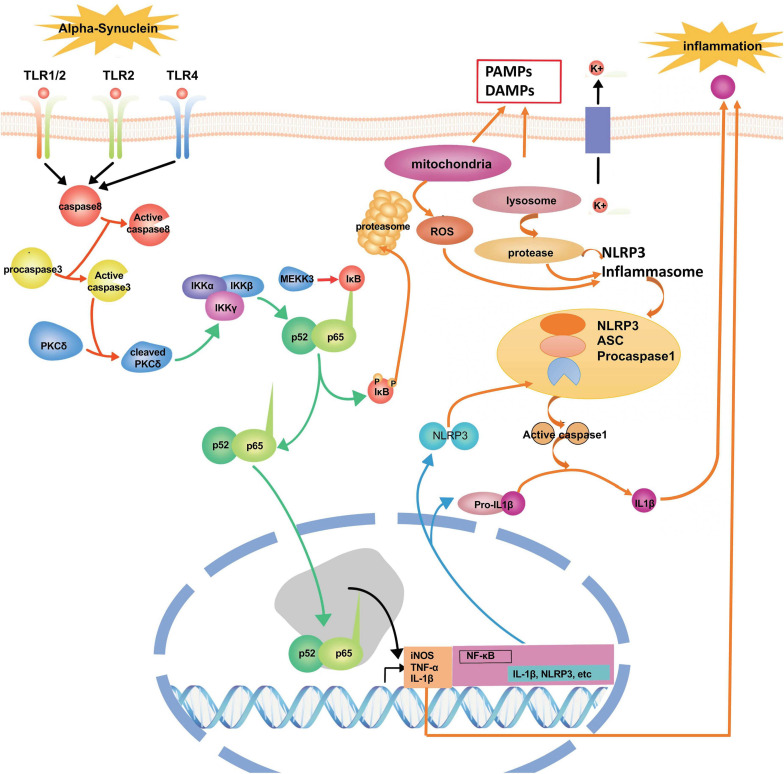
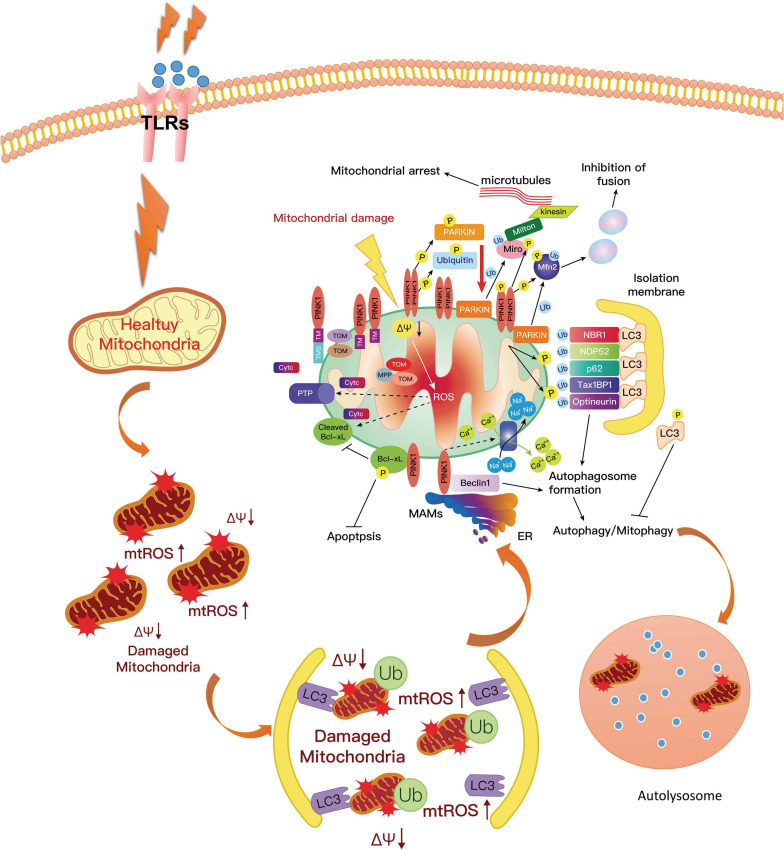
Parkinson's disease (PD) is one of the most prevalent neurodegenerative aging disorders characterized by motor and non-motor symptoms due to the selective loss of midbrain dopaminergic (DA) neurons. The decreased viability of DA neurons slowly results in the appearance of motor symptoms such as rigidity, bradykinesia, resting tremor, and postural instability. These symptoms largely depend on DA nigrostriatal denervation. Pharmacological and surgical interventions are the main treatment for improving clinical symptoms, but it has not been possible to cure PD. Furthermore, the cause of neurodegeneration remains unclear. One of the possible neurodegeneration mechanisms is a chronic inflammation of the central nervous system, which is mediated by microglial cells. Impaired or dead DA neurons can directly lead to microglia activation, producing a large number of reactive oxygen species and pro-inflammatory cytokines. These cytotoxic factors contribute to the apoptosis and death of DA neurons, and the pathological process of neuroinflammation aggravates the primary morbid process and exacerbates ongoing neurodegeneration. Therefore, anti-inflammatory treatment exerts a robust neuroprotective effect in a mouse model of PD. Since discovering the first mutation in the α-synuclein gene (SNCA), which can cause disease-causing, PD has involved many genes and loci such as LRRK2, Parkin, SNCA, and PINK1. In this article, we summarize the critical descriptions of the genetic factors involved in PD's occurrence and development (such as LRRK2, SNCA, Parkin, PINK1, and inflammasome), and these factors play a crucial role in neuroinflammation. Regulation of these signaling pathways and molecular factors related to these genetic factors can vastly improve the neuroinflammation of PD.
帕金森病(PD)是最常见的神经退行性衰老疾病之一,其特征是由于中脑多巴胺能(DA)神经元的选择性丧失而出现运动和非运动症状。DA神经元活力下降会缓慢导致运动症状的出现,如僵硬、运动迟缓、静止性震颤和姿势不稳。这些症状很大程度上取决于黑质纹状体多巴胺能神经支配的缺失。药物和手术干预是改善临床症状的主要治疗方法,但目前尚无法治愈PD。此外,神经退行性变的原因仍不清楚。可能的神经退行性变机制之一是由小胶质细胞介导的中枢神经系统慢性炎症。受损或死亡的DA神经元可直接导致小胶质细胞活化,产生大量活性氧和促炎细胞因子。这些细胞毒性因子导致DA神经元的凋亡和死亡,神经炎症的病理过程会加重原发性病变过程并加剧正在进行的神经退行性变。因此,抗炎治疗在PD小鼠模型中具有强大的神经保护作用。自从发现α-突触核蛋白基因(SNCA)中的第一个致病突变以来,PD已经涉及许多基因和位点,如LRRK2、Parkin、SNCA和PINK1。在本文中,我们总结了参与PD发生和发展的遗传因素(如LRRK2、SNCA、Parkin、PINK1和炎性小体)的关键描述,这些因素在神经炎症中起着至关重要的作用。调节与这些遗传因素相关的信号通路和分子因子可以极大地改善PD的神经炎症。