Parzibut Gilles, Henket Monique, Moermans Catherine, Struman Ingrid, Louis Edouard, Malaise Michel, Louis Renaud, Misset Benoît, Njock Makon-Sébastien, Guiot Julien
Department of Intensive Care, University Hospital of Liège, Liège, Belgium.
Laboratory of Pneumology, GIGA Research Center, University of Liège, University Hospital of Liège, Liège, Belgium.
Front Mol Biosci. 2021 Jul 15;8:640042. doi: 10.3389/fmolb.2021.640042. eCollection 2021.
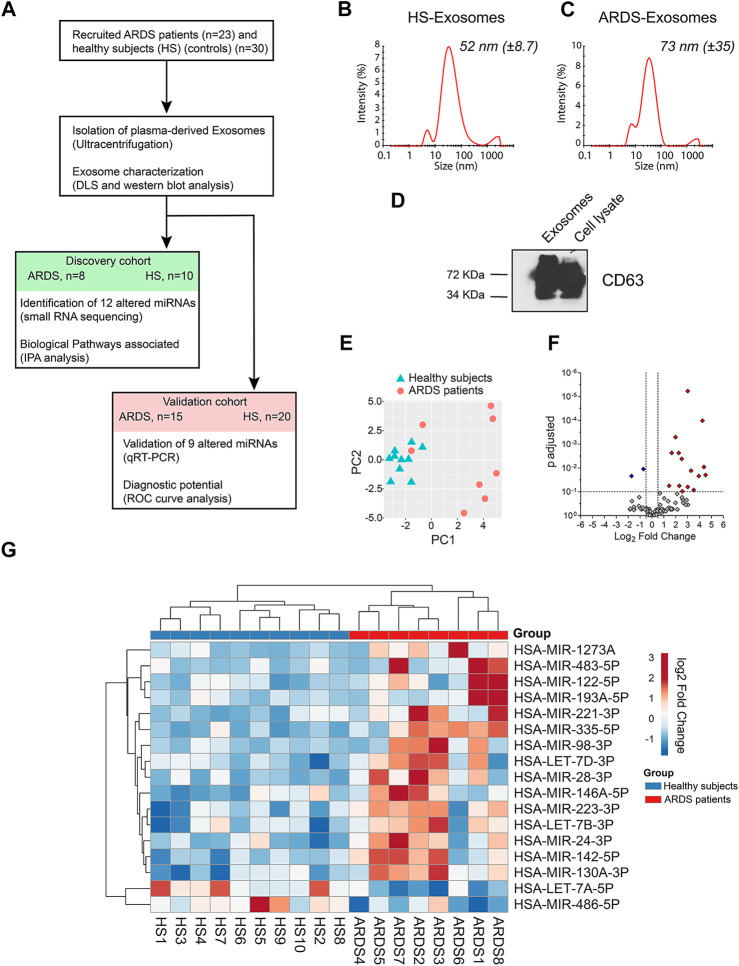
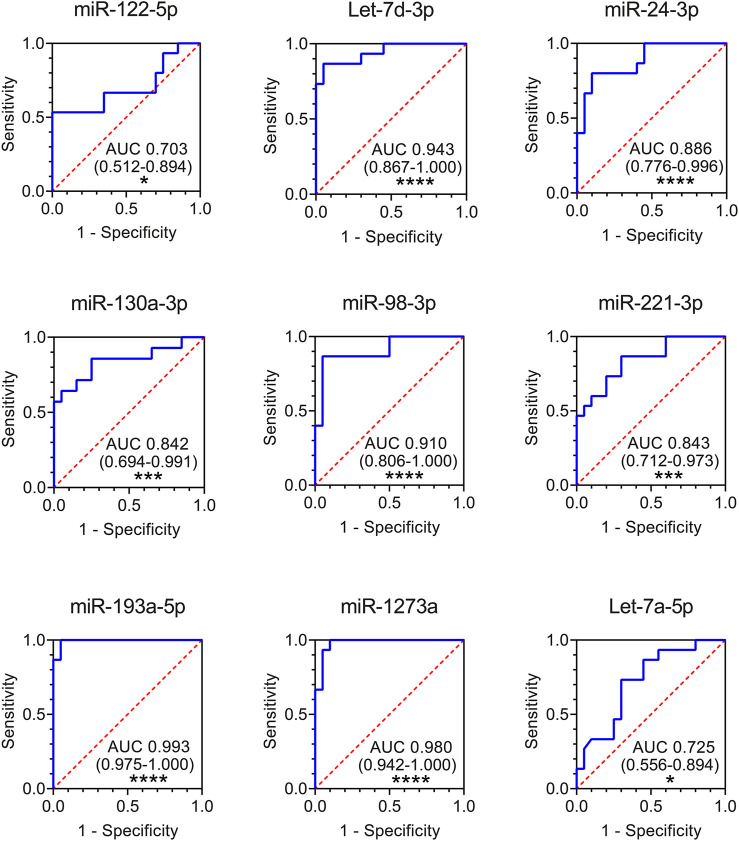
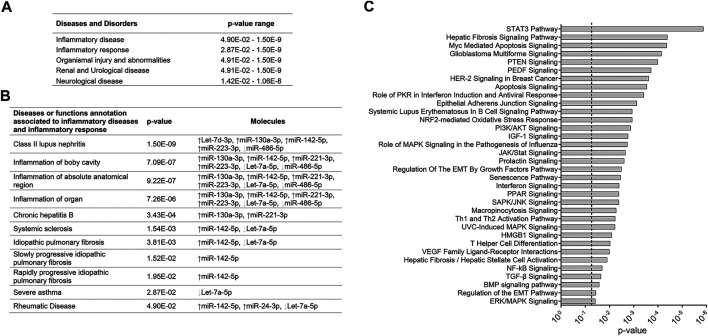
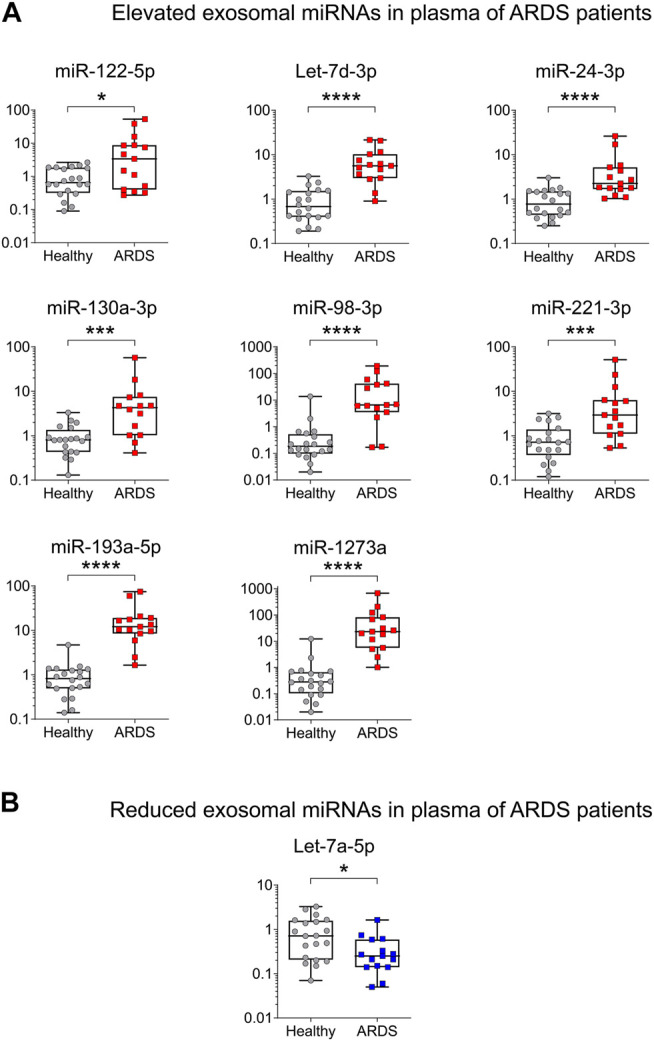
Acute respiratory distress syndrome (ARDS) is a diffuse, acute, inflammatory lung disease characterized by a severe respiratory failure. Recognizing and promptly treating ARDS is critical to combat the high mortality associated with the disease. Despite a significant progress in the treatment of ARDS, our ability to identify early patients and predict outcomes remains limited. The development of novel biomarkers is crucial. In this study, we profiled microRNA (miRNA) expression of plasma-derived exosomes in ARDS disease by small RNA sequencing. Sequencing of 8 ARDS patients and 10 healthy subjects (HSs) allowed to identify 12 differentially expressed exosomal miRNAs (adjusted < 0.05). Pathway analysis of their predicted targets revealed enrichment in several biological processes in agreement with ARDS pathophysiology, such as inflammation, immune cell activation, and fibrosis. By quantitative RT-PCR, we validated the alteration of nine exosomal miRNAs in an independent cohort of 15 ARDS patients and 20 HSs, among which seven present high capability in discriminating ARDS patients from HSs (area under the curve > 0.8) (miR-130a-3p, miR-221-3p, miR-24-3p, miR-98-3p, Let-7d-3p, miR-1273a, and miR-193a-5p). These findings highlight exosomal miRNA dysregulation in the plasma of ARDS patients which provide promising diagnostic biomarkers and open new perspectives for the development of therapeutics.
急性呼吸窘迫综合征(ARDS)是一种以严重呼吸衰竭为特征的弥漫性、急性炎症性肺病。识别并及时治疗ARDS对于对抗该疾病相关的高死亡率至关重要。尽管在ARDS治疗方面取得了重大进展,但我们识别早期患者和预测预后的能力仍然有限。新型生物标志物的开发至关重要。在本研究中,我们通过小RNA测序分析了ARDS患者血浆来源外泌体的微小RNA(miRNA)表达。对8例ARDS患者和10例健康受试者(HSs)进行测序,鉴定出12种差异表达的外泌体miRNA(校正后<0.05)。对其预测靶点的通路分析显示,在与ARDS病理生理学一致的几个生物学过程中富集,如炎症、免疫细胞活化和纤维化。通过定量RT-PCR,我们在一个由15例ARDS患者和20例HSs组成的独立队列中验证了9种外泌体miRNA的改变,其中7种在区分ARDS患者和HSs方面具有很高的能力(曲线下面积>0.8)(miR-130a-3p、miR-221-3p、miR-24-3p、miR-98-3p、Let-7d-3p、miR-1273a和miR-193a-5p)。这些发现突出了ARDS患者血浆中外泌体miRNA的失调,这为诊断提供了有前景的生物标志物,并为治疗学的发展开辟了新的前景。