Zhang Haiyan, Wang Zheng, Liu Zhengxia, Du Kang, Lu Xiang
Department of Cardiology, The Second Affiliated Hospital, Nanjing Medical University, Nanjing, China.
Department of Blood Transfusion, Sir Run Run Hospital, Nanjing Medical University, Nanjing, China.
Front Cardiovasc Med. 2021 Jul 14;8:685434. doi: 10.3389/fcvm.2021.685434. eCollection 2021.
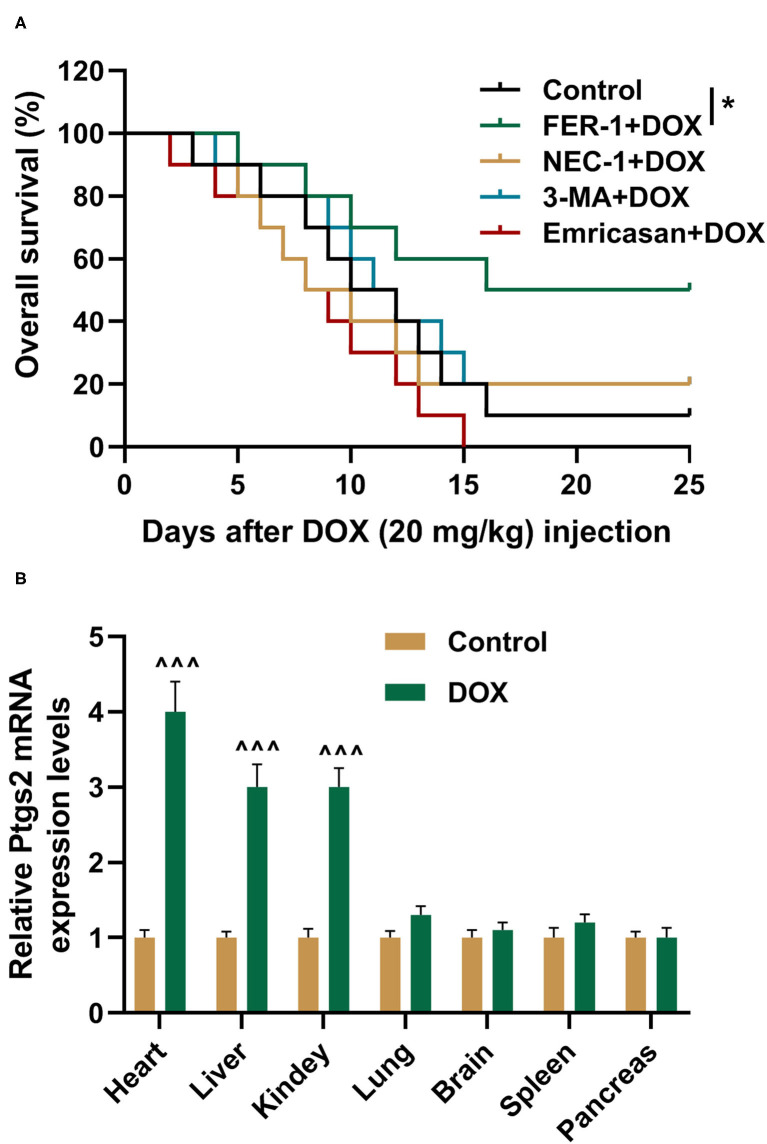
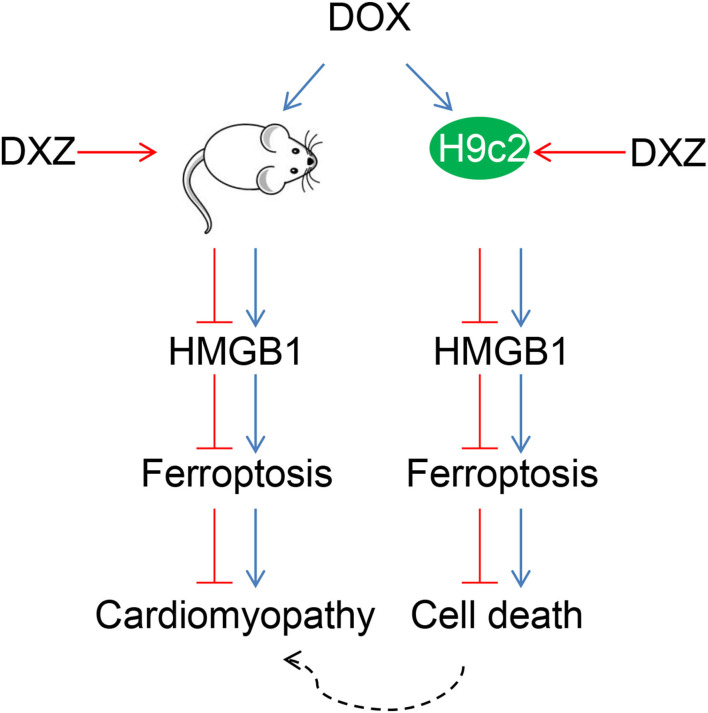
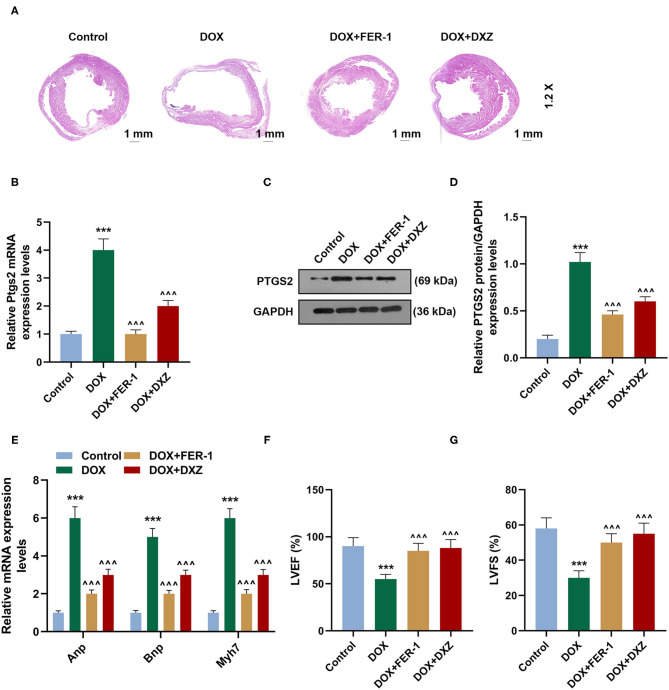
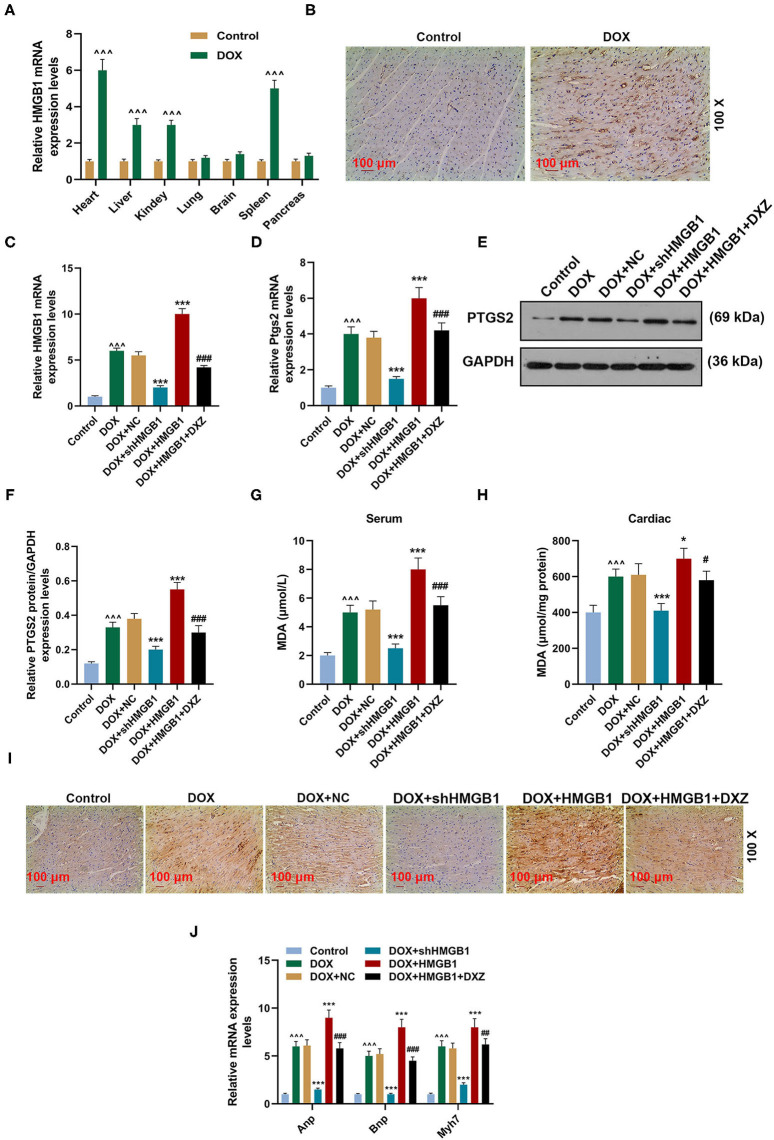
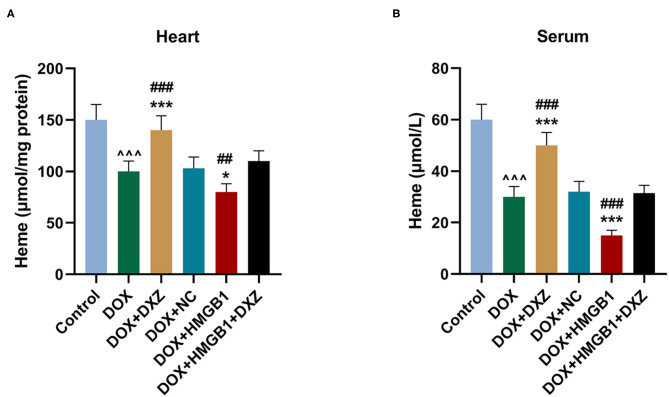
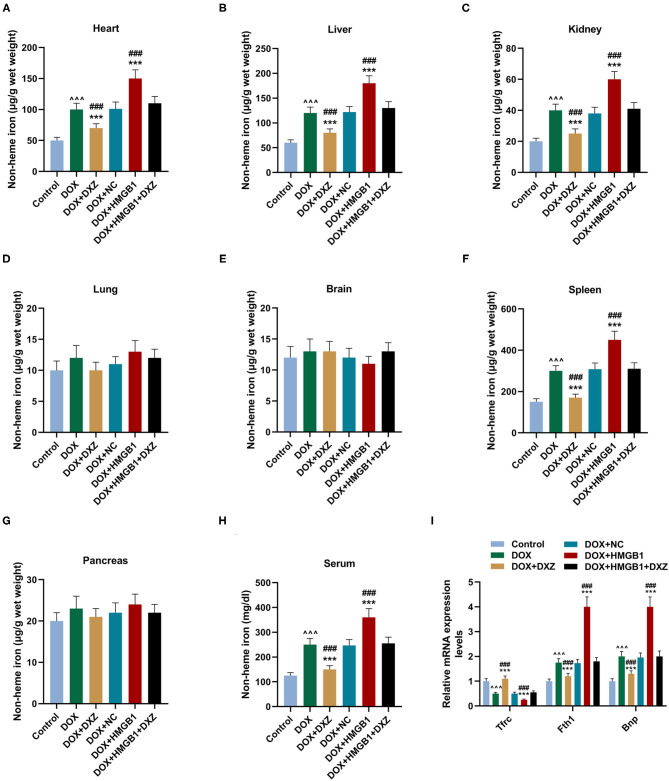
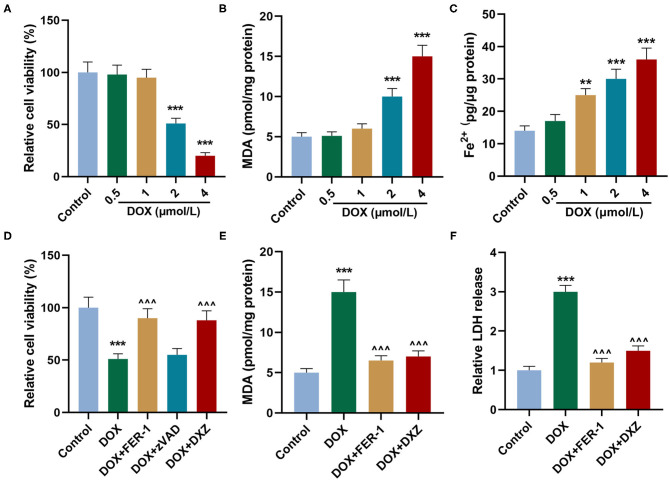
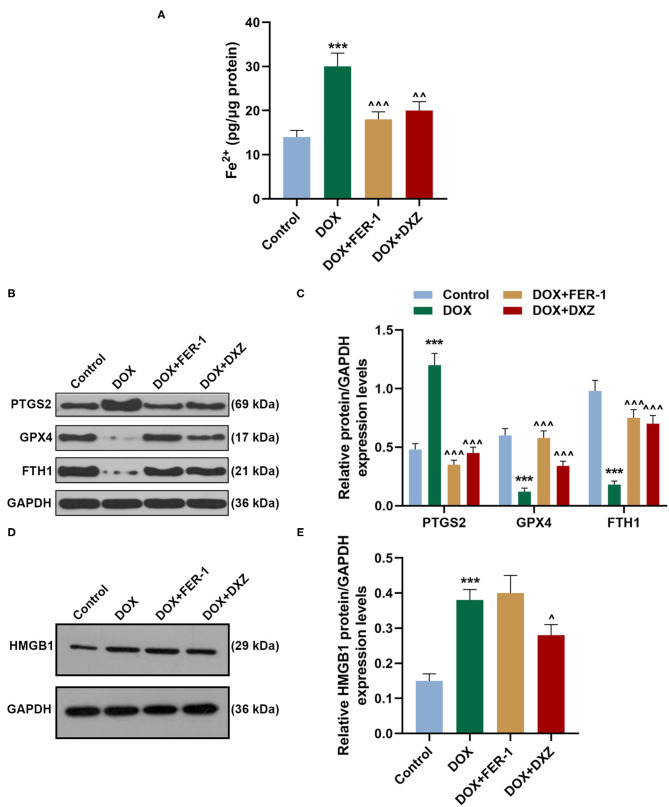
Dexrazoxane (DXZ) reduces cytotoxicity caused by Doxorubicin (DOX). However, the mechanism of DXZ in ferroptosis and cardiomyopathy remains unclear. This research, therefore, explores the role and mechanism of DXZ in DOX-induced ferroptosis and cardiomyopathy in rats. Kaplan-Meier survival analysis was performed in rats treated by DOX in combination with ferroptosis inhibitor (FER-1) or other cell death-associated inhibitors. The ferroptosis, cardiotoxicity, and expression of high mobility group box 1 (HMGB1) in rats treated by DOX in combination with FER-1 or with DXZ were determined by hematoxylin and eosin staining, echocardiographic analysis, and quantitative real-time PCR. The ferroptosis in DOX-treated rats that received HMGB1 knockdown or overexpression was further detected using molecular experiments. Finally, the viability, level of malondialdehyde (MDA), and expressions of ferroptosis-related markers (PTGS2, GPX4, and FTH1) of rat cardiomyocyte H9c2 exposed to DOX combined with FER-1, zVAD (an apoptosis inhibitor), DXZ, or not were detected by performing molecular experiments. FER-1 increased the survival of the rats induced by DOX. The DOX-induced ferroptosis and cardiotoxicity could be reversed by FER-1 or DXZ. HMGB1 was induced by DOX but was inhibited by DXZ or FER-1. Overexpression of HMGB1 promoted the ferroptosis and cardiotoxicity induced by DOX in the rats although silencing of HMGB1 showed opposite effects. The data indicate that DOX suppressed the viability and increased the MDA level in H9c2 cells in a dose-dependent manner. Moreover, DOX-induced increase of PTGS2 and decrease of GPX4 and FTH1 in H9c2 cells was reversed by DXZ or FER-1. Therefore, DXZ has protective effects on ferroptosis and cardiomyopathy in rats through regulating HMGB1.
右丙亚胺(DXZ)可降低阿霉素(DOX)引起的细胞毒性。然而,DXZ在铁死亡和心肌病中的作用机制仍不清楚。因此,本研究探讨DXZ在DOX诱导的大鼠铁死亡和心肌病中的作用及机制。对接受DOX联合铁死亡抑制剂(FER-1)或其他细胞死亡相关抑制剂治疗的大鼠进行Kaplan-Meier生存分析。通过苏木精-伊红染色、超声心动图分析和定量实时PCR测定DOX联合FER-1或DXZ治疗的大鼠的铁死亡、心脏毒性和高迁移率族蛋白B1(HMGB1)的表达。使用分子实验进一步检测接受HMGB1基因敲低或过表达的DOX处理大鼠的铁死亡情况。最后,通过分子实验检测暴露于DOX联合FER-1、zVAD(一种凋亡抑制剂)、DXZ或未处理的大鼠心肌细胞H9c2的活力、丙二醛(MDA)水平以及铁死亡相关标志物(PTGS2、GPX4和FTH1)的表达。FER-1提高了DOX诱导的大鼠的存活率。DOX诱导的铁死亡和心脏毒性可被FER-1或DXZ逆转。DOX诱导HMGB1表达,但被DXZ或FER-1抑制。HMGB1过表达促进了DOX诱导的大鼠铁死亡和心脏毒性,而HMGB1沉默则显示出相反的效果。数据表明,DOX以剂量依赖的方式抑制H9c2细胞的活力并提高MDA水平。此外,DXZ或FER-1可逆转DOX诱导的H9c2细胞中PTGS2的增加以及GPX4和FTH1的减少。因此,DXZ通过调节HMGB1对大鼠的铁死亡和心肌病具有保护作用。