Wang Ying, Tang Bo, Gao Yuan, Wu Xinfeng, Chen Jin, Shan Liming, Sun Kai, Zhao Yuantao, Yang Ke, Yu Jinhong, Li Wenge
Merchant Marine College, College of Ocean Science and Engineering, Shanghai Maritime University, Shanghai 201306, China.
Purchasing and Supplying Logistics Center Department, COMAC Shanghai Aircraft Manufacturing Co., Ltd, Shanghai 201324, China.
ACS Omega. 2021 Jul 15;6(29):19238-19251. doi: 10.1021/acsomega.1c02694. eCollection 2021 Jul 27.
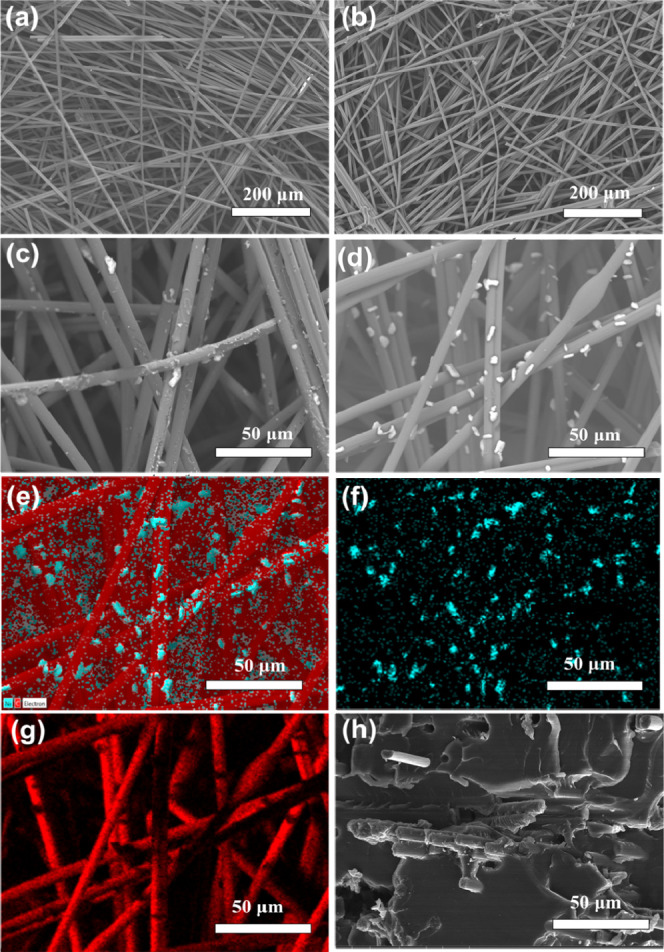
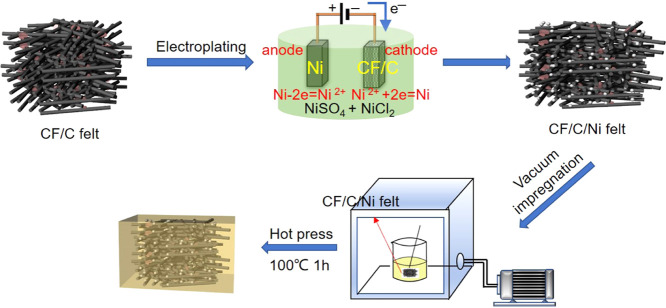
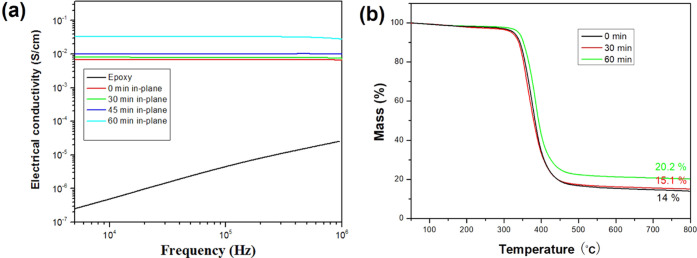
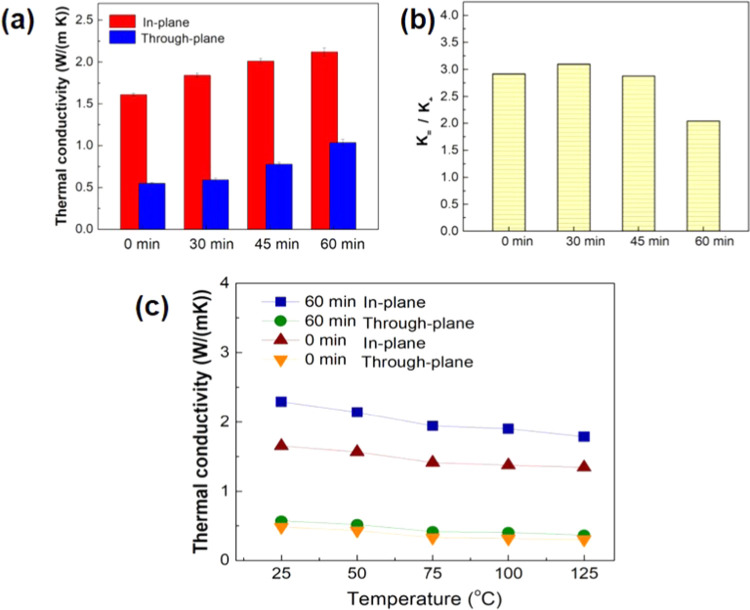
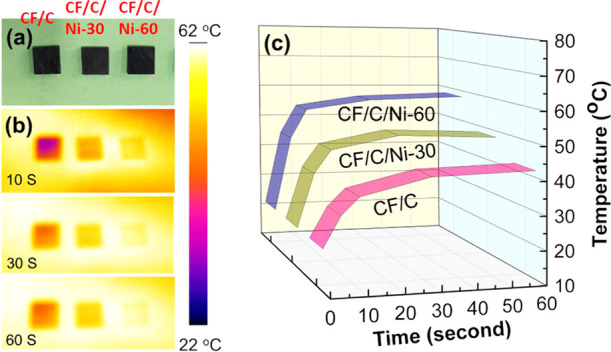
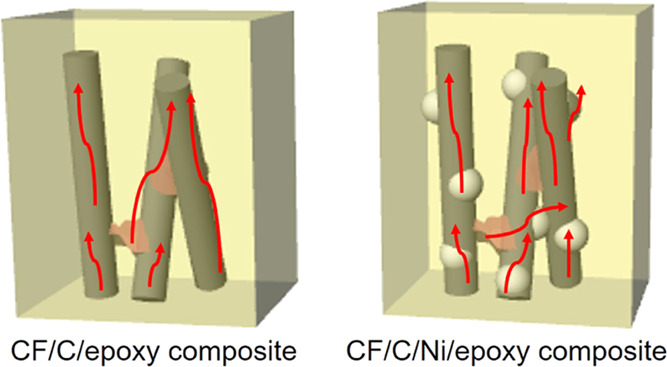
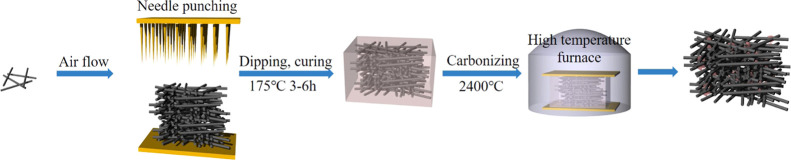
Heat dissipation problem is the primary factor restricting the service life of an electronic component. The thermal conductivity of materials has become a bottleneck that hinders the development of the electronic information industry (such as light-emitting diodes, 5G mobile phones). Therefore, the research on improving the thermal conductivity of materials has a very important theoretical value and a practical application value. Whether the thermally conductive filler in polymer composites can form a highly thermal conductive pathway is a key issue at this stage. The carbon fiber/carbon felt (CF/C felt) prepared in the study has a three-dimensional continuous network structure. The nickel-coated carbon fiber/carbon felt (CF/C/Ni felt) was fabricated by an electroplating deposition method. Three-dimensional CF/C/Ni/epoxy composites were manufactured by vacuum-assisted liquid-phase impregnation. By forming connection points between the adjacent carbon fibers, the thermal conduction path inside the felt can be improved so as to improve the thermal conductivity of the CF/C/Ni/epoxy composite. The thermal conductivity of the CF/C/Ni/epoxy composite (in-plane K) is up to 2.13 W/(m K) with 14.0 wt % CF/C and 3.70 wt % Ni particles (60 min electroplating deposition). This paper provides a theoretical basis for the development of high thermal conductivity and high-performance composite materials urgently needed in industrial production and high-tech fields.
散热问题是限制电子元件使用寿命的主要因素。材料的热导率已成为阻碍电子信息产业(如发光二极管、5G手机)发展的瓶颈。因此,研究提高材料的热导率具有非常重要的理论价值和实际应用价值。聚合物复合材料中的导热填料能否形成高导热通道是现阶段的一个关键问题。本研究制备的碳纤维/碳毡(CF/C毡)具有三维连续网络结构。采用电镀沉积法制备了镀镍碳纤维/碳毡(CF/C/Ni毡)。通过真空辅助液相浸渍法制备了三维CF/C/Ni/环氧树脂复合材料。通过在相邻碳纤维之间形成连接点,可以改善毡内部的热传导路径,从而提高CF/C/Ni/环氧树脂复合材料的热导率。当CF/C含量为14.0 wt%、Ni颗粒含量为3.70 wt%(电镀沉积60分钟)时,CF/C/Ni/环氧树脂复合材料的面内热导率(in-plane K)高达2.13 W/(m·K)。本文为工业生产和高科技领域急需的高导热高性能复合材料的开发提供了理论依据。