Wang Zhengdong, Meng Guodong, Wang Liangliang, Tian Liliang, Chen Siyu, Wu Guanglei, Kong Bo, Cheng Yonghong
School of Mechanical and Electrical Engineering, Xi'an University of Architecture and Technology, Xi'an, 710055, China.
State Key Laboratory of Electrical Insulation and Power Equipment, Center of Nanomaterials for Renewable Energy, Xi'an Jiaotong University, Xi'an, 710049, China.
Sci Rep. 2021 Jan 28;11(1):2495. doi: 10.1038/s41598-021-81925-x.
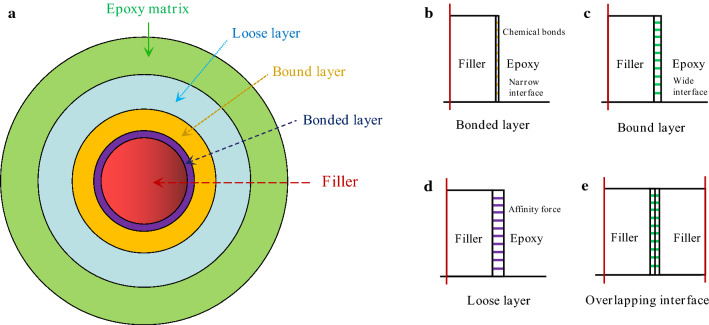
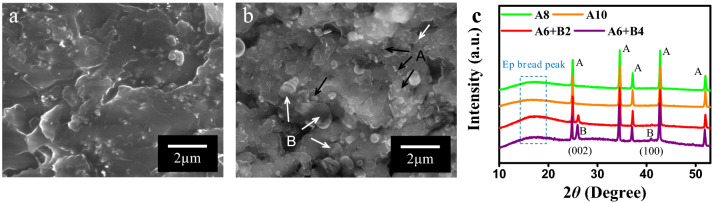
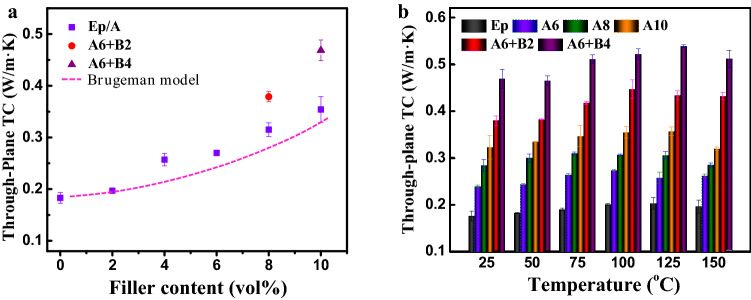
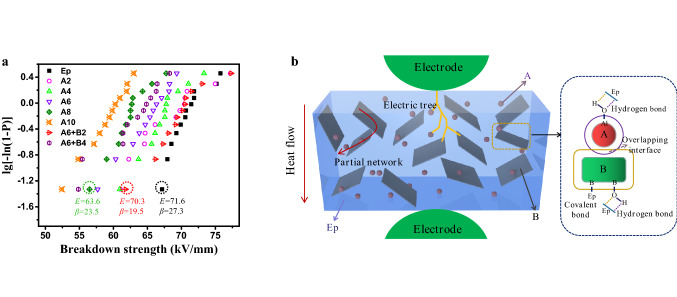
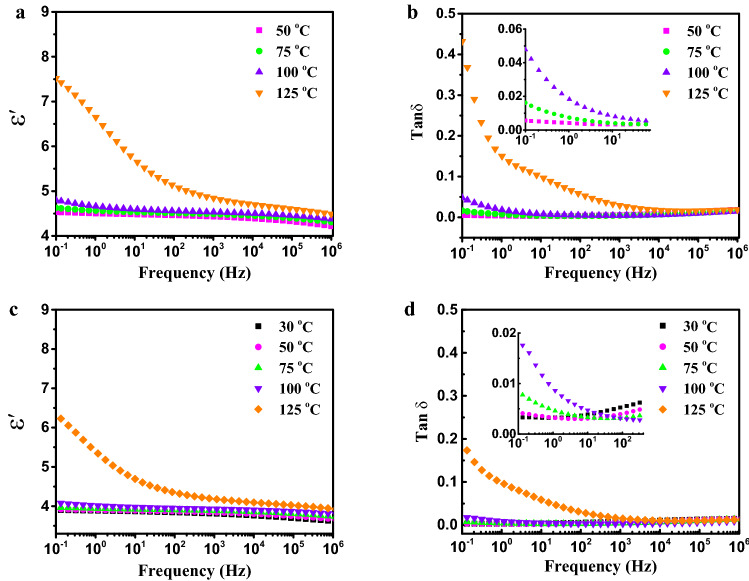
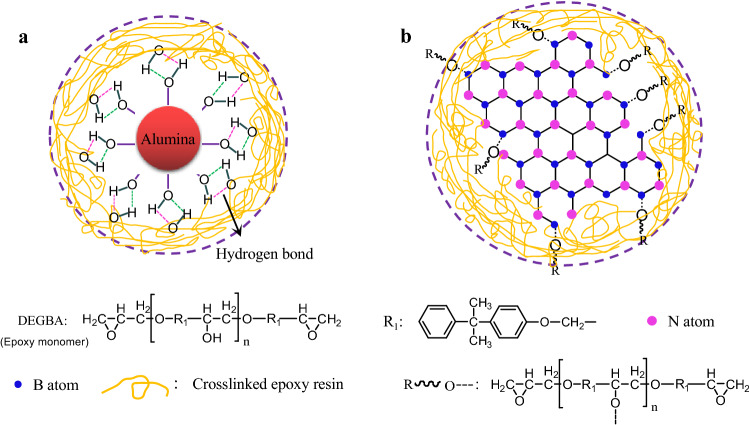
Dielectric materials with good thermal transport performance and desirable dielectric properties have significant potential to address the critical challenges of heat dissipation for microelectronic devices and power equipment under high electric field. This work reported the role of synergistic effect and interface on through-plane thermal conductivity and dielectric properties by intercalating the hybrid fillers of the alumina and boron nitride nanosheets (BNNs) into epoxy resin. For instance, epoxy composite with hybrid fillers at a relatively low loading shows an increase of around 3 times in through-plane thermal conductivity and maintains a close dielectric breakdown strength compared to pure epoxy. Meanwhile, the epoxy composite shows extremely low dielectric loss of 0.0024 at room temperature and 0.022 at 100 ℃ and 10 Hz. And covalent bonding and hydrogen-bond interaction models were presented for analyzing the thermal conductivity and dielectric properties.
具有良好热传输性能和理想介电性能的介电材料,在解决高电场下微电子器件和电力设备散热的关键挑战方面具有巨大潜力。这项工作通过将氧化铝和氮化硼纳米片(BNNs)的混合填料插入环氧树脂中,报道了协同效应和界面在面内热导率和介电性能方面的作用。例如,与纯环氧树脂相比,具有相对低负载混合填料的环氧复合材料的面内热导率提高了约3倍,并且保持了相近的介电击穿强度。同时,该环氧复合材料在室温下的介电损耗极低,为0.0024,在100℃和10Hz时为0.022。并且提出了共价键和氢键相互作用模型来分析热导率和介电性能。