Hoshino Isamu, Yokota Hajime
Division of Gastroenterological Surgery Chiba Cancer Center Chiba Japan.
Department of Diagnostic Radiology and Radiation Oncology Graduate School of Medicine Chiba University Chiba Japan.
Ann Gastroenterol Surg. 2021 Feb 1;5(4):427-435. doi: 10.1002/ags3.12437. eCollection 2021 Jul.
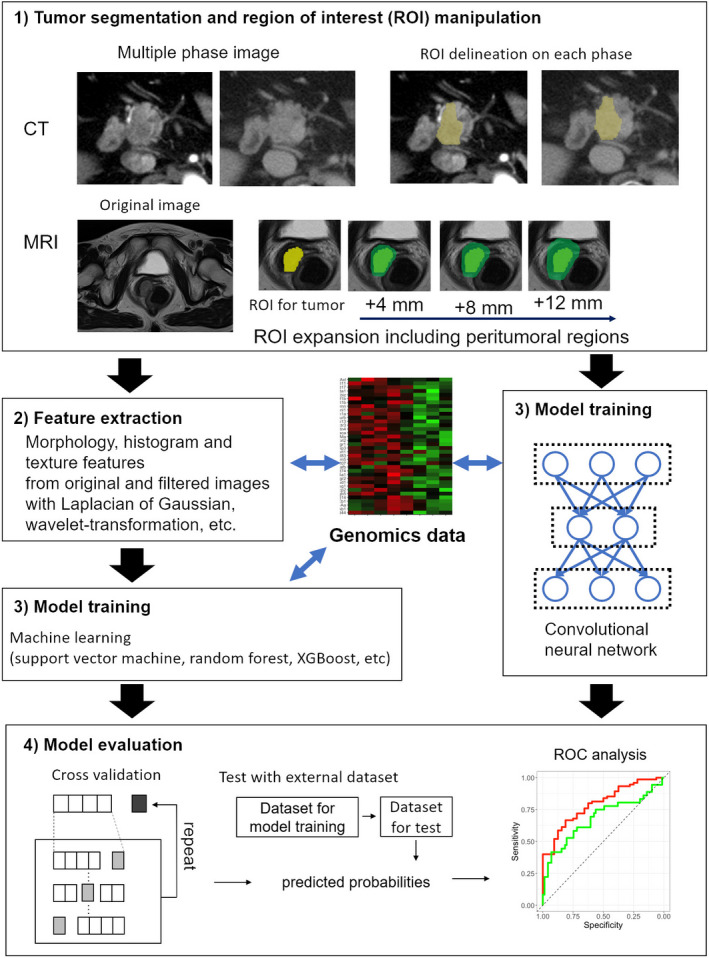
Radiogenomics is a new field of medical science that integrates two omics, radiomics and genomics, and may bring a major paradigm shift in traditional personalized medicine strategies that require tumor tissue samples. In addition, the acquisition of the data does not require special imaging equipment or special imaging conditions, and it is possible to use image information from computed tomography, magnetic resonance imaging, positron emission tomography-computed tomography in clinical practice, so the versatility and cost-effectiveness of radiogenomics are expected. So far, the field of radiogenomics has developed, especially in the fields of brain tumors and breast cancer, but recently, reports of radiogenomic research on gastroenterological cancer are increasing. This review provides an overview of radiogenomic research methods and summarizes the current radiogenomic research in gastroenterological cancer. In addition, the application of artificial intelligence is considered to be indispensable for the integrated analysis of enormous omics information in the future, and the future direction of this research, including the latest technologies, will be discussed.
放射基因组学是医学科学的一个新领域,它整合了放射组学和基因组学这两个组学领域,可能会给需要肿瘤组织样本的传统个性化医疗策略带来重大的范式转变。此外,数据采集不需要特殊的成像设备或特殊的成像条件,在临床实践中可以使用来自计算机断层扫描、磁共振成像、正电子发射断层扫描-计算机断层扫描的图像信息,因此放射基因组学的通用性和成本效益值得期待。到目前为止,放射基因组学领域已经得到了发展,尤其是在脑肿瘤和乳腺癌领域,但最近,关于胃肠癌放射基因组学研究的报道也在增加。这篇综述概述了放射基因组学的研究方法,并总结了目前胃肠癌的放射基因组学研究。此外,人工智能的应用被认为对于未来海量组学信息的综合分析不可或缺,本文还将讨论这项研究的未来方向(包括最新技术)。