Zhou Shurong, Chen Wenjie, Cole Janet, Zhu Guizhi
Department of Pharmaceutics, Center for Pharmaceutical Engineering and Sciences, Institute for Structural Biology, Drug Discovery and Development (ISB3D), School of Pharmacy, Massey Cancer Center, Virginia Commonwealth University, Richmond, VA, 23219, USA.
Med Drug Discov. 2020 Jun;6. doi: 10.1016/j.medidd.2020.100023. Epub 2020 Mar 24.
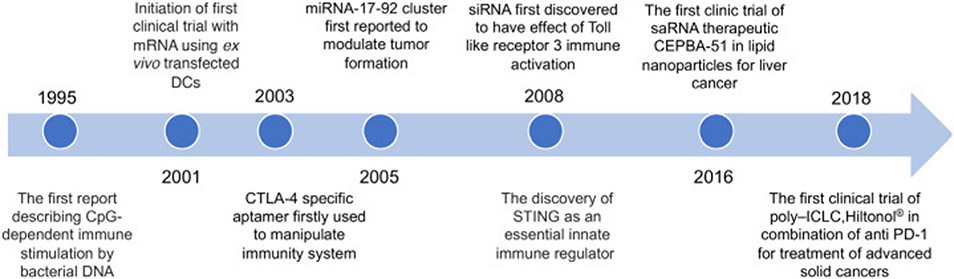
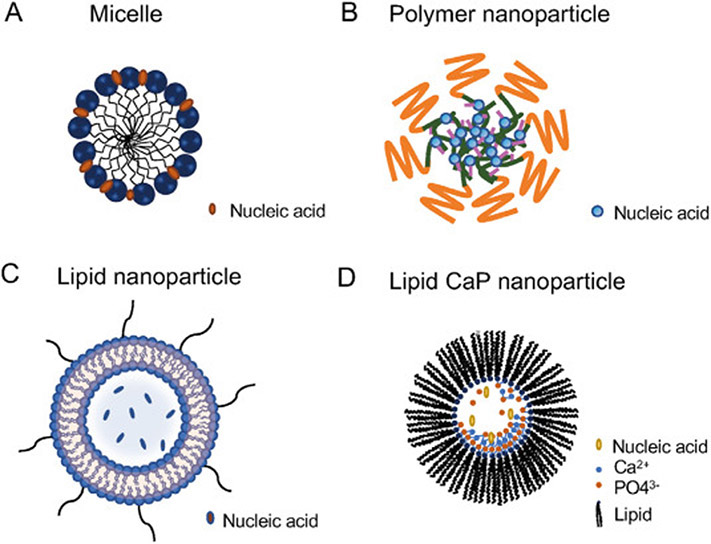
Cancer immunotherapy has shown great potential as witnessed by an increasing number of immuno-oncology drug approvals in the past few years. Meanwhile, the field of nucleic acid therapeutics has made significant advancement. Nucleic acid therapeutics, such as plasmids, antisense oligonucleotides (ASO), small interfering RNA (siRNA) and microRNA, messenger RNA (mRNA), immunomodulatory DNA/RNA, and gene-editing guide RNA (gRNA) are attractive due to their versatile abilities to alter the expression of target endogenous genes or even synthetic genes, and modulate the immune responses. These abilities can play vital roles in the development of novel immunotherapy strategies. However, limited by the intrinsic physicochemical properties such as negative charges, hydrophilicity, as well as susceptibility to enzymatic degradation, the delivery of nucleic acid therapeutics faces multiple challenges. It is therefore pivotal to develop drug delivery systems that can carry, protect, and specifically deliver and release nucleic acid therapeutics to target tissues and cells. In this review, we attempted to summarize recent advances in nucleic acid therapeutics and the delivery systems for these therapeutics in cancer immunotherapy.
近年来,越来越多的免疫肿瘤学药物获批,这表明癌症免疫疗法具有巨大潜力。与此同时,核酸治疗领域也取得了重大进展。核酸治疗药物,如质粒、反义寡核苷酸(ASO)、小干扰RNA(siRNA)、微小RNA、信使RNA(mRNA)、免疫调节性DNA/RNA以及基因编辑引导RNA(gRNA),因其具有改变靶内源基因甚至合成基因表达以及调节免疫反应的多种能力而备受关注。这些能力在新型免疫治疗策略的开发中可发挥至关重要的作用。然而,由于核酸治疗药物固有的物理化学性质,如带负电荷、亲水性以及易被酶降解,其递送面临多重挑战。因此,开发能够携带、保护并特异性递送和释放核酸治疗药物至靶组织和细胞的药物递送系统至关重要。在本综述中,我们试图总结核酸治疗药物以及用于癌症免疫治疗的这些治疗药物递送系统的最新进展。