Research School of Population Health, College of Health and Medicine, Australian National University, Canberra, Australia.
Royal Centre for Disease Control, Ministry of Health, Thimphu, Bhutan.
BMC Infect Dis. 2021 Aug 2;21(1):729. doi: 10.1186/s12879-021-06409-9.
Dengue is the most common arboviral disease in the tropical and sub-tropical regions of the world. Like other regions, dengue-endemic areas have faced the additional public health and socio-economic impact of the ongoing coronavirus disease 2019 (COVID-19) pandemic. COVID-19 and dengue co-infections have been reported, with complicated patient management and care requirements. This review aimed to collate and synthesise current knowledge on the clinical features and outcomes of COVID-19 and dengue virus co-infection, a potentially important new dimension to be considered in public health management of the COVID-19 pandemic.
A systematic literature review was conducted using PubMed, Web of Science and Scopus databases from 1st January to 21st November 2020. The key search terms used were "dengue" and "coronavirus". Descriptive analysis with graphical illustrations were used to present the clinical and laboratory parameters of the co-infection.
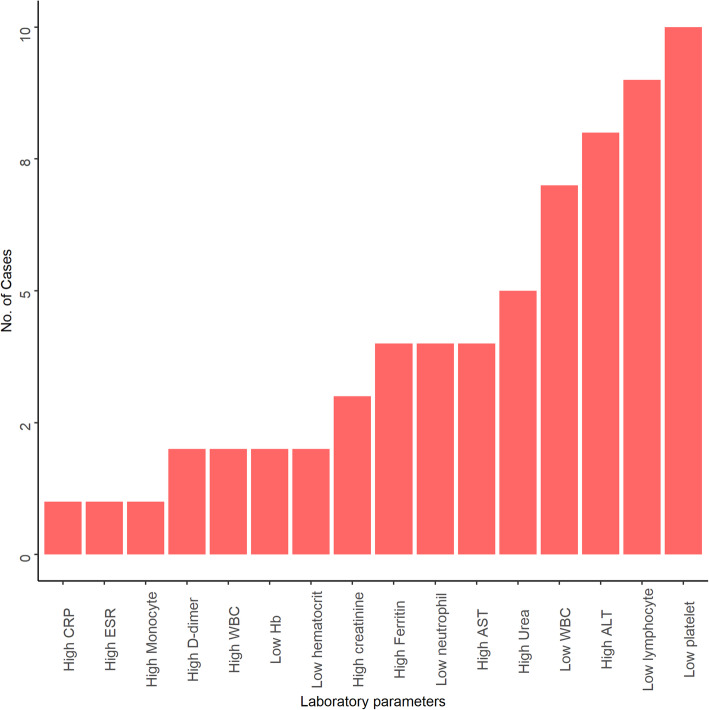
Thirteen published papers and four news articles were included in the review. Most studies were case reports with a detailed description of the clinical and laboratory characteristics of the co-infection. All cases were in adults with the exception of a six-year old child. The common symptoms of co-infection were fever, dyspnea, headache, and cough. Common laboratory results included thrombocytopenia, lymphocytopenia, elevated transaminases, and leukopenia. Serious outcomes of co-infection included septic shock, acute respiratory disease syndrome and multi-organ failure, leading to death in some patients.
COVID-19 and dengue co-infection was associated with severe disease and fatal outcomes. The correct diagnosis and treatment of co-infection poses a substantial challenge due to the overlapping clinical and laboratory parameters. Therefore, confirmative diagnostic tests are necessary for accurate and timely diagnosis and patient management.
登革热是世界热带和亚热带地区最常见的虫媒病毒病。与其他地区一样,登革热流行地区还面临着持续的 2019 冠状病毒病(COVID-19)大流行带来的额外公共卫生和社会经济影响。已报告 COVID-19 和登革热病毒合并感染病例,其患者管理和护理要求复杂。本综述旨在综合和综合当前关于 COVID-19 和登革热病毒合并感染的临床特征和结局的知识,这是在 COVID-19 大流行公共卫生管理中需要考虑的一个潜在重要新方面。
使用 PubMed、Web of Science 和 Scopus 数据库,从 2020 年 1 月 1 日至 11 月 21 日进行了系统的文献回顾。使用的关键搜索词是“登革热”和“冠状病毒”。使用描述性分析和图形说明来呈现合并感染的临床和实验室参数。
综述共纳入 13 篇已发表的论文和 4 篇新闻文章。大多数研究是病例报告,详细描述了合并感染的临床和实验室特征。所有病例均为成年人,除一名 6 岁儿童外。合并感染的常见症状包括发热、呼吸困难、头痛和咳嗽。常见的实验室结果包括血小板减少、淋巴细胞减少、转氨酶升高和白细胞减少。合并感染的严重后果包括感染性休克、急性呼吸窘迫综合征和多器官衰竭,导致部分患者死亡。
COVID-19 和登革热合并感染与严重疾病和致命结局相关。由于重叠的临床和实验室参数,合并感染的正确诊断和治疗构成了重大挑战。因此,需要进行确证性诊断测试,以实现准确和及时的诊断和患者管理。