Rayamajhee Binod, Pokhrel Anil, Syangtan Gopiram, Khadka Saroj, Lama Bhupendra, Rawal Lal Bahadur, Mehata Suresh, Mishra Shyam Kumar, Pokhrel Roshan, Yadav Uday Narayan
School of Optometry and Vision Science, University of New South Wales, Sydney, NSW, Australia.
Department of Infection and Immunology, Kathmandu Research Institute for Biological Sciences, Kathmandu, Nepal.
Front Public Health. 2021 Feb 17;9:597808. doi: 10.3389/fpubh.2021.597808. eCollection 2021.
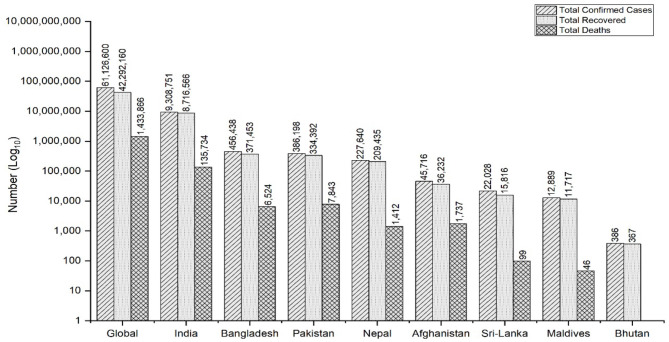
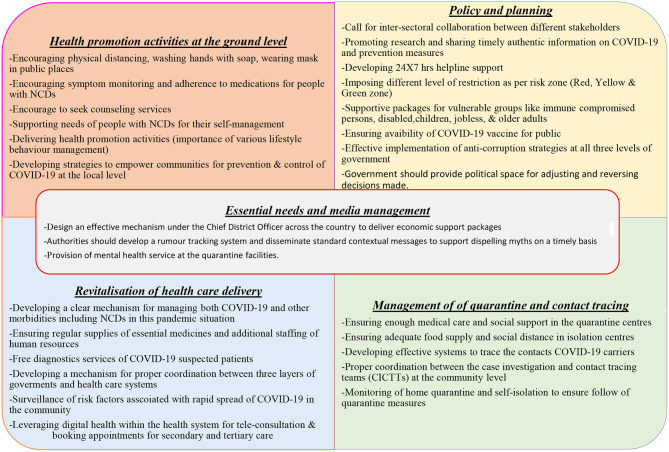
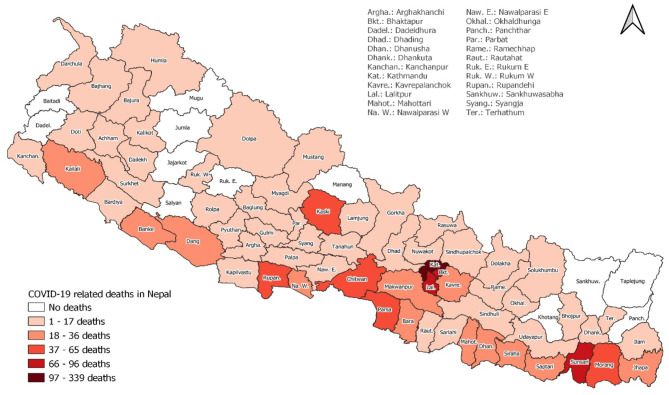
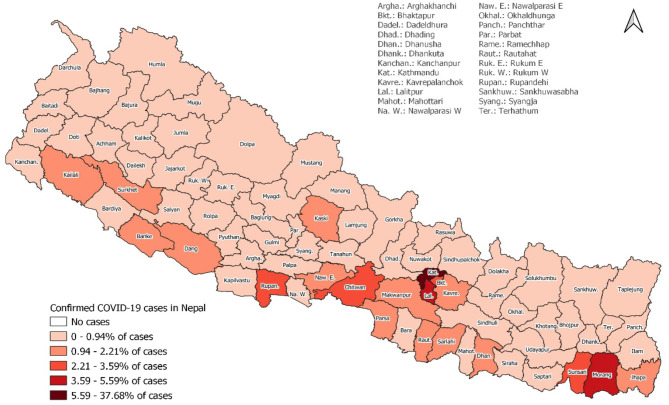
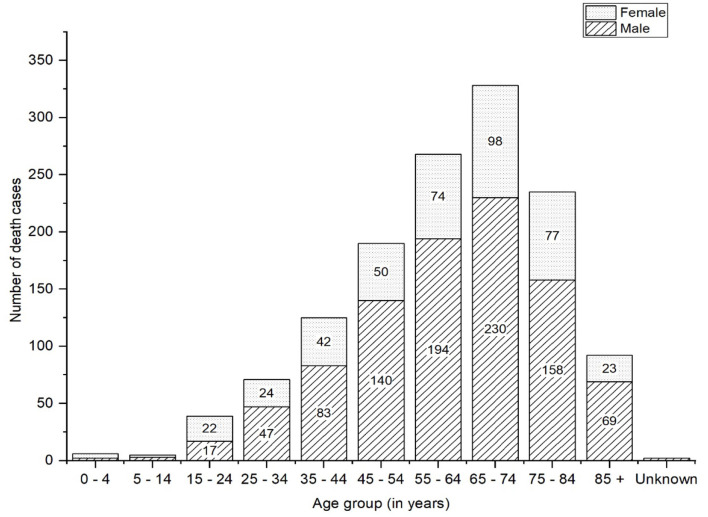
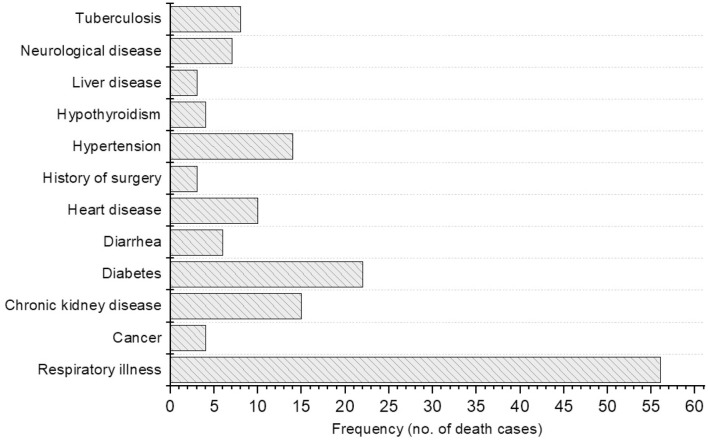
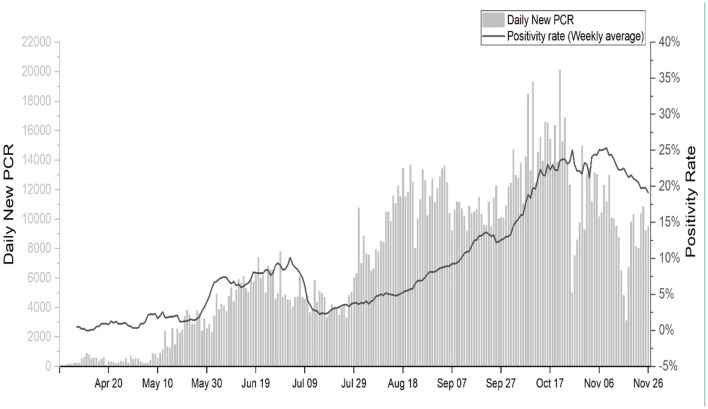
COVID-19, caused by SARS-CoV-2, was first reported in Wuhan, China and is now a pandemic affecting over 218 countries and territories around the world. Nepal has been severely affected by it, with an increasing number of confirmed cases and casualties in recent days, even after 8 months of the first case detected in China. As of 26 November 2020, there were over 227,600 confirmed cases of COVID in Nepal with 209,435 recovered cases and 1,412 deaths. This study aimed to compile public data available from the Ministry of Health and Population (MoHP), Government of Nepal (GoN) and analyse the data of 104 deceased COVID-19 patients using IBM SPSS (Version 25.0). Additionally, this study also aimed to provide critical insights on response of the GoN to COVID-19 and way forward to confront unprecedented pandemic. Figures and maps were created using the Origin Lab (Version 2018) and QGIS (Version 3.10.8). Most of the reported cases were from Bagmati Province, the location of Nepal's capital city, Kathmandu. Among deceased cases, >69% of the patients were male and patients ≥54 years accounted for 67.9% ( = 923). Preliminary findings showed respiratory illness, diabetes, and chronic kidney diseases were the most common comorbid conditions associated with COVID-19 deaths in Nepal. Despite some efforts in the 8 months since the first case was detected, the government's response so far has been insufficient. Since the government eased the lockdown in July 2020, Nepal is facing a flood of COVID-19 cases. If no aggressive actions are taken, the epidemic is likely to result in significant morbidity and mortality in Nepal. The best way to curb the effect of the ongoing pandemic in a resource-limited country like Nepal is to increase testing, tracing, and isolation capacity, and to set up quality quarantine centers throughout the nation. A comprehensive health literacy campaign, quality care of older adults and those with comorbidity will also result in the effective management of the ongoing pandemic.
由严重急性呼吸综合征冠状病毒2(SARS-CoV-2)引起的2019冠状病毒病(COVID-19)首次在中国武汉被报道,如今已成为一场大流行病,影响着全球218个以上的国家和地区。尼泊尔受到了严重影响,尽管在中国首例病例被发现8个月后,最近几天确诊病例和死亡人数仍在增加。截至2020年11月26日,尼泊尔有超过227,600例COVID确诊病例,其中209,435例康复,1,412人死亡。本研究旨在汇总从尼泊尔政府卫生与人口部(MoHP)获取的公开数据,并使用IBM SPSS(版本25.0)分析104例COVID-19死亡患者的数据。此外,本研究还旨在对尼泊尔政府应对COVID-19的情况以及应对这一前所未有的大流行病的未来方向提供关键见解。图表和地图使用Origin Lab(版本2018)和QGIS(版本3.10.8)制作。大多数报告病例来自尼泊尔首都加德满都所在的巴格马蒂省。在死亡病例中,超过69%的患者为男性,54岁及以上的患者占67.9%(n = 923)。初步研究结果表明,呼吸系统疾病、糖尿病和慢性肾脏病是尼泊尔与COVID-19死亡相关的最常见合并症。尽管在首例病例被发现后的8个月里做出了一些努力,但政府迄今为止的应对措施仍不足。自2020年7月政府放松封锁以来,尼泊尔正面临COVID-19病例的激增。如果不采取积极行动,疫情可能会在尼泊尔导致大量发病和死亡。在像尼泊尔这样资源有限的国家,遏制当前大流行病影响的最佳方法是提高检测、追踪和隔离能力,并在全国建立高质量的检疫中心。开展全面的健康素养宣传活动、对老年人和合并症患者进行高质量护理,也将有助于有效应对当前的大流行病。