Department of Psychology, Georgia State University, Atlanta, GA, 30030, USA.
Cogn Res Princ Implic. 2021 Aug 3;6(1):53. doi: 10.1186/s41235-021-00319-9.
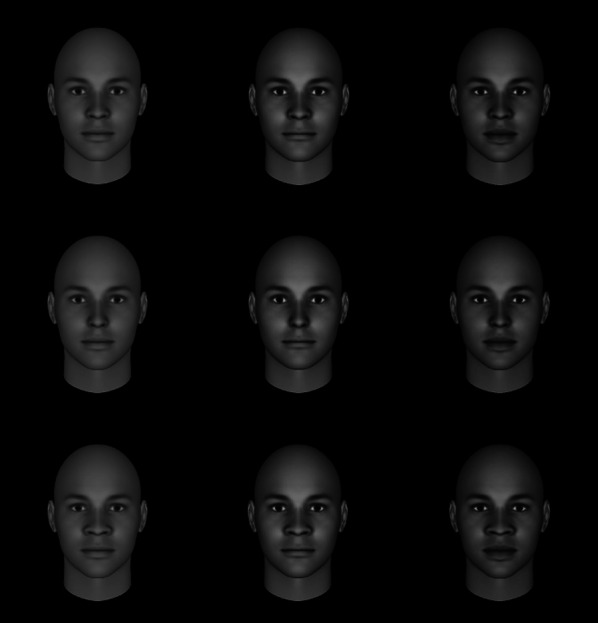
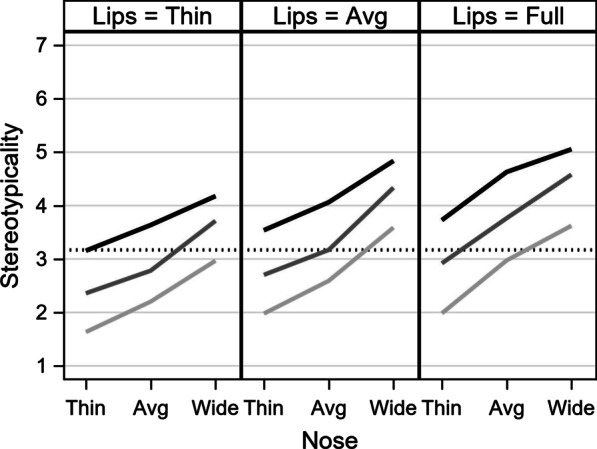
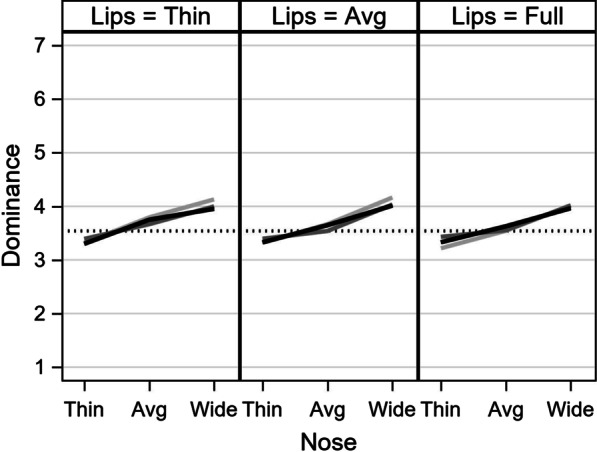
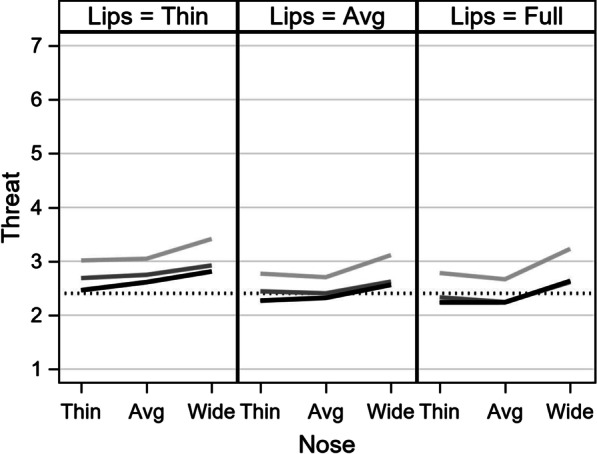
Faces judged as stereotypically Black are perceived negatively relative to less stereotypical faces. In this experiment, artificial faces were constructed to examine the effects of nose width, lip fullness, and skin reflectance, as well as to study the relations among perceived dominance, threat, and Black stereotypicality. Using a multilevel structural equation model to isolate contributions of the facial features and the participant demographics, results showed that stereotypicality was related to wide nose, darker reflectance, and to a lesser extent full lips; threat was associated with wide nose, thin lips, and low reflectance; dominance was mainly related to nose width. Facial features explained variance among faces, suggesting that face-type bias in this sample was related to specific face features rather than particular characteristics of the participant. People's perceptions of relations across these traits may underpin some of the sociocultural disparities in treatment of certain individuals by the legal system.
相对于不太刻板的面孔,被判断为典型黑人特征的面孔会被负面感知。在这项实验中,我们构建了人工面孔来研究鼻子宽度、嘴唇饱满度和皮肤反射率的影响,以及研究感知支配力、威胁和黑人刻板印象之间的关系。使用多层结构方程模型来分离面部特征和参与者人口统计学的贡献,结果表明刻板印象与宽鼻子、较暗的反射率以及较不饱满的嘴唇有关;威胁与宽鼻子、薄嘴唇和低反射率有关;支配力主要与鼻子宽度有关。面部特征解释了面孔之间的差异,这表明在这个样本中,面孔类型的偏见与特定的面部特征有关,而不是与参与者的特定特征有关。人们对这些特征之间关系的感知可能是法律体系对某些人进行不同待遇的一些社会文化差异的基础。