Zhang Zhicheng, Ai Guo, Chen Liping, Liu Shunfang, Gong Chen, Zhu Xiaodong, Zhang Chunli, Qin Hua, Hu Junhui, Huang Jinjin
Department of Gastroenterology, Tongji Hospital, Tongji Medical College, Huazhong University of Science and Technology, Wuhan, China.
Department of Molecular and Medical Pharmacology, David Geffen School of Medicine, University of California, Los Angeles (UCLA), Los Angeles, USA.
BMC Infect Dis. 2021 Aug 3;21(1):738. doi: 10.1186/s12879-021-06457-1.
COVID-19 has spread widely worldwide, causing millions of deaths. We aim to explore the association of immunological features with COVID-19 severity.
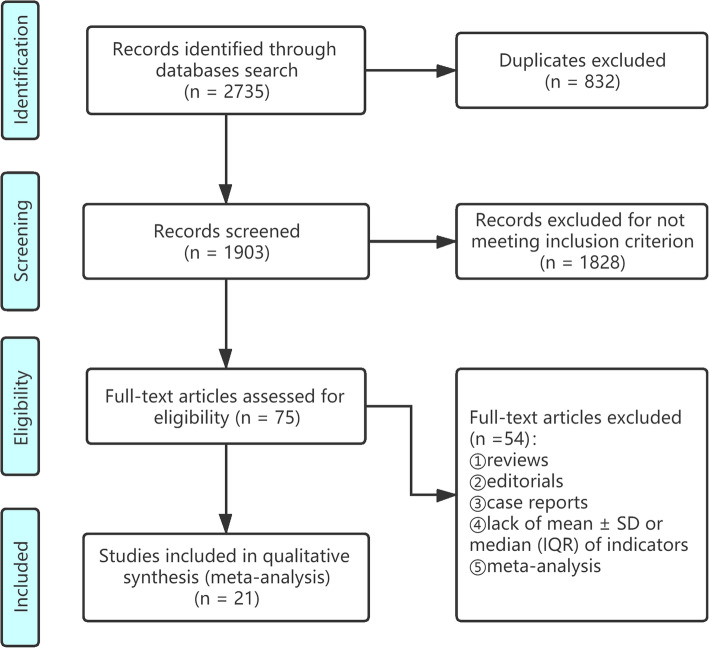
We conducted a meta-analysis to estimate mean difference (MD) of immune cells and cytokines levels with COVID-19 severity in PubMed, Web of Science, Scopus, the Cochrane Library and the grey literature.
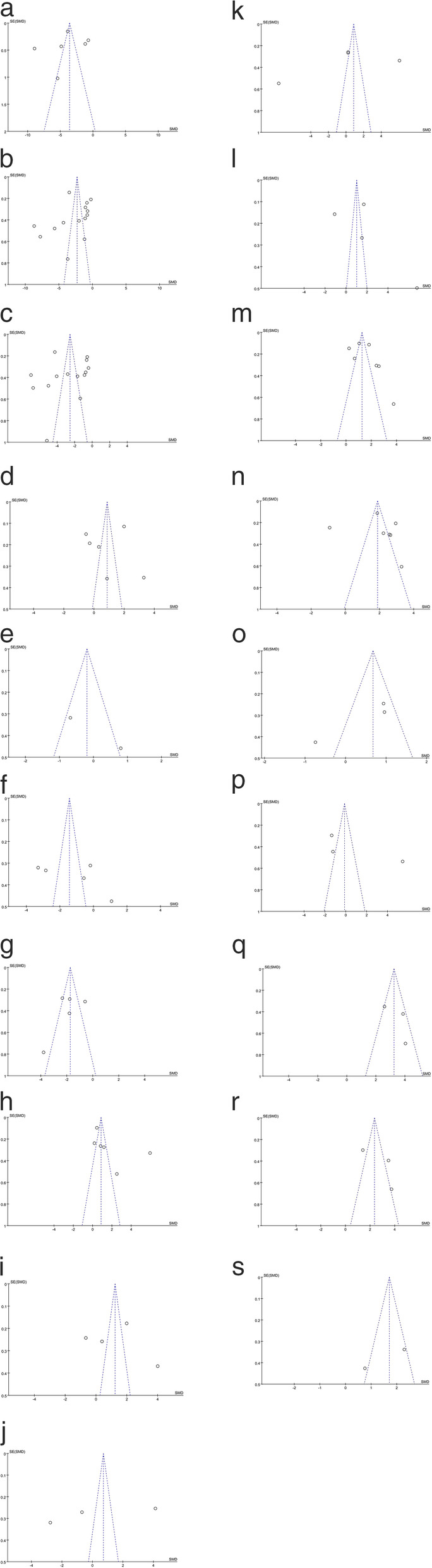
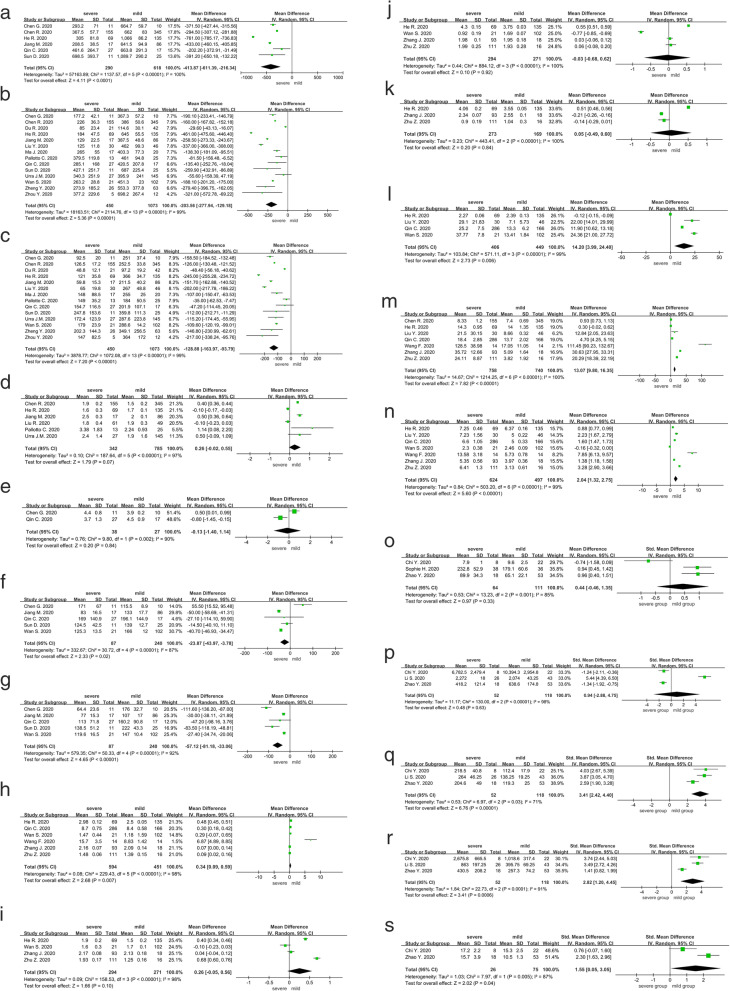
A total of 21 studies with 2033 COVID-19 patients were included. Compared with mild cases, severe cases showed significantly lower levels of immune cells including CD3 T cell (× 10, MD, - 413.87; 95%CI, - 611.39 to - 216.34), CD4 T cell (× 10, MD, - 203.56; 95%CI, - 277.94 to - 129.18), CD8 T cell (× 10, MD, - 128.88; 95%CI, - 163.97 to - 93.79), B cell (× 10/L; MD, - 23.87; 95%CI, - 43.97 to - 3.78) and NK cell (× 10/L; MD, - 57.12; 95%CI, - 81.18 to - 33.06), and significantly higher levels of cytokines including TNF-α (pg/ml; MD, 0.34; 95%CI, 0.09 to 0.59), IL-5 (pg/ml; MD, 14.2; 95%CI, 3.99 to 24.4), IL-6 (pg/ml; MD, 13.07; 95%CI, 9.80 to 16.35), and IL-10 (pg/ml; MD, 2.04; 95%CI, 1.32 to 2.75), and significantly higher levels of chemokines as MCP-1 (SMD, 3.41; 95%CI, 2.42 to 4.40), IP-10 (SMD, 2.82; 95%CI, 1.20 to 4.45) and eotaxin (SMD, 1.55; 95%CI, 0.05 to 3.05). However, no significant difference was found in other indicators such as Treg cell (× 10, MD, - 0.13; 95%CI, - 1.40 to 1.14), CD4/CD8 ratio (MD, 0.26; 95%CI, - 0.02 to 0.55), IFN-γ (pg/ml; MD, 0.26; 95%CI, - 0.05 to 0.56), IL-2 (pg/ml; MD, 0.05; 95%CI, - 0.49 to 0.60), IL-4 (pg/ml; MD, - 0.03; 95%CI, - 0.68 to 0.62), GM-CSF (SMD, 0.44; 95%CI, - 0.46 to 1.35), and RANTES (SMD, 0.94; 95%CI, - 2.88 to 4.75).
Our meta-analysis revealed significantly lower levels of immune cells (CD3 T, CD4 T, CD8 T, B and NK cells), higher levels of cytokines (TNF-α, IL-5, IL-6 and IL-10) and higher levels of chemokines (MCP-1, IP-10 and eotaxin) in severe cases in comparison to mild cases of COVID-19. Measurement of immunological features could help assess disease severity for effective triage of COVID-19 patients.
新型冠状病毒肺炎(COVID-19)已在全球广泛传播,导致数百万人死亡。我们旨在探讨免疫特征与COVID-19严重程度之间的关联。
我们进行了一项荟萃分析,以估计在PubMed、科学网、Scopus、考克兰图书馆和灰色文献中,免疫细胞和细胞因子水平与COVID-19严重程度之间的平均差异(MD)。
共纳入21项研究,涉及2033例COVID-19患者。与轻症病例相比,重症病例的免疫细胞水平显著降低,包括CD3 T细胞(×10,MD,-413.87;95%CI,-611.39至-216.34)、CD4 T细胞(×10,MD,-203.56;95%CI,-277.94至-129.18)、CD8 T细胞(×10,MD,-128.88;95%CI,-163.97至-93.79)、B细胞(×10/L;MD,-23.87;95%CI,-43.97至-3.78)和NK细胞(×10/L;MD,-57.12;95%CI,-81.18至-33.06);细胞因子水平显著升高,包括肿瘤坏死因子-α(pg/ml;MD,0.34;95%CI,0.09至0.59)、白细胞介素-5(pg/ml;MD,14.2;95%CI,3.99至24.4)、白细胞介素-6(pg/ml;MD,13.07;95%CI,9.80至16.35)和白细胞介素-10(pg/ml;MD,2.04;95%CI,1.32至2.75);趋化因子水平也显著升高,如单核细胞趋化蛋白-1(SMD,3.41;95%CI,2.42至4.40)、干扰素诱导蛋白10(SMD,2.82;95%CI,1.20至4.45)和嗜酸性粒细胞趋化因子(SMD,1.55;95%CI,0.于3.05)。然而,在其他指标中未发现显著差异,如调节性T细胞(×10,MD,-0.13;95%CI,-1.40至1.14)、CD4/CD8比值(MD,0.26;95%CI,-0.02至0.55)、干扰素-γ(pg/ml;MD,0.26;95%CI,-0.05至0.56)、白细胞介素-2(pg/ml;MD,0项;95%CI,-0.49至0.60)、白细胞介素-于(pg/ml;MD,-0.03;95%CI,-0.68至0.62)、粒细胞-巨噬细胞集落刺激因子(SMD,0.44;95%CI,-0.46至1.35)和调节激活正常T细胞表达和分泌因子(SMD,0.94;95%CI,-2.88至4.75)。
我们的荟萃分析显示,与COVID-19轻症病例相比,重症病例的免疫细胞(CD3 T、CD4 T、CD8 T、B和NK细胞)水平显著降低,细胞因子(肿瘤坏死因子-α、白细胞介素-5、白细胞介素-6和白细胞介素-10)水平和趋化因子(单核细胞趋化蛋白-1、干扰素诱导蛋白10和嗜酸性粒细胞趋化因子)水平显著升高。测量免疫特征有助于评估疾病严重程度,以便对COVID-19患者进行有效的分诊。