Department of Neurology, Memory and Aging Center, University of California, San Francisco, California, 94143, USA.
Department of Pharmaceutical Chemistry, University of California, San Francisco, California, 94143, USA.
Mol Neurodegener. 2021 Aug 3;16(1):51. doi: 10.1186/s13024-021-00472-1.
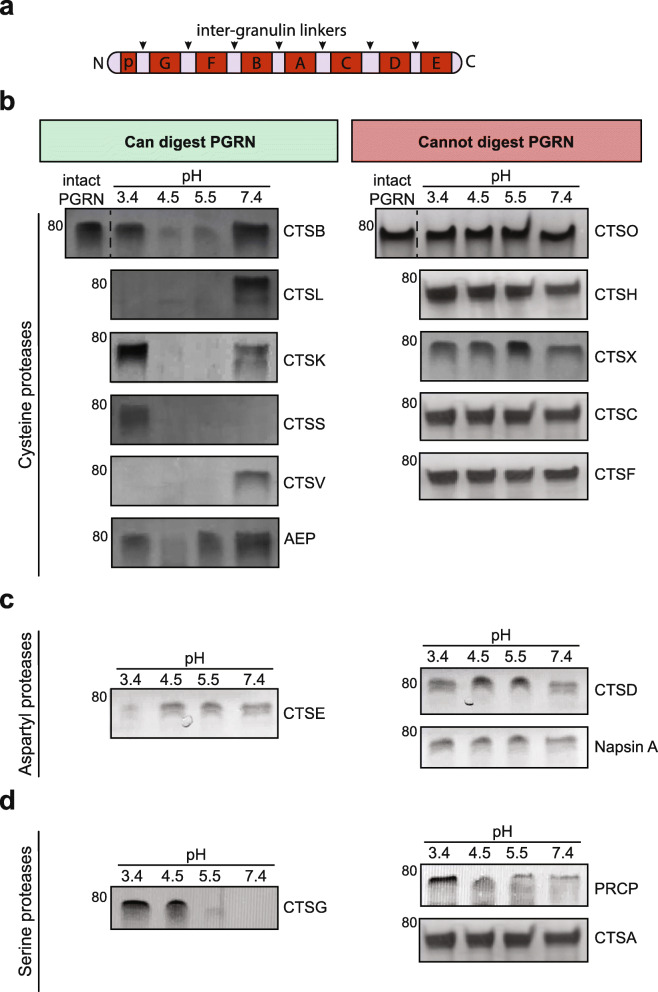
Progranulin loss-of-function mutations are linked to frontotemporal lobar degeneration with TDP-43 positive inclusions (FTLD-TDP-Pgrn). Progranulin (PGRN) is an intracellular and secreted pro-protein that is proteolytically cleaved into individual granulin peptides, which are increasingly thought to contribute to FTLD-TDP-Pgrn disease pathophysiology. Intracellular PGRN is processed into granulins in the endo-lysosomal compartments. Therefore, to better understand the conversion of intracellular PGRN into granulins, we systematically tested the ability of different classes of endo-lysosomal proteases to process PGRN at a range of pH setpoints.
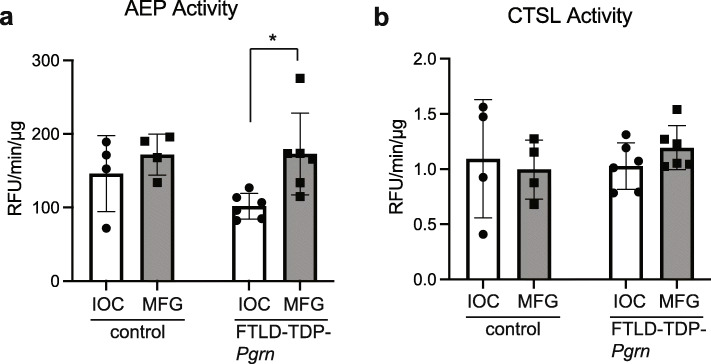
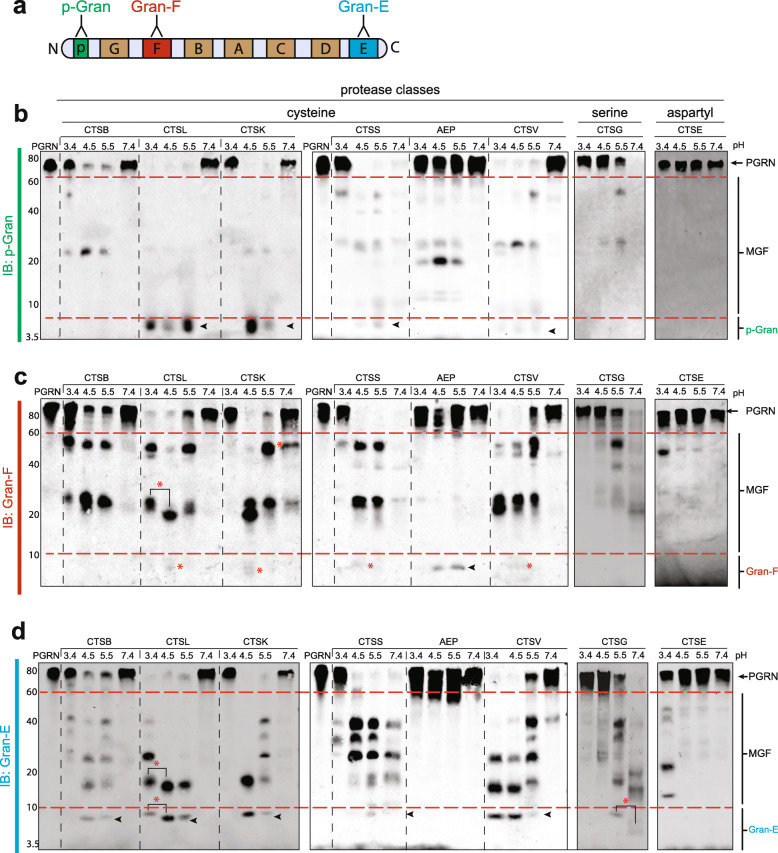
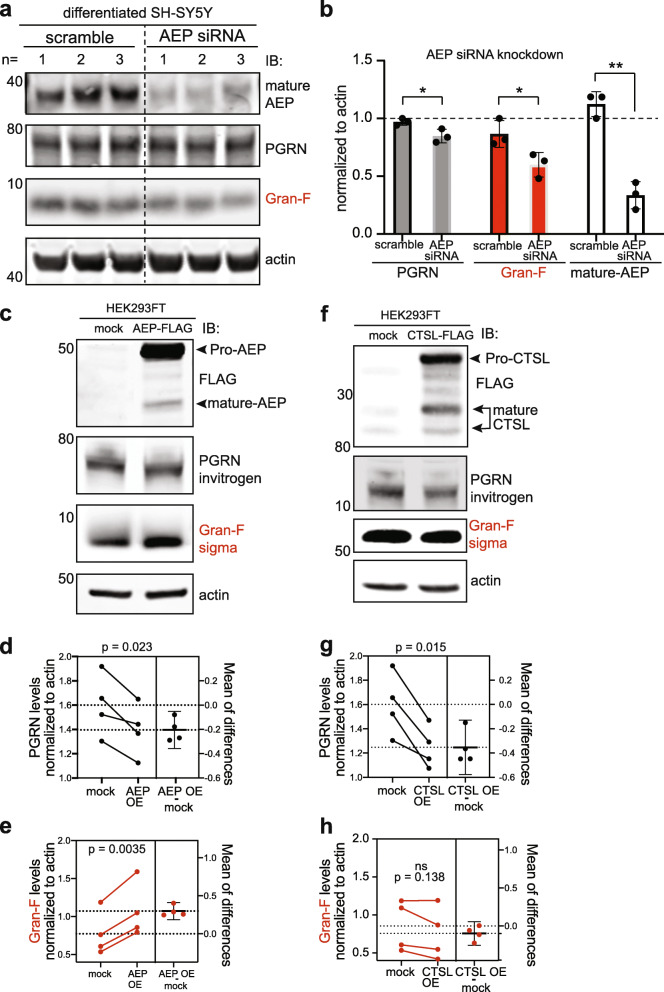
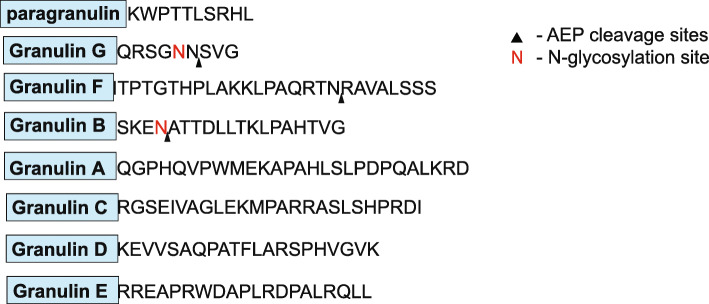
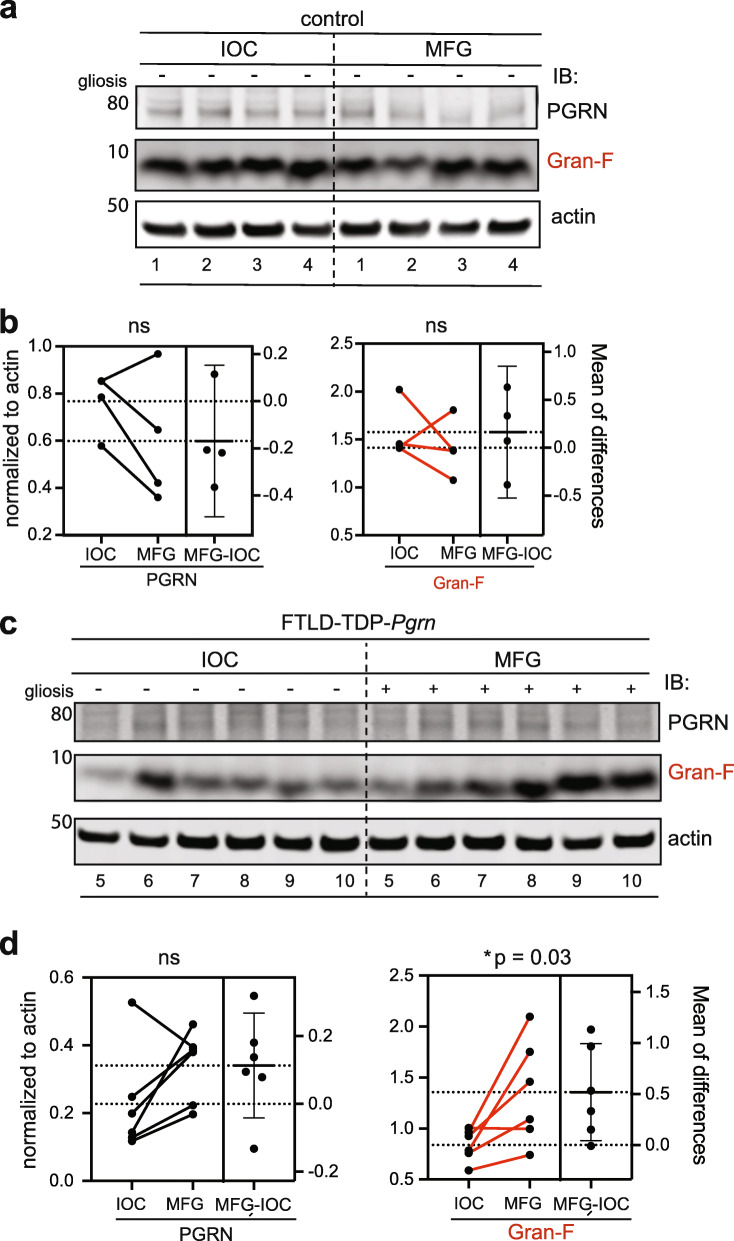
In vitro cleavage assays identified multiple enzymes that can process human PGRN into multi- and single-granulin fragments in a pH-dependent manner. We confirmed the role of cathepsin B and cathepsin L in PGRN processing and showed that these and several previously unidentified lysosomal proteases (cathepsins E, G, K, S and V) are able to process PGRN in distinctive, pH-dependent manners. In addition, we have demonstrated a new role for asparagine endopeptidase (AEP) in processing PGRN, with AEP having the unique ability to liberate granulin F from the pro-protein. Brain tissue from individuals with FTLD-TDP-Pgrn showed increased PGRN processing to granulin F and increased AEP activity in degenerating brain regions but not in regions unaffected by disease.
This study demonstrates that multiple lysosomal proteases may work in concert to liberate multi-granulin fragments and granulins. It also implicates both AEP and granulin F in the neurobiology of FTLD-TDP-Pgrn. Modulating progranulin cleavage and granulin production may represent therapeutic strategies for FTLD-Pgrn and other progranulin-related diseases.
颗粒蛋白前体(PGRN)功能丧失突变与 TDP-43 阳性包涵体的额颞叶变性(FTLD-TDP-Pgrn)有关。PGRN 是一种细胞内和分泌的前蛋白,经蛋白水解酶切割成单个颗粒素肽,这些肽越来越被认为是导致 FTLD-TDP-Pgrn 疾病病理生理学的原因。细胞内的 PGRN 在内溶酶体隔室中被加工成颗粒素。因此,为了更好地了解细胞内 PGRN 向颗粒素的转化,我们系统地测试了不同类别的内溶酶体蛋白酶在一系列 pH 设定点下加工 PGRN 的能力。
体外切割实验鉴定出多种能够以 pH 依赖的方式将人 PGRN 切割成多和单颗粒素片段的酶。我们证实了组织蛋白酶 B 和组织蛋白酶 L 在 PGRN 加工中的作用,并表明这些酶和几种以前未识别的溶酶体蛋白酶(组织蛋白酶 E、G、K、S 和 V)能够以独特的、pH 依赖的方式加工 PGRN。此外,我们还证明了天冬酰胺内肽酶(AEP)在 PGRN 加工中的新作用,AEP 具有从前蛋白中释放颗粒素 F 的独特能力。来自 FTLD-TDP-Pgrn 患者的脑组织显示出 PGRN 加工成颗粒素 F 的增加,以及在退化的脑区而非不受疾病影响的脑区中 AEP 活性的增加。
这项研究表明,多种溶酶体蛋白酶可能协同作用释放多颗粒素片段和颗粒素。它还表明 AEP 和颗粒素 F 都与 FTLD-TDP-Pgrn 的神经生物学有关。调节颗粒蛋白前体的切割和颗粒素的产生可能是治疗 FTLD-Pgrn 和其他颗粒蛋白相关疾病的策略。