Department of Biomaterials, Faculty of Engineering Sciences, University of Bayreuth, Bayreuth, Germany.
Department of Process Biotechnology, Faculty of Engineering Sciences, University of Bayreuth, Bayreuth, Germany.
Sci Rep. 2021 Aug 3;11(1):15702. doi: 10.1038/s41598-021-95073-9.
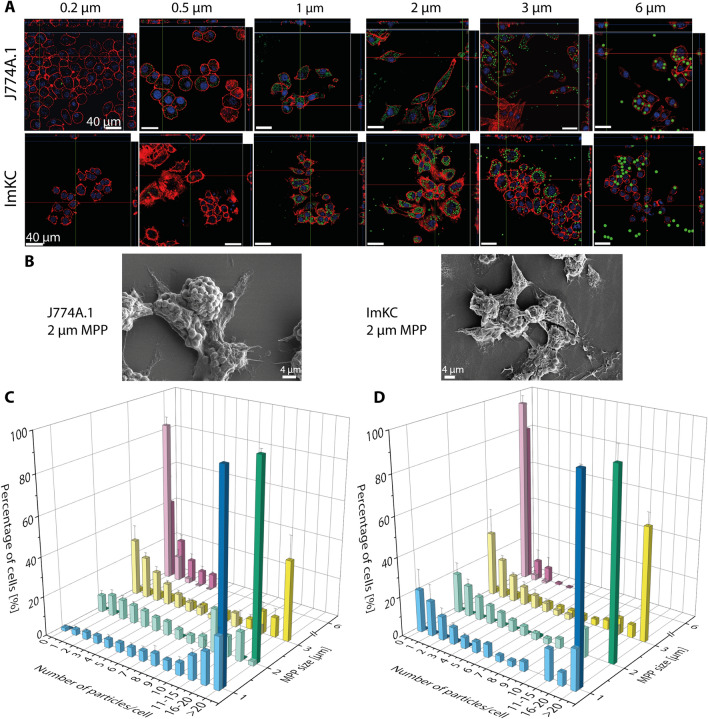
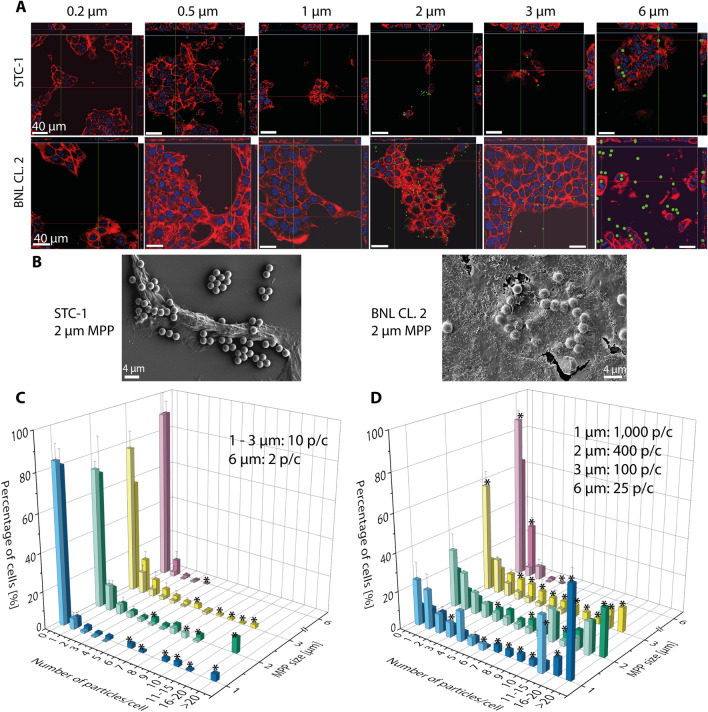
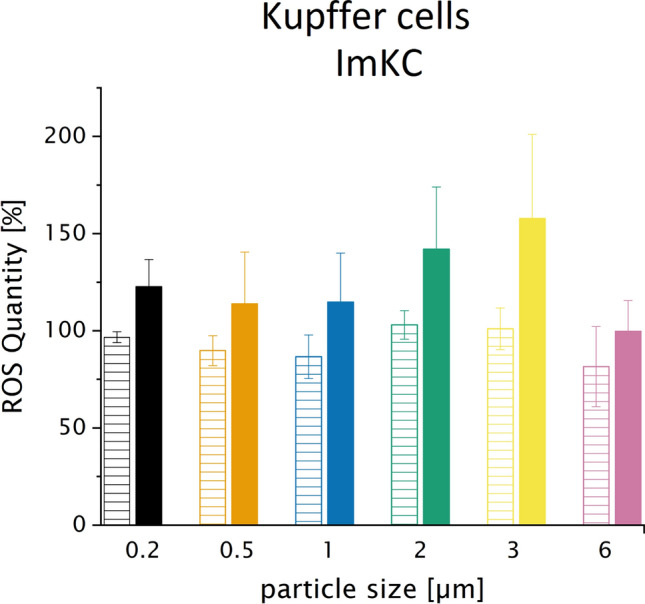
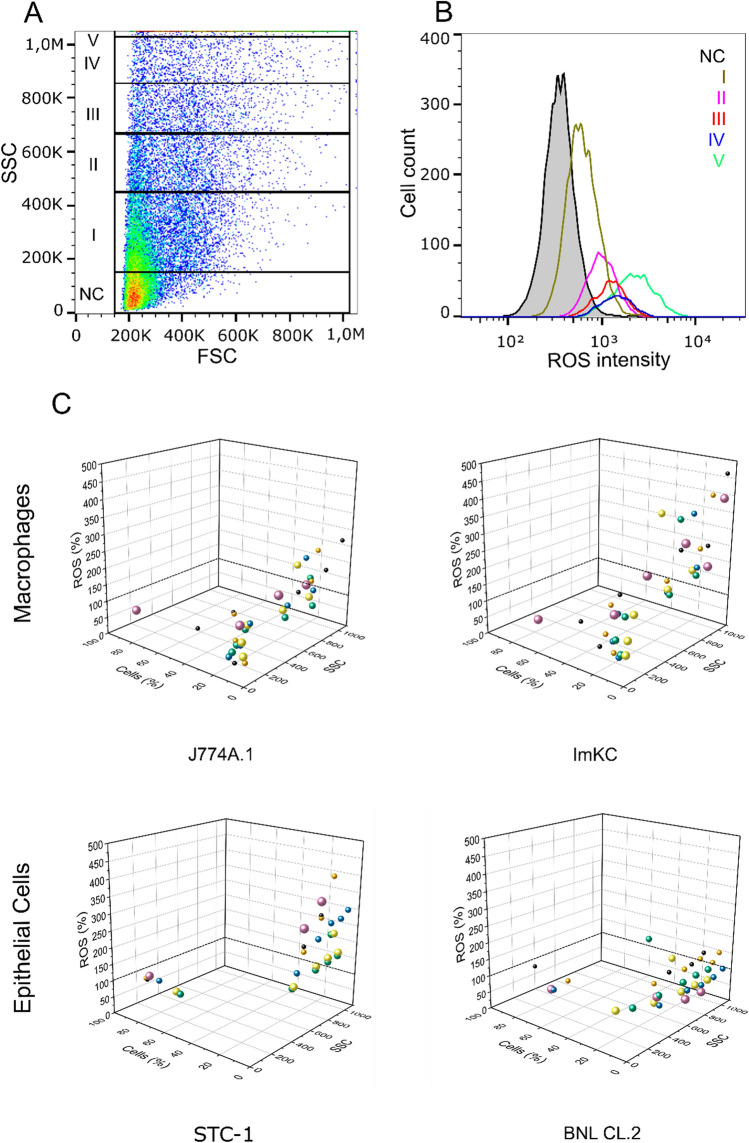
Microplastic (MP) contamination has been identified as an ecological problem with an increasing impact on everyday life. Yet, possible effects of MP at the cellular level are still poorly understood. Here, the interaction of murine macrophages (J774A.1, ImKC) and epithelial cells (STC-1, BNL CL.2) with well-characterized poly(styrene) MP particles (MPP) of varying sizes (0.2-6.0 µm) was studied. Macrophages are expected to actively engulf particles which could be confirmed in this study, while epithelial cells are found in tissues with direct contact with ingested or inhaled MPP. Here, the epithelial cells from both investigated cell lines did not ingest MPP in significant numbers. Concomitantly, no cytotoxic effects nor any influence on cellular proliferation were observed. Cells from the two macrophage cell lines showed high ingestion of MPP of all sizes, but cytotoxic effects were observed only for one of them (ImKC) and only at MPP concentrations above 250 µg/mL. Indications of cellular stress as well as effects on cell proliferation were observed for cell populations with high particle cell interactions.
微塑料 (MP) 污染已被确定为对日常生活影响日益增加的生态问题。然而,MP 在细胞水平上的可能影响仍知之甚少。在这里,研究了具有不同大小(0.2-6.0 µm)的经过充分表征的聚苯乙烯 MP 颗粒 (MPP) 与鼠源巨噬细胞 (J774A.1, ImKC) 和上皮细胞 (STC-1, BNL CL.2) 的相互作用。预计巨噬细胞将主动吞噬颗粒,本研究中可以证实这一点,而上皮细胞存在于与摄入或吸入的 MPP 直接接触的组织中。在这里,来自两种被研究的细胞系的上皮细胞没有大量吞噬 MPP。同时,没有观察到细胞毒性作用或对细胞增殖的任何影响。两种巨噬细胞系的细胞均表现出对所有大小的 MPP 的高吞噬作用,但仅在其中一种(ImKC)和仅在 MPP 浓度高于 250 µg/mL 时才观察到细胞毒性作用。在具有高颗粒-细胞相互作用的细胞群体中观察到细胞应激的迹象以及对细胞增殖的影响。