Meguins Lucas Crociati, Rocha Andre Salotto, Laurenti Matheus Rodrigo, de Morais Dionei Freitas
Department of Neurosurgery, Fundação Faculdade Regional de Medicina de São José do Rio Preto (FUNFARME), São José do Rio Preto, São Paulo, Brazil.
Surg Neurol Int. 2021 Jul 12;12:346. doi: 10.25259/SNI_514_2021. eCollection 2021.
Coronavirus Disease 2019 (COVID-19) pandemic raised global attention especially due to the severe acute respiratory symptoms associated to it. However, almost one third of patients also develop neurological symptoms. The aim of the present study is to describe the case of a previously health adult that evolved cerebral ventricular empyema in the IV ventricle during COVID-19 infection treatment.
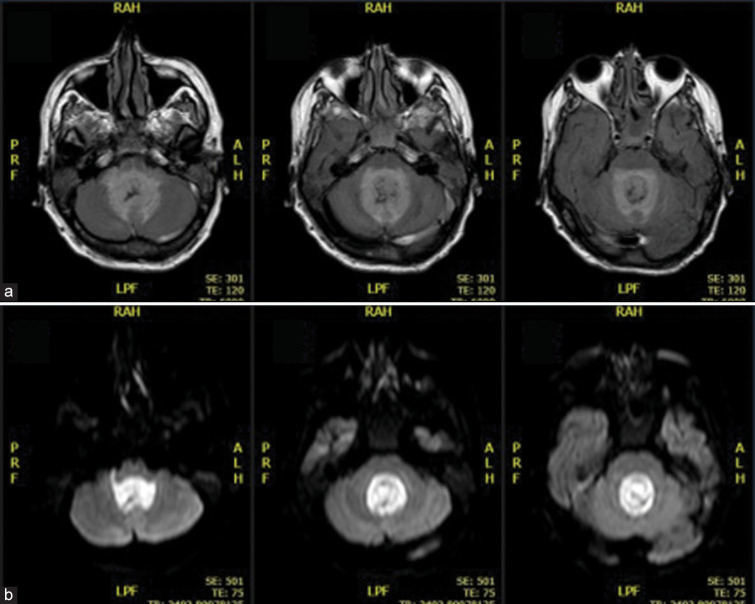
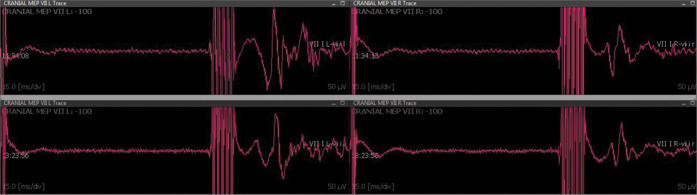
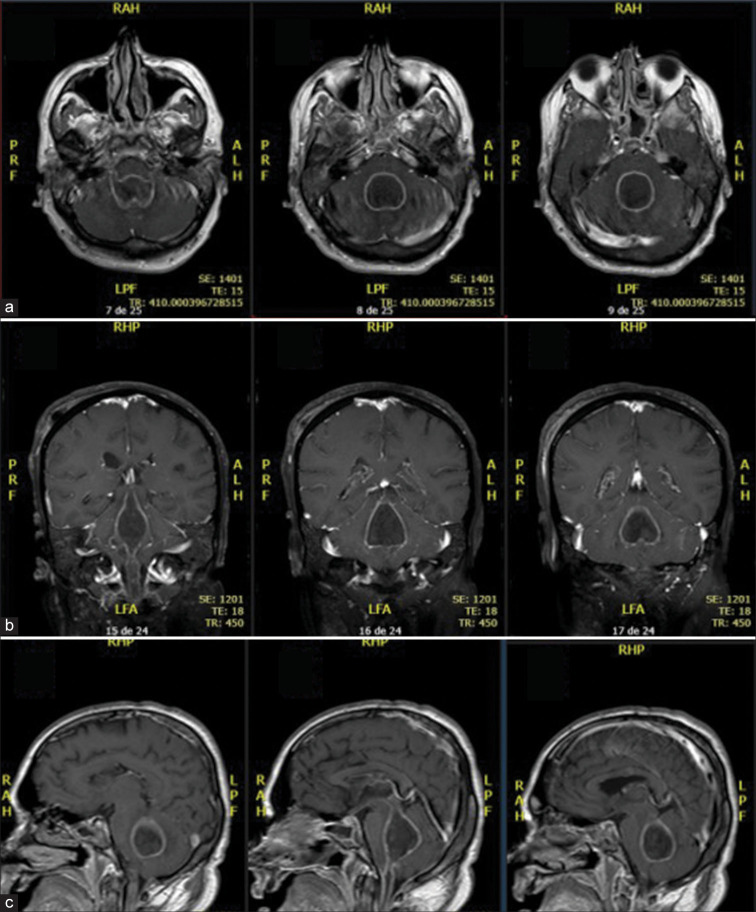
A 49-year-old man with COVID-19 developed pneumonia caused by multidrug-resistant . After treating adequate treatment, sedation was switched off without showing appropriate awakening. Brain CT was performed with evidence of communicating hydrocephalus. External ventricular shunt (EVD) was implant with intraoperative cerebrospinal fluid suggestive of meningitis with a positive culture for oxacillin-sensitive . Twenty days after EVD, meningitis treatment was finished and with 2 negative cultures, conversion to ventriculoperitoneal shunt was performed. In the following week, during the evaluation of the patient in intensive care, quadriplegia and absence of spontaneous respiratory movement were evidenced, just maintaining head movement. Brain MRI was performed with a diagnosis of ventriculitis associated with pus collections on the IV ventricle. The patient underwent microsurgical drainage removal of the shunt, with a positive intraventricular collection culture for carbapenemase and multidrug-resistant , without improvement in the neurological condition. After 14 weeks of hospitalization, the patient died.
It is well known that COVID-19 has potential to directly attack and cause severe damage to the central nervous system; however, ventricular empyema is an extremely rare life-threatening complication.
2019年冠状病毒病(COVID-19)大流行引起了全球关注,特别是因其相关的严重急性呼吸道症状。然而,近三分之一的患者还会出现神经系统症状。本研究的目的是描述一名先前健康的成年人在COVID-19感染治疗期间发生第四脑室脑室积脓的病例。
一名患有COVID-19的49岁男性发生了由多重耐药菌引起的肺炎。经过充分治疗后,停用镇静剂,但患者未出现适当的苏醒。进行脑部CT检查,发现有交通性脑积水的证据。植入了外部脑室引流管(EVD),术中脑脊液提示存在脑膜炎,对苯唑西林敏感的培养结果呈阳性。EVD置入20天后,脑膜炎治疗结束,两次培养结果均为阴性,遂进行了脑室-腹腔分流术。在接下来的一周,在重症监护室对患者进行评估时,发现患者四肢瘫痪且无自主呼吸运动,仅能保持头部活动。进行脑部MRI检查,诊断为与第四脑室积脓相关的脑室炎。患者接受了显微手术引流并取出分流管,脑室内积液培养对碳青霉烯酶和多重耐药菌呈阳性,神经系统状况无改善。住院14周后,患者死亡。
众所周知,COVID-19有可能直接攻击并对中枢神经系统造成严重损害;然而,脑室积脓是一种极其罕见的危及生命的并发症。