Pascual Juan Silvestre Grecia, Chan Kevin Ivan Peñaverde, Khu Kathleen Joy Ong-Lopez
Division of Neurosurgery, Department of Neurosciences, Philippine General Hospital, College of Medicine, University of the Philippines Manila, Manila, Philippines.
Surg Neurol Int. 2021 Jul 12;12:348. doi: 10.25259/SNI_405_2021. eCollection 2021.
Cough is one of the most common symptoms of coronavirus disease 2019 (COVID-19) infection. This relatively benign symptom may lead to serious sequelae, especially in postoperative neurosurgical patients.
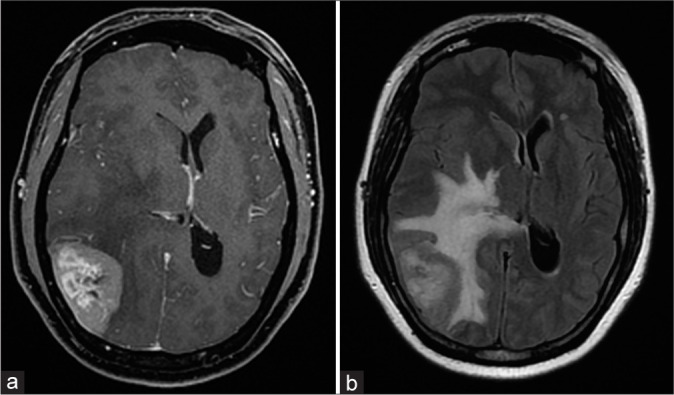
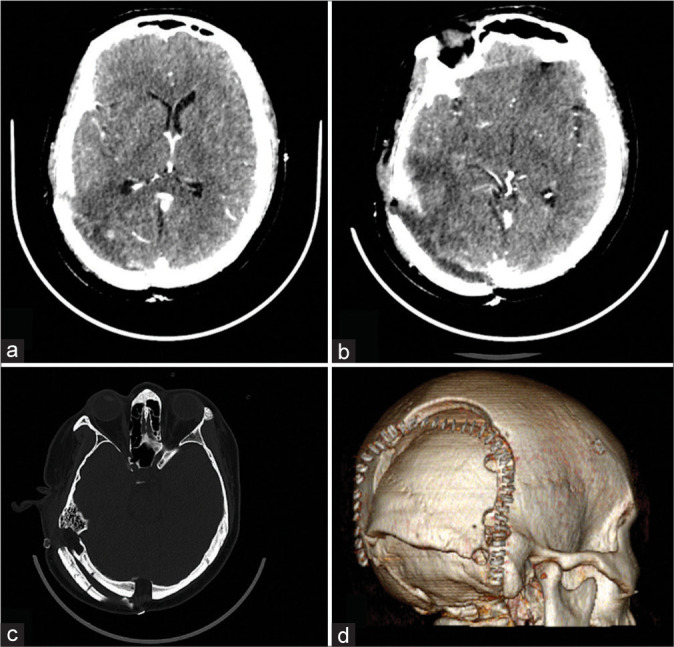
Here, we report a case of bone flap displacement, pseudomeningocele formation, and consequent cerebrospinal fluid leak in a patient with COVID-19 infection who recently underwent craniotomy for excision of cerebral metastasis. We highlight the pathophysiologic mechanisms of cough that may cause increased intracranial pressure (ICP), leading to the postoperative morbidity.
Aside from additional risks to the patient's health and increased treatment costs, these complications also lead to subsequent delays in the management of the underlying disease. Symptomatic treatment of cough is advised to prevent complications resulting from increased ICP.
咳嗽是2019冠状病毒病(COVID-19)感染最常见的症状之一。这种相对良性的症状可能会导致严重的后遗症,尤其是在神经外科术后患者中。
在此,我们报告一例COVID-19感染患者发生骨瓣移位、假性脑膜膨出形成及随后的脑脊液漏,该患者近期接受了开颅手术以切除脑转移瘤。我们强调了咳嗽可能导致颅内压(ICP)升高从而引起术后发病的病理生理机制。
除了给患者健康带来额外风险和增加治疗成本外,这些并发症还会导致基础疾病治疗的后续延迟。建议对咳嗽进行对症治疗以预防因ICP升高导致的并发症。