Centre for Biochemical Pharmacology, William Harvey Research Institute, Barts and The London School of Medicine and Dentistry, Queen Mary University of London, United Kingdom (U.K.D., M.S.).
CSIR-Institute of Genomics and Integrative Biology, New Delhi, India (U.K.D., P.B., S.N., V.M., A.A., M.S.).
Arterioscler Thromb Vasc Biol. 2021 Oct;41(10):2598-2615. doi: 10.1161/ATVBAHA.120.316389. Epub 2021 Aug 5.
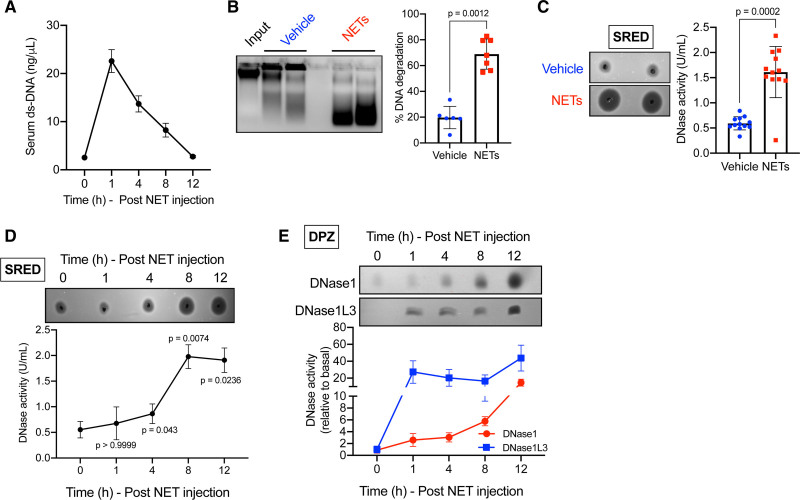
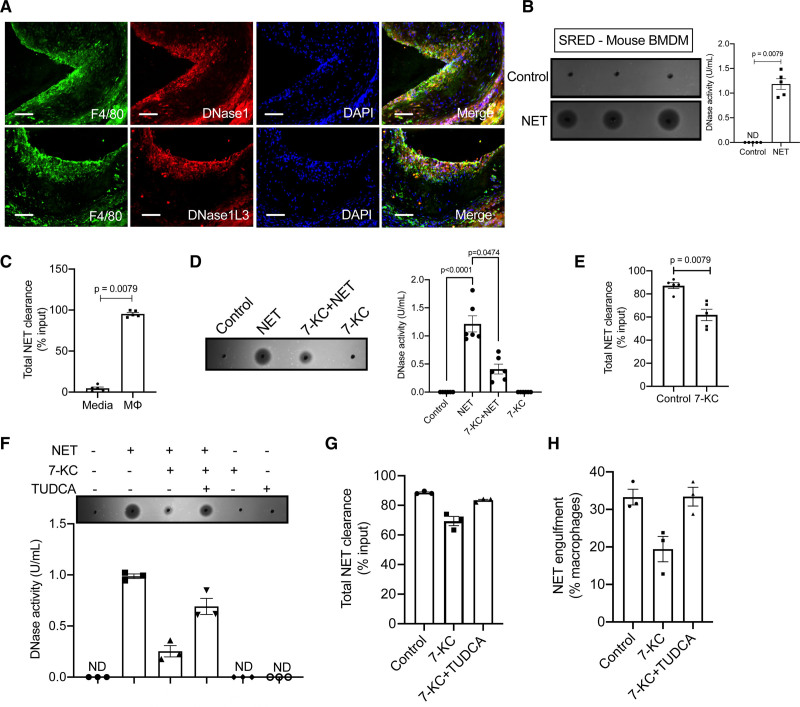
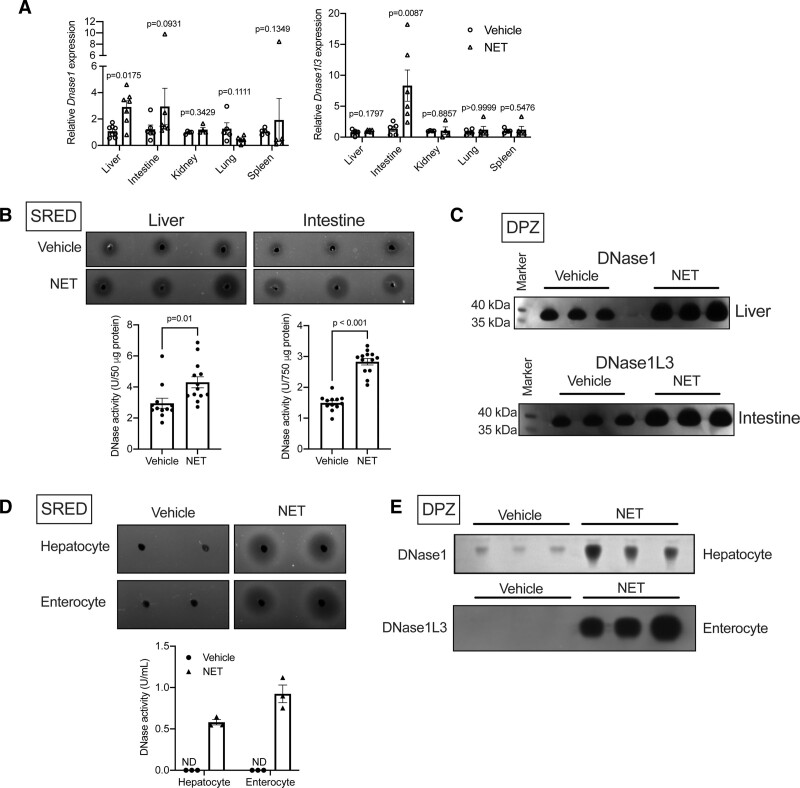
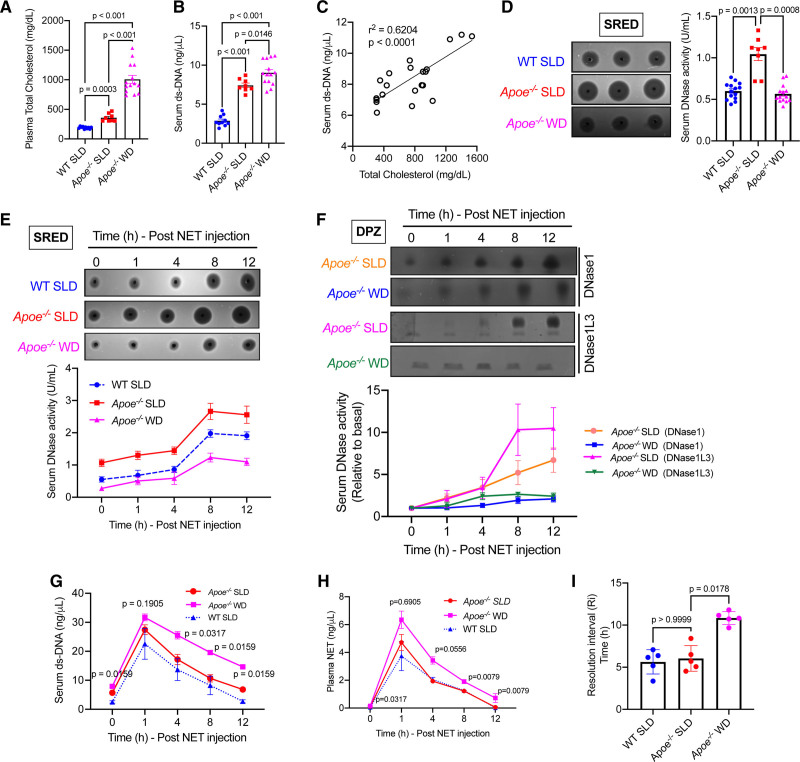
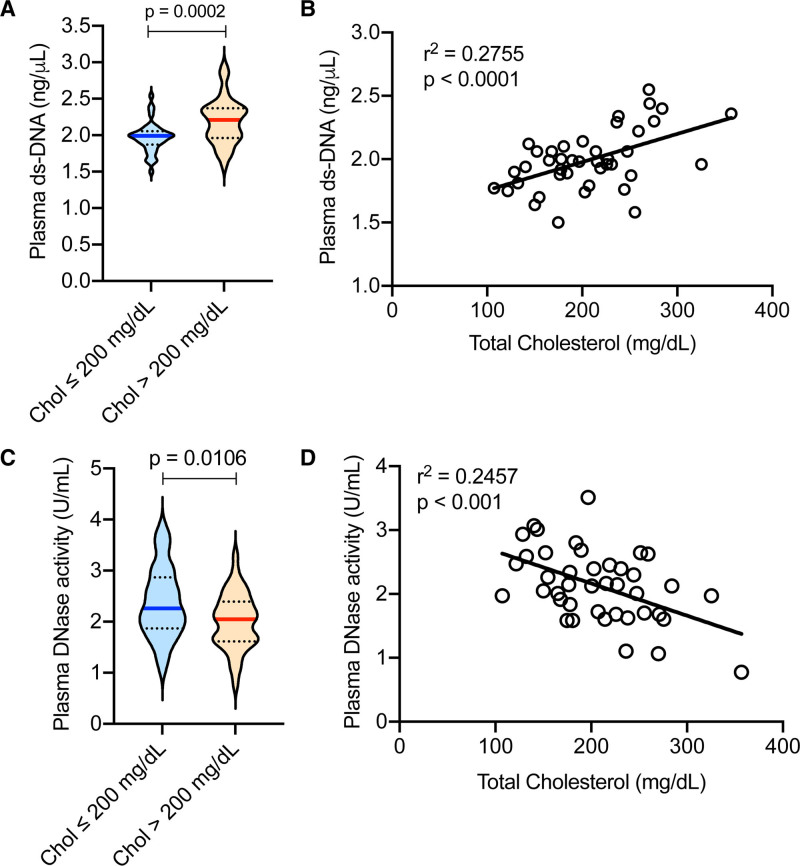
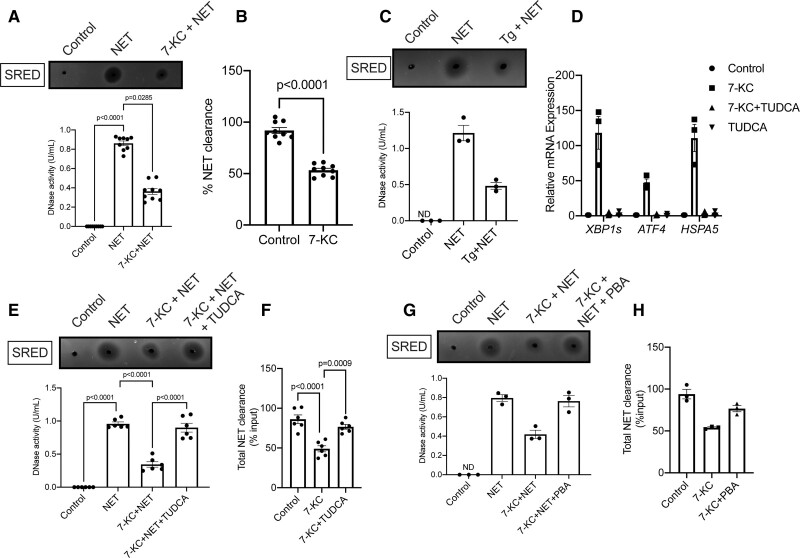
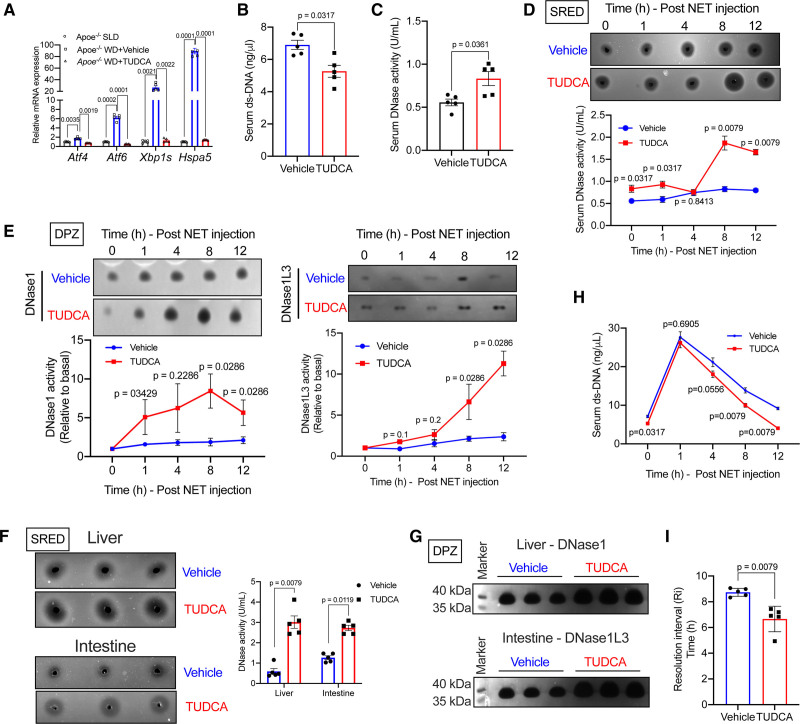
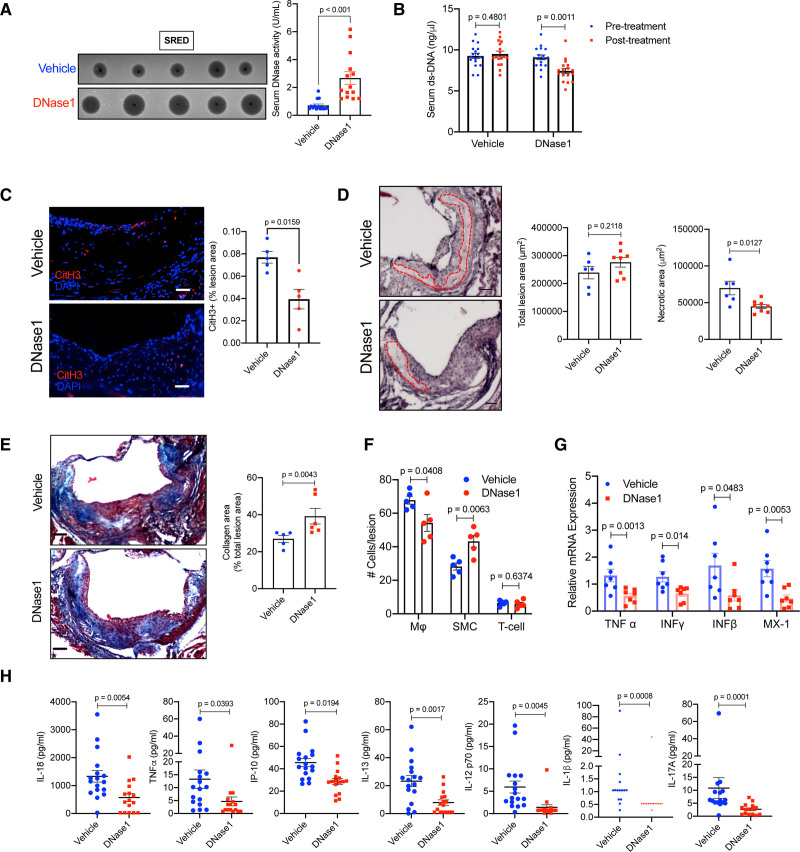
Objective: Hypercholesterolemia-induced NETosis and accumulation of neutrophil extracellular traps (NETs) in the atherosclerotic lesion exacerbates inflammation and is causally implicated in plaque progression. We investigated whether hypercholesterolemia additionally impairs the clearance of NETs mediated by endonucleases such as DNase1 and DNase1L3 and its implication in advanced atherosclerotic plaque progression. Approach and Results: Using a mouse model, we demonstrate that an experimental increase in the systemic level of NETs leads to a rapid increase in serum DNase activity, which is critical for the prompt clearance of NETs and achieving inflammation resolution. Importantly, hypercholesterolemic mice demonstrate an impairment in this critical NET-induced DNase response with consequent delay in the clearance of NETs and defective inflammation resolution. Administration of tauroursodeoxycholic acid, a chemical chaperone that relieves endoplasmic reticulum stress, rescued the hypercholesterolemia-induced impairment in the NET-induced DNase response suggesting a causal role for endoplasmic reticulum stress in this phenomenon. Correction of the defective DNase response with exogenous supplementation of DNase1 in Apoe-/- mice with advanced atherosclerosis resulted in a decrease in plaque NET content and significant plaque remodeling with decreased area of plaque necrosis and increased collagen content. From a translational standpoint, we demonstrate that humans with hypercholesterolemia have elevated systemic extracellular DNA levels and decreased plasma DNase activity. Conclusions: These data suggest that hypercholesterolemia impairs the NET-induced DNase response resulting in defective clearance and accumulation of NETs in the atherosclerotic plaque. Therefore, strategies aimed at rescuing this defect could be of potential therapeutic benefit in promoting inflammation resolution and atherosclerotic plaque stabilization.
高胆固醇血症诱导的中性粒细胞胞外诱捕网(NET)形成和在动脉粥样硬化病变中的积累加剧了炎症,并与斑块进展有关。我们研究了高胆固醇血症是否会进一步损害内切核酸酶(如 DNase1 和 DNase1L3)介导的 NET 清除,并探讨其对晚期动脉粥样硬化斑块进展的影响。
利用小鼠模型,我们证明系统性 NET 水平升高会导致血清 DNase 活性迅速增加,这对于 NET 的快速清除和炎症缓解至关重要。重要的是,高胆固醇血症小鼠在这种关键的 NET 诱导的 DNase 反应中存在缺陷,导致 NET 清除延迟和炎症缓解受损。使用牛磺熊脱氧胆酸(一种可缓解内质网应激的化学伴侣)进行治疗,可挽救高胆固醇血症引起的 NET 诱导的 DNase 反应缺陷,提示内质网应激在这一现象中起因果作用。在晚期动脉粥样硬化的 Apoe-/- 小鼠中,通过外源性补充 DNase1 纠正缺陷的 DNase 反应,可降低斑块 NET 含量,并导致斑块重塑,斑块坏死面积减少,胶原含量增加。从转化的角度来看,我们证明高胆固醇血症患者的系统性细胞外 DNA 水平升高,血浆 DNase 活性降低。
这些数据表明,高胆固醇血症损害了 NET 诱导的 DNase 反应,导致 NET 在动脉粥样硬化斑块中的清除和积累缺陷。因此,旨在挽救这种缺陷的策略可能具有促进炎症缓解和动脉粥样硬化斑块稳定的潜在治疗益处。