Zhao Yu-Fei, Zuo Zi-Ang, Li Zhe-Yun, Yuan Ye, Hong Shi-Chai, Fu Wei-Guo, Zhou Bin, Wang Li-Xin
Department of Vascular Surgery, Zhongshan Hospital, Fudan University, 200032, Shanghai, China.
Vascular Surgery Institute of Fudan University, Fudan University, 200032, Shanghai, China.
Nat Commun. 2024 Dec 30;15(1):10736. doi: 10.1038/s41467-024-55038-8.
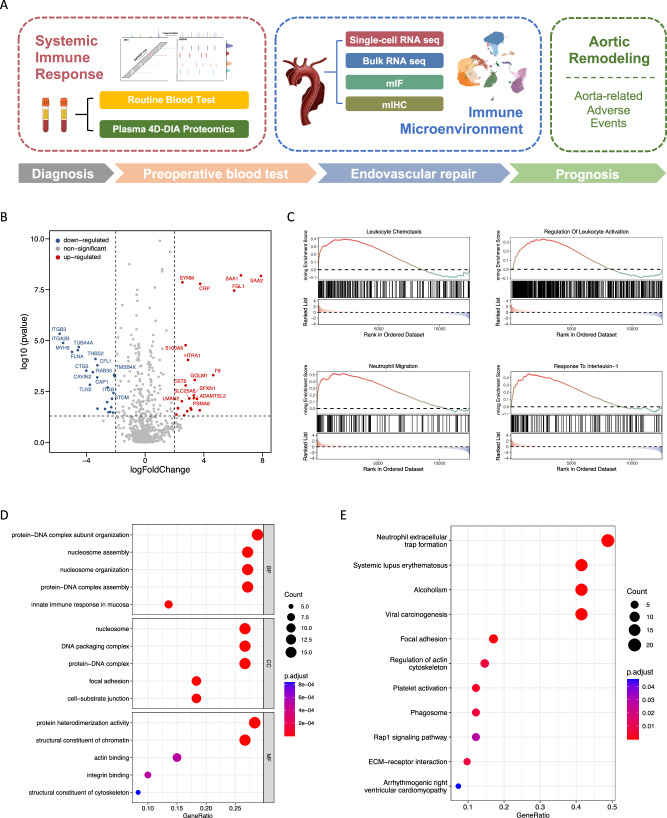
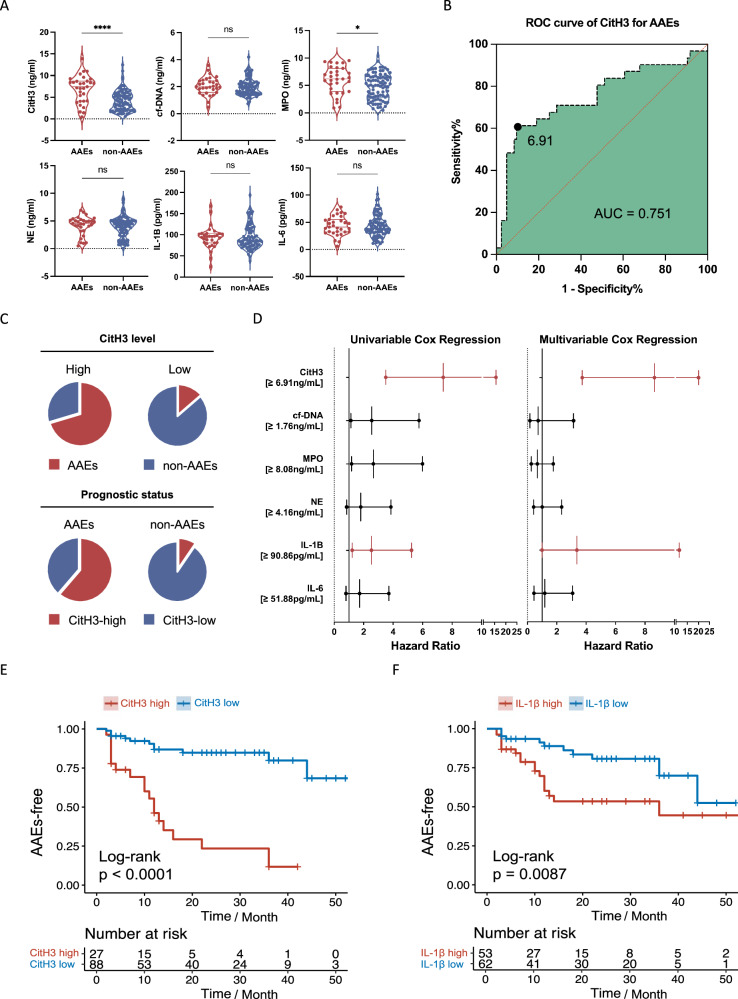
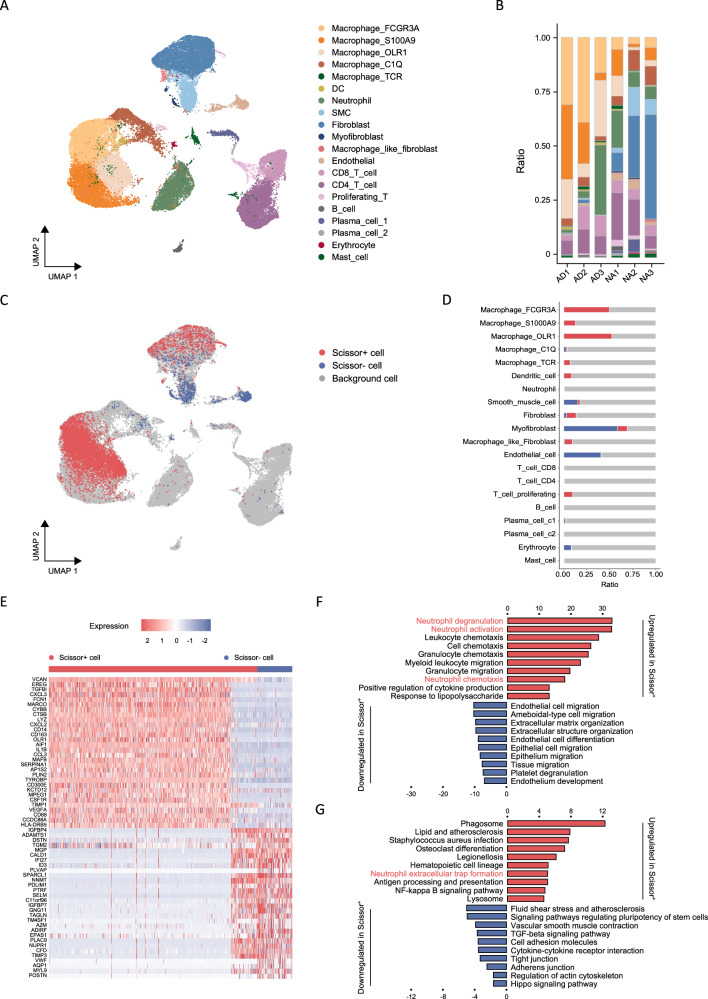
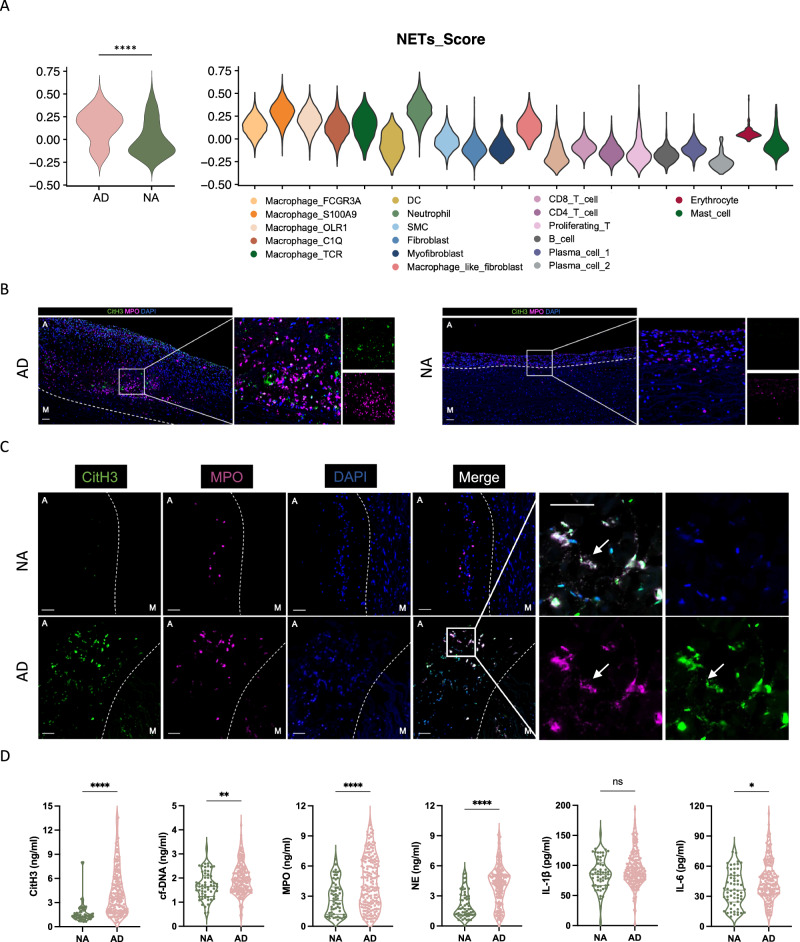
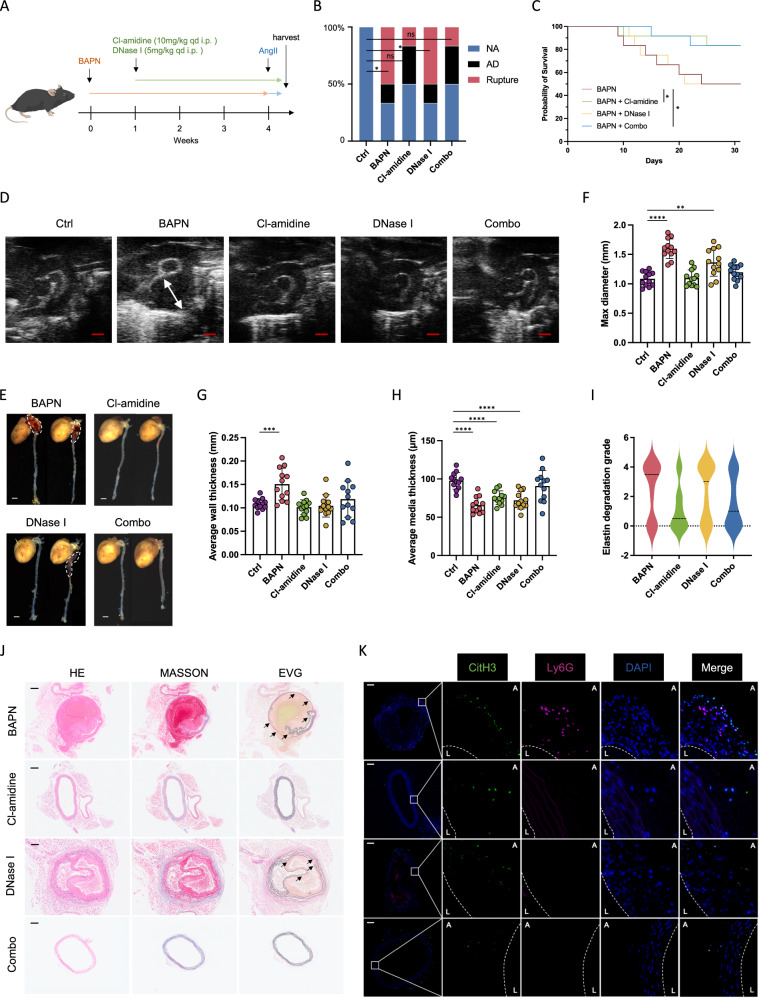
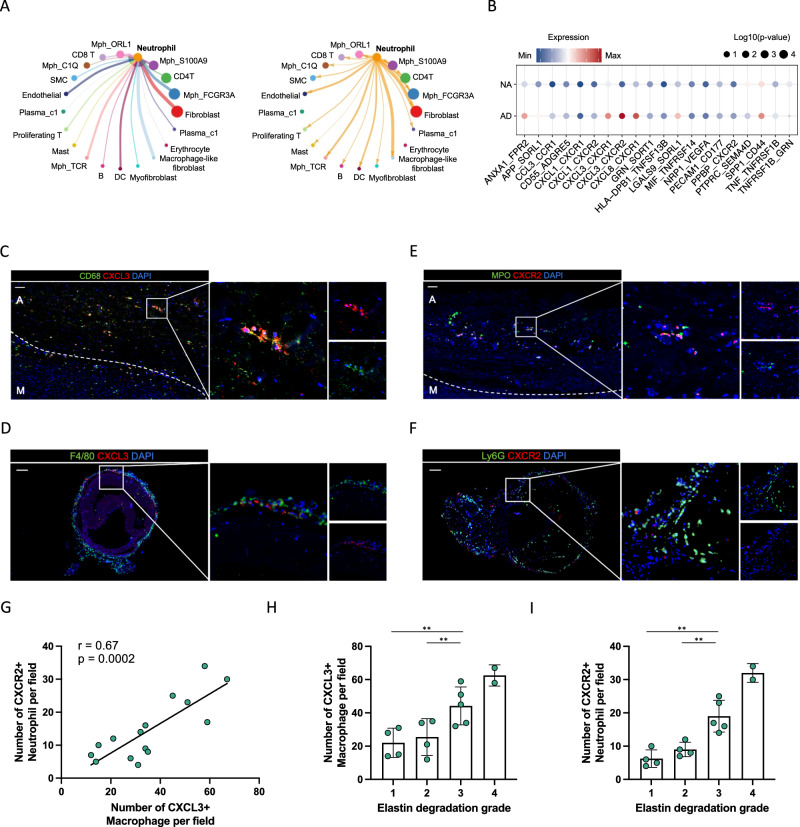
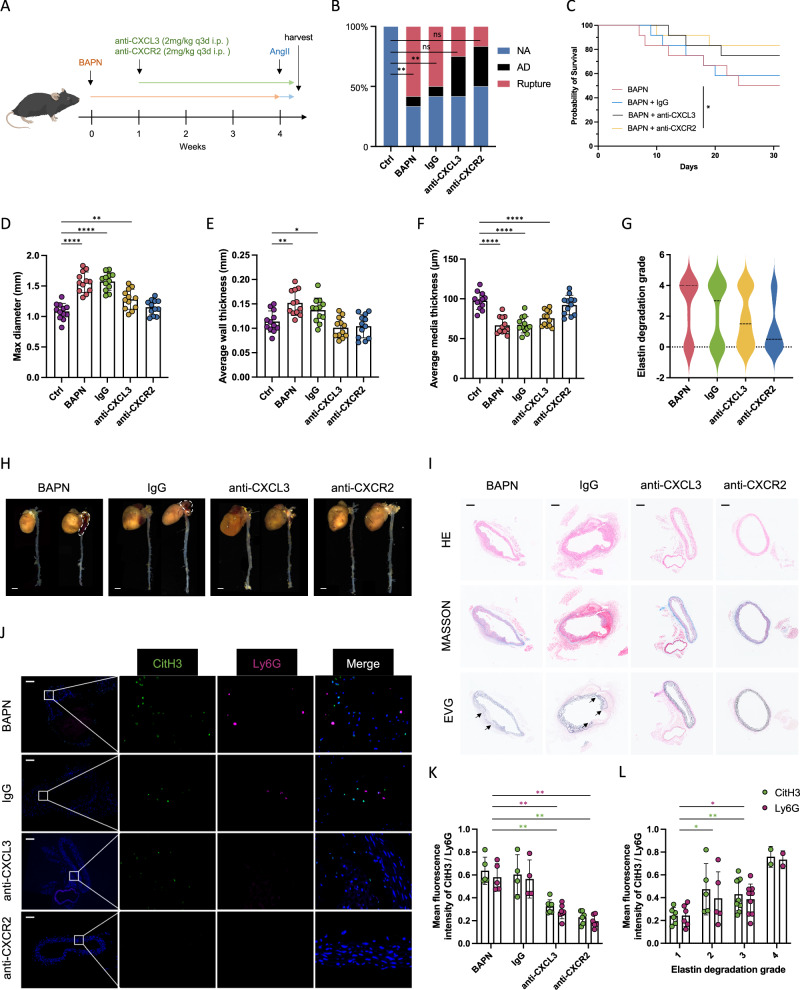
Adverse aortic remodeling increases the risk of aorta-related adverse events (AAEs) after thoracic endovascular aortic repair (TEVAR) and affects the overall prognosis of aortic dissection (AD). It is imperative to delve into the exploration of prognostic indicators to streamline the identification of individuals at elevated risk for postoperative AAEs, and therapeutic targets to optimize the efficacy of TEVAR for patients with AD. Here, we perform proteomic and single-cell transcriptomic analyses of peripheral blood and aortic lesions, respectively, from patients with AD and healthy subjects. The integrated multi-omics profiling identifies that highly phenotype-associated macrophages orchestrate neutrophil extracellular traps (NETs) through CXCL3/CXCR2 axis, thereby promoting the development of AD. Increased NETs formation is a defining feature of systemic immunity and aortic microenvironment of AD. Inhibiting NETs formation through the blockade of citrullinated histone H3 or CXCL3/CXCR2 axis ameliorates the progression and rupture of aortic dissection in male mice. The plasma level of citrullinated histone H3 predicts AAEs following endovascular therapy, facilitating the risk stratification and prognostic evaluation for patients with AD.
不良主动脉重塑会增加胸主动脉腔内修复术(TEVAR)后与主动脉相关的不良事件(AAEs)风险,并影响主动脉夹层(AD)的总体预后。深入探索预后指标以简化对术后AAEs高危个体的识别,以及探索治疗靶点以优化TEVAR对AD患者的疗效势在必行。在此,我们分别对AD患者和健康受试者的外周血和主动脉病变进行了蛋白质组学和单细胞转录组学分析。综合多组学分析表明,高度表型相关的巨噬细胞通过CXCL3/CXCR2轴协调中性粒细胞胞外陷阱(NETs),从而促进AD的发展。NETs形成增加是AD全身免疫和主动脉微环境的一个决定性特征。通过阻断瓜氨酸化组蛋白H3或CXCL3/CXCR2轴抑制NETs形成可改善雄性小鼠主动脉夹层的进展和破裂。瓜氨酸化组蛋白H3的血浆水平可预测血管内治疗后的AAEs,有助于AD患者的风险分层和预后评估。