Division of Orthopaedic and Trauma Surgery, Department of Surgery, University Hospitals of Geneva, 4 Rue Gabrielle-Perret-Gentil, CH-1211, Geneva 14, Switzerland.
J Orthop Surg Res. 2021 Aug 4;16(1):477. doi: 10.1186/s13018-021-02622-z.
Femoral neck fractures (FNF) are frequent in the elderly population, and surgical management is indicated in the vast majority of cases. Osteosynthesis is an alternative to arthroplasty for non-displaced FNF. Triple screw construct (TS) and the dynamic hip screw system (DHS) are considered gold standards for osteosynthesis. The newly available femoral neck system (FNS) currently lacks evidence as to whether it is a valid alternative to TS and DHS. The purpose of this study was to evaluate the short-term clinical and radiological outcomes after non-displaced (Garden I and II) FNF osteosynthesis using TS, DHS, and FNS.
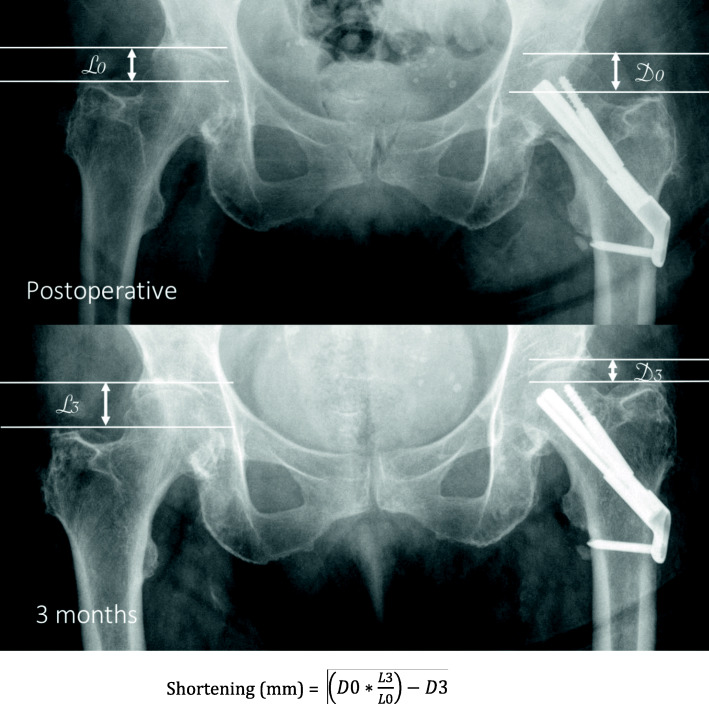
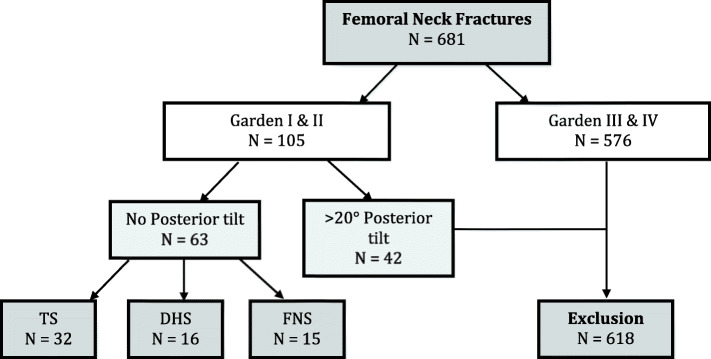
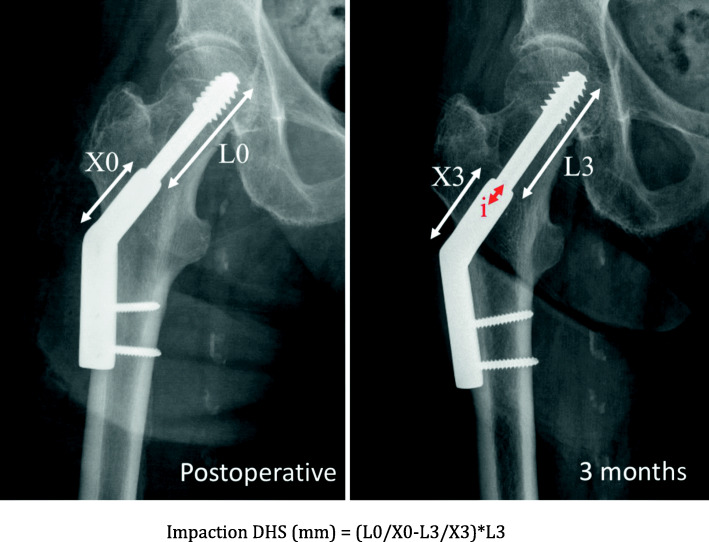
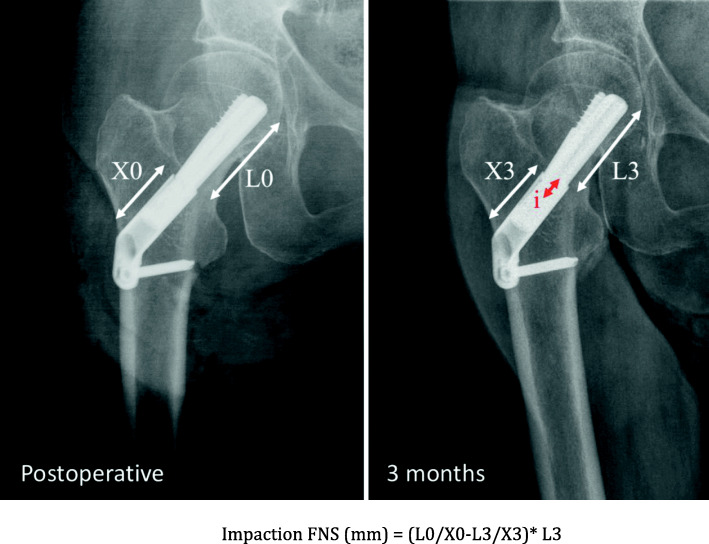
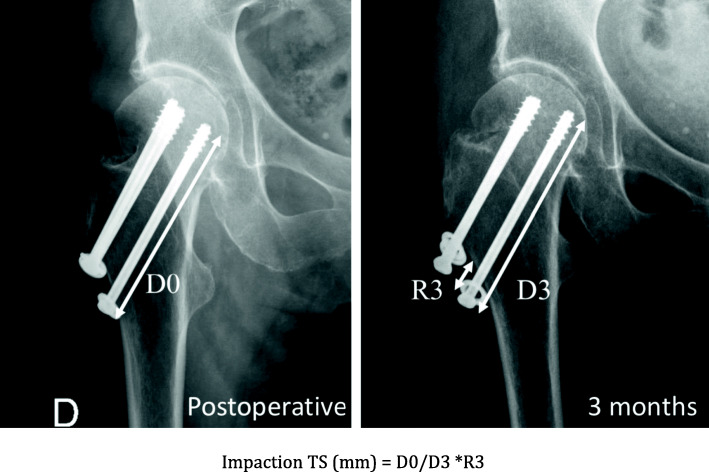
All the patients of the author's institution aged ≥ 75 years with a non-displaced (Garden I and II) FNF eligible for osteosynthesis between November 2015 and December 2019 were included in this single-center retrospective non-randomized study. Patients were treated with either TS, DHS, or FNS depending on the surgeon's preference. Clinical data (age, gender, ASA score, duration of surgery, need for blood transfusion and number of packed red blood cells transfused, surgical site complications, length of stay, discharge location, postoperative medical complications and readmission within 30 days, and mortality within 3 months) were extracted from the patients' charts. The radiological analysis assessed the fracture classification, fracture impaction, and proximal femur shortening at 3 and 6 months using the institutional imaging software.
Baseline characteristics in the TS (n = 32), DHS (n = 16), and FNS (n = 15) groups were similar with respect to age (mean 85 years), gender (female to male ratio 4:1), and ASA score. There were no significant differences across the groups for the need for blood transfusion, surgical site complications, length of stay, postoperative medical complications and readmission within 30 days, discharge location, and mortality within 3 months. The duration of surgery was significantly lower in the FNS group (43.3 vs 68.8 min; p < 0.001). The radiological assessment found similar impaction (5.2 mm ± 4.8) and shortening (8.6 mm ± 8.2) in all groups that did not seem to progress after 3 months.
The FNS appears to be a valid alternative implant for FNF osteosynthesis and is associated with a shorter operative time than TS and DHS. Short-term clinical and radiological outcomes of FNS are similar to TS and DHS implants. Further long-term multicenter randomized studies are however necessary to confirm these first results.
股骨颈骨折(FNF)在老年人群中很常见,绝大多数情况下需要手术治疗。对于无移位的 FNF,骨接合术是关节置换术的一种替代方法。三枚螺钉固定(TS)和动力髋螺钉系统(DHS)被认为是骨接合术的金标准。新出现的股骨颈系统(FNS)目前缺乏是否可作为 TS 和 DHS 的有效替代物的证据。本研究旨在评估 TS、DHS 和 FNS 治疗无移位(Garden I 和 II)FNF 骨接合术的短期临床和影像学结果。
作者所在机构的所有年龄≥75 岁、符合骨接合术适应证的无移位(Garden I 和 II)FNF 患者均纳入本单中心回顾性非随机研究。根据外科医生的偏好,患者接受 TS、DHS 或 FNS 治疗。从患者病历中提取临床数据(年龄、性别、ASA 评分、手术时间、输血需求和输血量、手术部位并发症、住院时间、出院地点、术后医疗并发症和 30 天内再入院、3 个月内死亡率)。使用机构成像软件在 3 个月和 6 个月时评估骨折分类、骨折嵌插和股骨近端缩短情况。
TS(n=32)、DHS(n=16)和 FNS(n=15)组患者的基线特征在年龄(平均 85 岁)、性别(女性与男性比例为 4:1)和 ASA 评分方面相似。各组在输血需求、手术部位并发症、住院时间、术后医疗并发症和 30 天内再入院、出院地点和 3 个月内死亡率方面无显著差异。FNS 组手术时间明显缩短(43.3 分钟比 68.8 分钟;p<0.001)。影像学评估显示所有组的嵌插(5.2mm±4.8)和缩短(8.6mm±8.2)相似,且在 3 个月后似乎没有进展。
FNS 似乎是 FNF 骨接合术的有效替代植入物,与 TS 和 DHS 相比,手术时间更短。FNS 的短期临床和影像学结果与 TS 和 DHS 植入物相似。然而,需要进一步进行长期多中心随机研究以证实这些初步结果。