CAS Key Laboratory of Tissue Microenvironment and Tumor, Shanghai Institute of Nutrition and Health, University of Chinese Academy of Sciences, Chinese Academy of Sciences, Shanghai, China.
Shanghai Institute of Immunology, Shanghai Key Laboratory for Tumor Microenvironment and Inflammation, Shanghai Jiao Tong University School of Medicine, Shanghai, China.
Mucosal Immunol. 2021 Nov;14(6):1306-1322. doi: 10.1038/s41385-021-00431-5. Epub 2021 Aug 4.
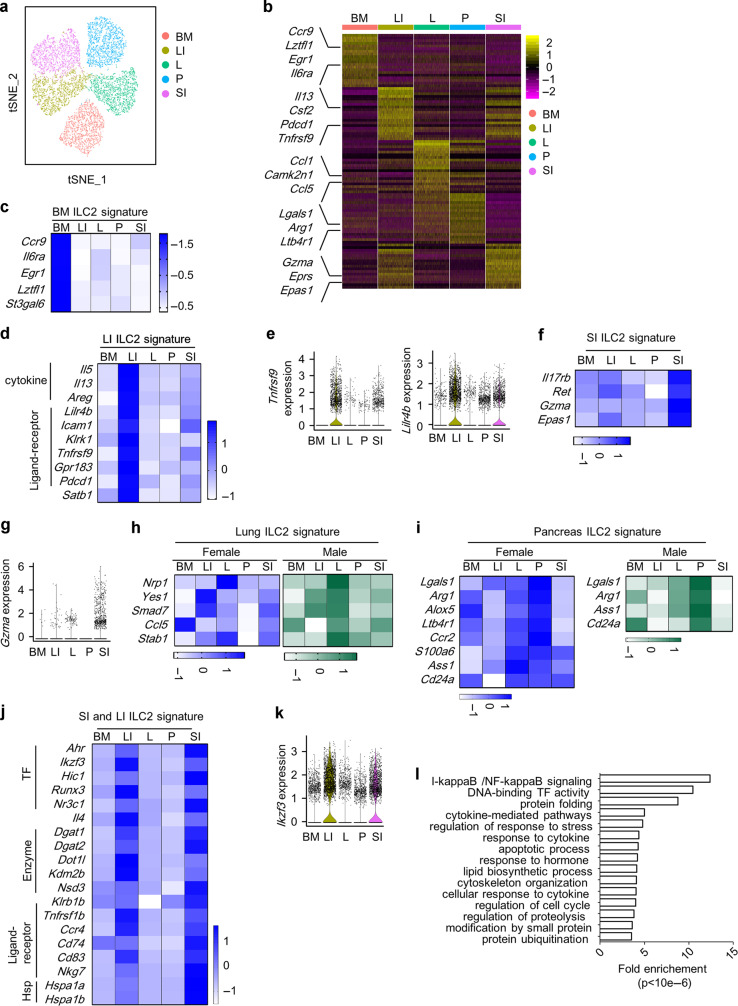
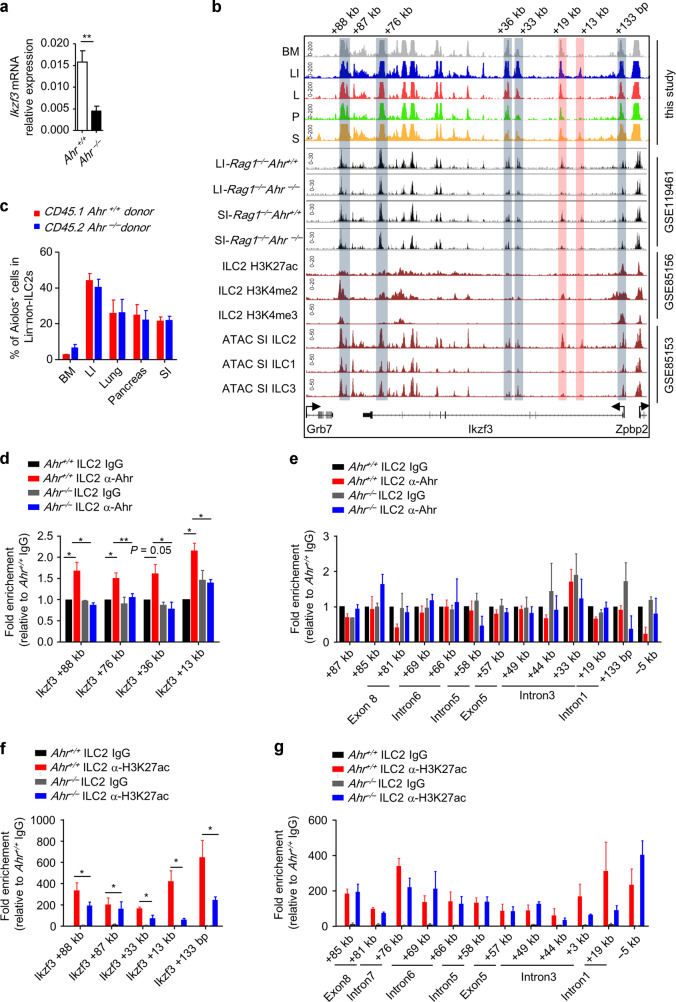
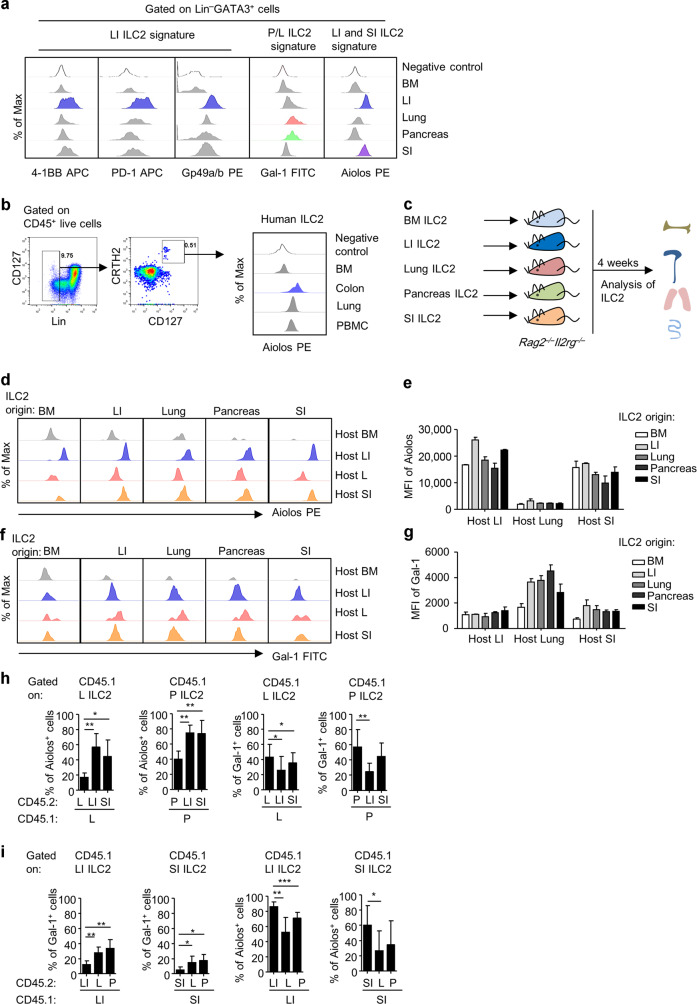
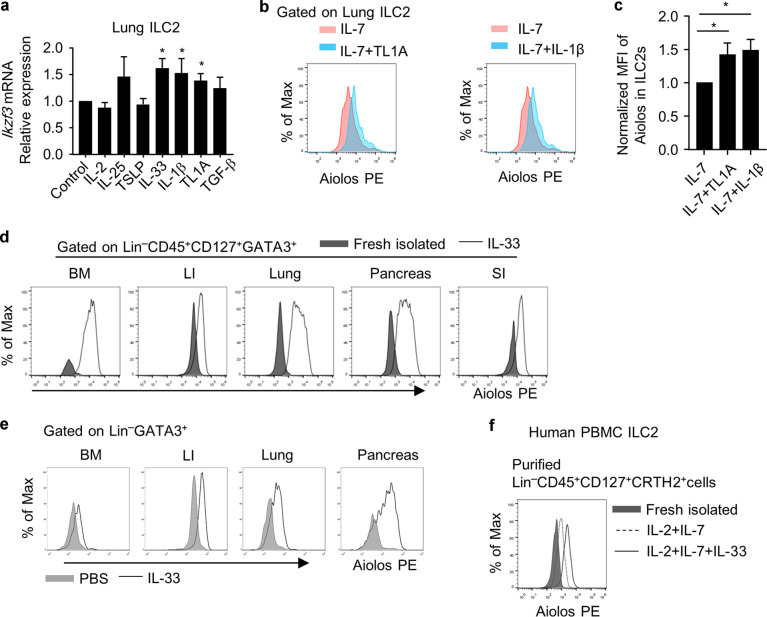
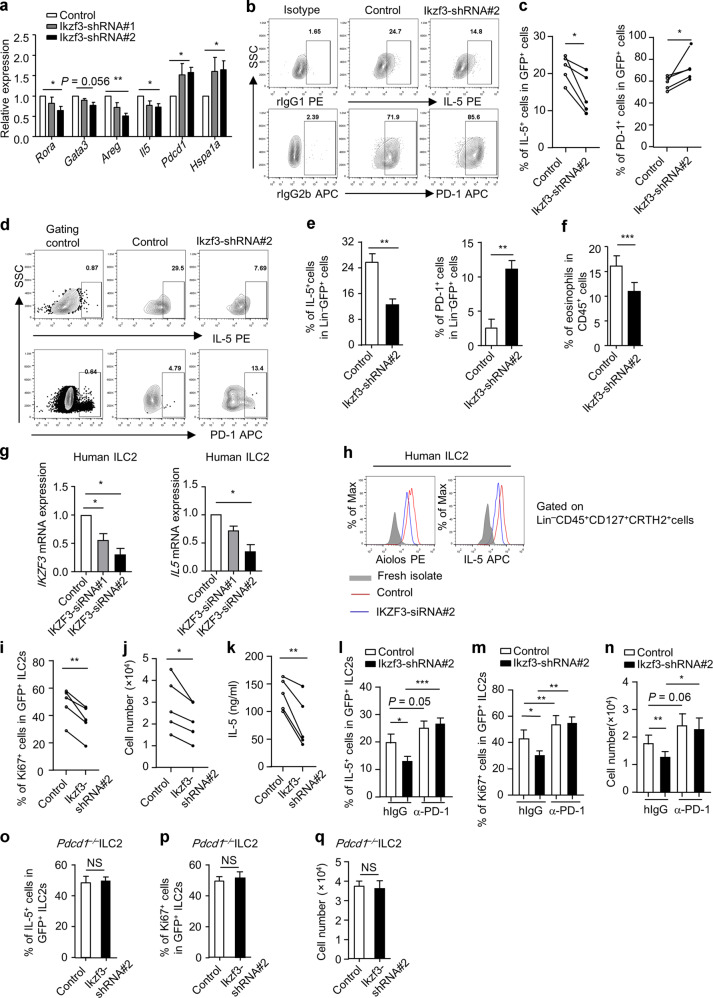
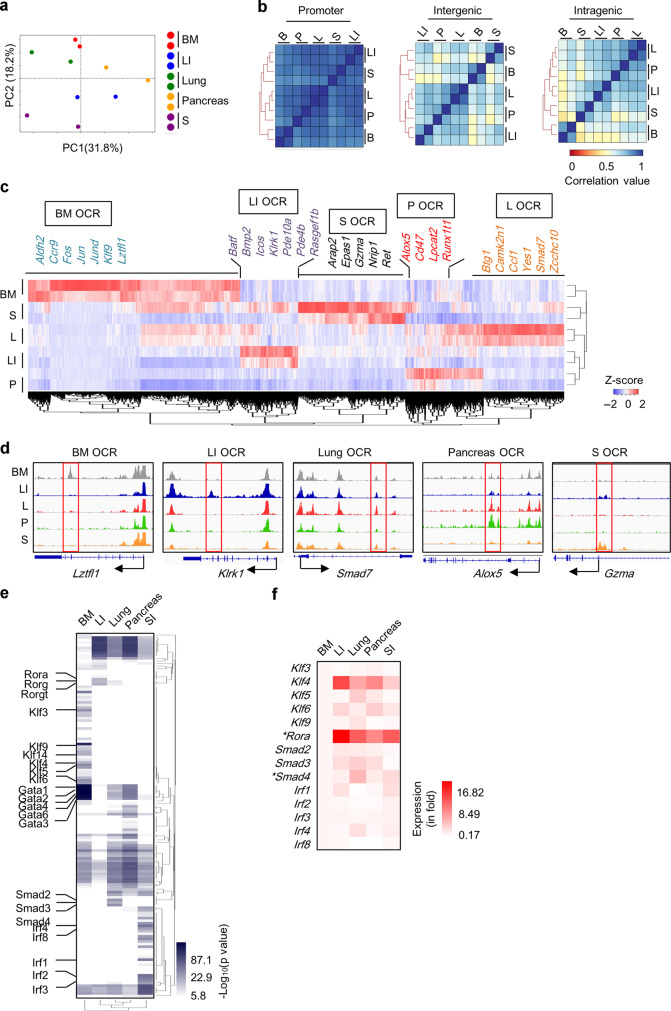
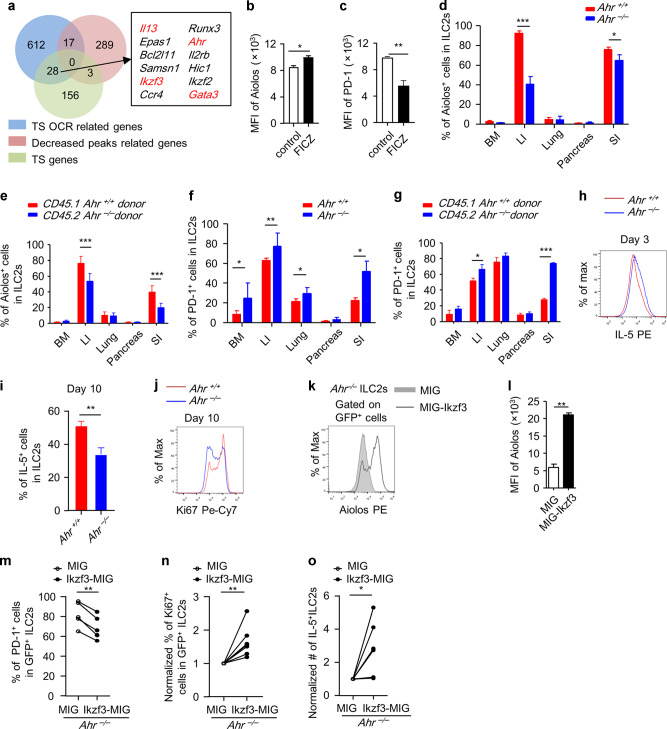
Group 2 innate lymphoid cells (ILC2s) manifest tissue heterogeneity and are crucial modulators of regional immune responses. The molecular mechanisms regulating tissue ILC2 properties remain elusive. Here, we interrogate the signatures of ILC2s from five tissues at the transcriptome and epigenetic level. We have found that tissue microenvironment strongly shapes ILC2 identities. The intestine induces AiolosILC2s, whereas lung and pancreas enhance Galectin-1ILC2s. Though being a faithful gut ILC2 feature under the steady state, Aiolos is induced in non-intestinal ILC2s by pro-inflammatory cytokines. Specifically, IL-33 stimulates Aiolos expression in both human and mouse non-intestinal ILC2s. Functionally, Aiolos facilitates eosinophil recruitment by supporting IL-5 production and proliferation of ST2ILC2s through inhibiting PD-1. At the epigenetic level, ILC2 tissue characters are imprinted by open chromatin regions (OCRs) at non-promoters. Intestinal-specific transcription factor aryl hydrocarbon receptor (Ahr) binds to Ikzf3 (encoding Aiolos) locus, increases the accessibility of an intestinal ILC2-specific OCR, and promotes the Ikzf3 transcription by enhancing H3K27ac. Consequently, Ahr prevents ILC2s entering an "exhausted-like" state through sustaining Aiolos expression. Our work elucidates mechanism of ILC2 tissue adaptation and highlights Aiolos as a potential target of type 2 inflammation.
2 型固有淋巴细胞(ILC2s)表现出组织异质性,是区域免疫反应的关键调节因子。调控组织 ILC2 特性的分子机制仍不清楚。在这里,我们在转录组和表观遗传水平上研究了五种组织的 ILC2 特征。我们发现组织微环境强烈影响 ILC2 特性。肠道诱导 AiolosILC2s,而肺和胰腺增强 Galectin-1ILC2s。虽然在稳态下 Aiolos 是忠实的肠道 ILC2 特征,但在非肠道 ILC2s 中,促炎细胞因子诱导 Aiolos 表达。具体来说,IL-33 刺激人和小鼠非肠道 ILC2s 中 Aiolos 的表达。功能上,Aiolos 通过支持 IL-5 产生和 ST2ILC2s 的增殖来促进嗜酸性粒细胞募集,从而抑制 PD-1。在表观遗传水平上,ILC2 组织特征通过非启动子上的开放染色质区域(OCR)印记。肠道特异性转录因子芳香烃受体(Ahr)结合到 Ikzf3(编码 Aiolos)基因座,增加肠道 ILC2 特异性 OCR 的可及性,并通过增强 H3K27ac 促进 Ikzf3 转录,从而防止 ILC2 进入“衰竭样”状态。我们的工作阐明了 ILC2 组织适应的机制,并强调了 Aiolos 作为 2 型炎症的潜在靶点。