Fram Noah R, Goudarzi Visda, Terasawa Hiroko, Berger Jonathan
Center for Computer Research in Music and Acoustics, Music Department, Stanford University, Stanford, CA, United States.
Department of Audio Arts and Acoustics, Columbia College Chicago, Chicago, IL, United States.
Front Psychol. 2021 Jul 19;12:674246. doi: 10.3389/fpsyg.2021.674246. eCollection 2021.
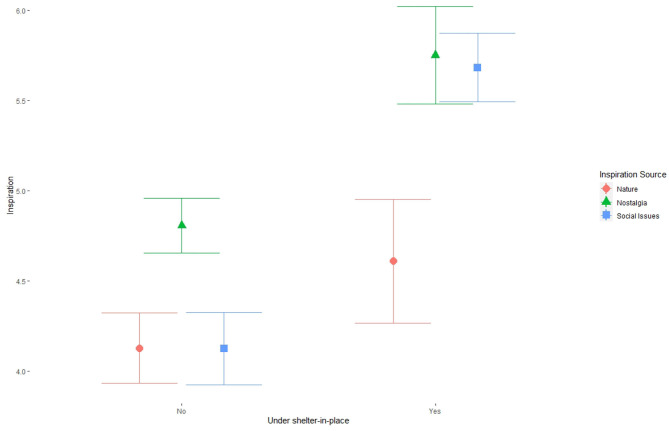
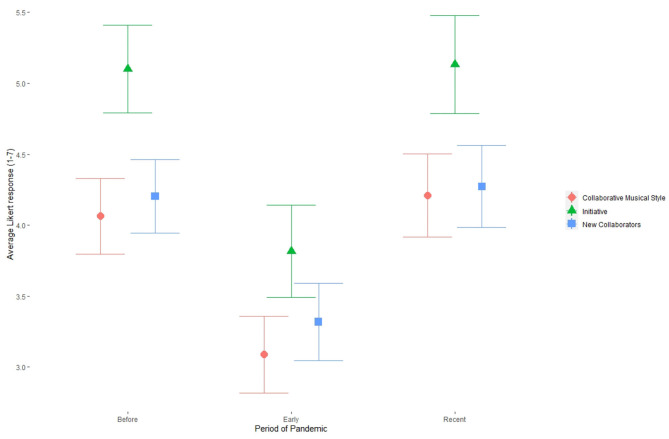
The Covid-19 pandemic severely limited collaboration among musicians in rehearsal and ensemble performance, and demanded radical shifts in collaborative practices. Understanding the nature of these changes in music creators' patterns of collaboration, as well as how musicians shifted prioritizations and adapted their use of the available technologies, can offer invaluable insights into the resilience and importance of different aspects of musical collaboration. In addition, assessing changes in the collaboration networks among music creators can improve the current understanding of genre and style formation and evolution. We used an internet survey distributed to music creators, including performers, composers, producers, and engineers, all active before and during the pandemic, to assess their perceptions of how their music, collaborative practice, and use of technology were impacted by shelter-in-place orders associated with Covid-19, as well as how they adapted over the course of the pandemic. This survey was followed by Zoom interviews with a subset of participants. Along with confirming previous results showing increased reliance on nostalgia for musical inspiration, we found that participants' collaborative behaviors were surprisingly resilient to pandemic-related changes. In addition, participant responses appeared to be driven by a relatively small number of underlying factors, representing approaches to musical collaboration such as or , inspiration clusters such as , and style or genre clusters.
新冠疫情严重限制了音乐家在排练和合奏表演中的合作,并要求合作方式发生根本性转变。了解音乐创作者合作模式的这些变化的本质,以及音乐家如何改变优先事项并调整对现有技术的使用,可以为音乐合作不同方面的韧性和重要性提供宝贵的见解。此外,评估音乐创作者之间合作网络的变化可以增进目前对流派和风格形成与演变的理解。我们通过向音乐创作者(包括表演者、作曲家、制作人及工程师,他们在疫情之前及期间都很活跃)发放网络调查问卷,来评估他们对于音乐、合作实践以及技术使用如何受到与新冠疫情相关的居家令影响的看法,以及他们在疫情期间是如何适应的。此次调查之后,我们对一部分参与者进行了Zoom访谈。除了证实之前显示出对音乐灵感的怀旧依赖增加的结果外,我们还发现参与者的合作行为对与疫情相关的变化具有惊人的韧性。此外,参与者的回答似乎由相对较少的潜在因素驱动,这些因素代表了音乐合作的方式(如 或 )、灵感集群(如 )以及风格或流派集群。