Department of Radiology, University of Health Sciences- Mehmet Akif Inan Education and Research Hospital, Sanliurfa, Turkey.
Department of Radiology, University of Health Sciences- Mehmet Akif Inan Education and Research Hospital, Sanliurfa, Turkey.
J Clin Densitom. 2021 Oct-Dec;24(4):506-515. doi: 10.1016/j.jocd.2021.07.007. Epub 2021 Jul 24.
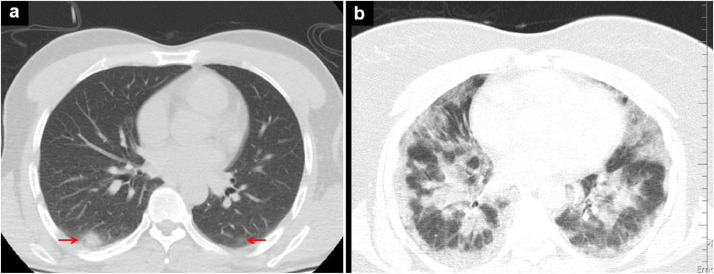
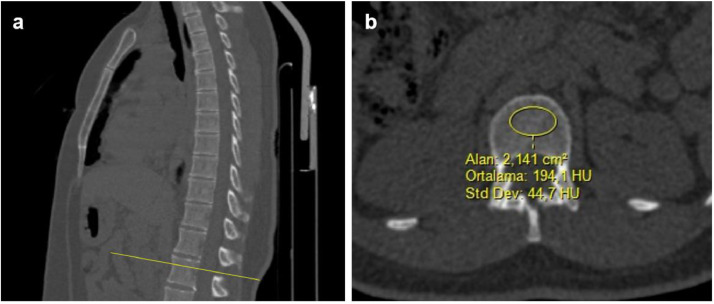
The aim of this study is to evaluate the prognostic value of the vertebral bone mineral density (BMD) on chest computed tomography (CT) in COVID-19 patients. The chest CT of hospitalized patients with COVID-19 pneumonia were evaluated for Pneumonia Severity Score (PSS) as the ratio of the volume of involved lung parenchyma to the total lung volume. In addition, BMD was manually measured from the vertebral corpus using axial CT images. The relationships of clinical variables, PSS and vertebral BMD with patient outcomes, namely mortality, intensive care unit (ICU) admission and mechanical ventilation were investigated. Lower BMD was defined as ≤100 HU. The study included 209 patients (118 males, 56.4%). As a result of the univariate analysis, the rates of mortality, ICU admission and mechanical ventilation were 17.2% (n = 36), 24.8% (n = 52), and 20.6% (n = 43), respectively, and they were significantly higher among the patients with lower BMD (38.1 vs 13.0%, p < 0.001; 33.4 vs 21.2%, p = 0.002; and 38.1 vs 8.2%, p < 0.001, respectively). In the mortality group, PSS was significantly higher (median, 9 vs 5; p < 0.001) and vertebral BMD was significantly lower (median, 83 vs 139; p < 0.001). Severe clinical incidence was significantly higher in patients with lower BMD compared to those with higher BMD (39.7 vs 24.7% and p = 0.028). There was a significant correlation between clinical classification and lower BMD (r = 0.152 and p = 0.028). The multivariate analysis revealed vertebral BMD [odds ratio (OR), 1.028; 95% CI, 1.011-1.045, p = 0.001) and lower BMD (OR, 4.682; 95% CI, 1.784-12.287, p = 0.002) as significant independent predictors of mortality. Vertebral BMD is a strong independent predictor of mortality that is reproducible and can be easily evaluated on the chest CT images of COVID-19 patients.
本研究旨在评估 COVID-19 患者胸部计算机断层扫描(CT)中椎体骨密度(BMD)的预后价值。对住院的 COVID-19 肺炎患者的胸部 CT 进行肺炎严重程度评分(PSS)评估,即受累肺实质体积与总肺体积的比值。此外,使用轴向 CT 图像手动测量椎体 BMD。研究了临床变量、PSS 和椎体 BMD 与患者结局(死亡率、重症监护病房(ICU)入住和机械通气)的关系。低 BMD 定义为≤100 HU。该研究共纳入 209 例患者(男性 118 例,女性 56.4%)。单因素分析结果显示,死亡率、ICU 入住率和机械通气率分别为 17.2%(n=36)、24.8%(n=52)和 20.6%(n=43),低 BMD 组患者的死亡率、ICU 入住率和机械通气率显著较高(38.1%比 13.0%,p<0.001;33.4%比 21.2%,p=0.002;38.1%比 8.2%,p<0.001)。在死亡组中,PSS 显著升高(中位数为 9 分比 5 分;p<0.001),椎体 BMD 显著降低(中位数为 83 比 139;p<0.001)。与高 BMD 患者相比,低 BMD 患者的严重临床发病率显著较高(39.7%比 24.7%,p=0.028)。临床分类与低 BMD 呈显著相关(r=0.152,p=0.028)。多因素分析显示,椎体 BMD[比值比(OR),1.028;95%置信区间(CI),1.011-1.045,p=0.001]和低 BMD(OR,4.682;95%CI,1.784-12.287,p=0.002)是死亡率的独立预测因素。椎体 BMD 是死亡率的一个强有力的独立预测因素,可重复性好,且可在 COVID-19 患者的胸部 CT 图像上进行容易评估。