Sridhara Shankarappa, Ramesh Nandini, Gopakkali Pradeep, Paramesh Venkatesh, Tamam Nissren, Abdelbacki Ashraf M M, Elansary Hosam O, El-Sabrout Ahmed M, Abdelmohsen Shaimaa A M
Department of Agronomy, University of Agricultural and Horticultural Sciences, Shivamogga 577201, Karnataka, India.
ICAR-Central Coastal Agricultural Research Institute, Old Goa 403402, Goa, India.
Saudi J Biol Sci. 2021 Aug;28(8):4800-4806. doi: 10.1016/j.sjbs.2021.05.008. Epub 2021 May 8.
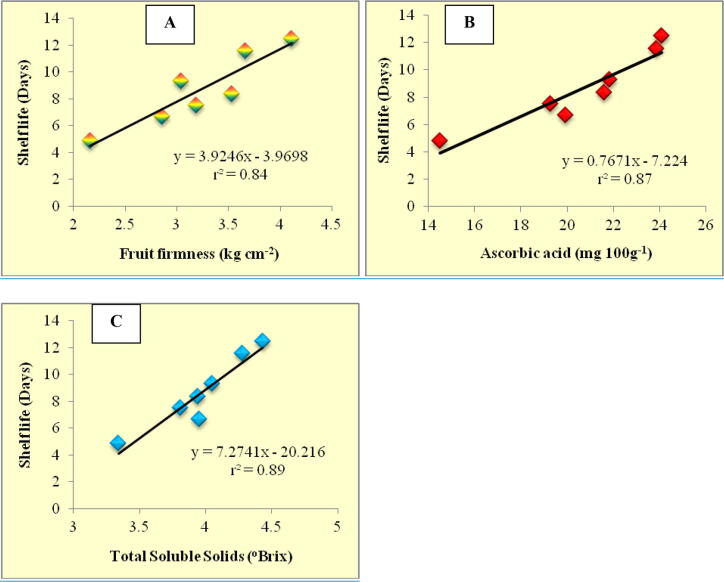
Brassinosteroids (BRs) have emerged as pleiotropic phytohormone owing to their wide function in crop growth and metabolism. Homobrassinolide (HBR) being an analogue of BRs is known to improve the growth, yield and quality parameters in many crop plants. Thus, an evaluation study was conducted for two years (2018 and 2019) to elucidate the performance of tomato plants ( L.) to a novel group of phytohormone,HBR. The field experiment comprised of seven treatments with homobrassinolide 0.04% (Emulsifiable Concentrate) EC at four different concentrations (0.06, 0.08, 0.10 and 0.12 g active ingredient (a.i.) ha) and two well-known growth promoters Gibberellic acid (GA), Naphthalene Acetic Acid (NAA) along with the untreated control. Plant height and chlorophyll concentration were found significantly different in both years of experiment as well as among the different treatments. HBR at 0.12 g a.i. ha was found better with maximum number of fruits (77.36 plant), fruit length (6.72 cm), fruit breadth (6.45 cm) and fruit weight (80.52 g) over other concentrations and treatments. Fruit yield was more pronounced in the plots treated with plant growth regulators compared to untreated control. However, significantly higher fruit yield of 91.07 t ha (62.58 t ha with untreated control) along with improved quality traits fruit firmness (4.11 kg cm), ascorbic acid content (24.09 mg 100 g), total soluble solids (4.43°Brix) and keeping quality (12.50 days) was recorded in 0.12 g a.i. ha HBR treated plots. Thus, it can be inferred that HBRapplication would be a better option to enhance growth, yield as well as quality traits in tomato.
油菜素甾醇(BRs)已成为一种多效性植物激素,因为它们在作物生长和代谢中具有广泛的功能。高油菜素内酯(HBR)作为BRs的类似物,已知能改善许多作物的生长、产量和品质参数。因此,进行了为期两年(2018年和2019年)的评估研究,以阐明番茄植株对一种新型植物激素HBR的反应。田间试验包括七种处理,分别是四种不同浓度(0.06、0.08、0.10和0.12克活性成分(a.i.)/公顷)的0.04%(乳油)HBR,两种著名的生长促进剂赤霉素(GA)、萘乙酸(NAA)以及未处理的对照。在两年的试验以及不同处理之间,发现株高和叶绿素浓度存在显著差异。与其他浓度和处理相比,0.12克a.i./公顷的HBR在果实数量(77.36个/株)、果实长度(6.72厘米)、果实宽度(6.45厘米)和果实重量(80.52克)方面表现最佳。与未处理的对照相比,用植物生长调节剂处理的地块果实产量更高。然而,在0.12克a.i./公顷HBR处理的地块中,果实产量显著更高,达到91.07吨/公顷(未处理对照为62.58吨/公顷),同时品质性状得到改善,果实硬度(4.11千克/平方厘米)、抗坏血酸含量(24.09毫克/100克)、总可溶性固形物(4.43°Brix)和保鲜期(12.50天)均有所提高。因此,可以推断,施用HBR将是提高番茄生长、产量和品质性状的更好选择。