• 文献检索
  • 文档翻译
  • 深度研究
  • 学术资讯
  • Suppr Zotero 插件Zotero 插件
  • 邀请有礼
  • 套餐&价格
  • 历史记录
应用&插件
Suppr Zotero 插件Zotero 插件浏览器插件Mac 客户端Windows 客户端微信小程序
定价
高级版会员购买积分包购买API积分包
服务
文献检索文档翻译深度研究API 文档MCP 服务
关于我们
关于 Suppr公司介绍联系我们用户协议隐私条款
关注我们

Suppr 超能文献

核心技术专利:CN118964589B侵权必究
粤ICP备2023148730 号-1Suppr @ 2026

文献检索

告别复杂PubMed语法,用中文像聊天一样搜索,搜遍4000万医学文献。AI智能推荐,让科研检索更轻松。

立即免费搜索

文件翻译

保留排版,准确专业,支持PDF/Word/PPT等文件格式,支持 12+语言互译。

免费翻译文档

深度研究

AI帮你快速写综述,25分钟生成高质量综述,智能提取关键信息,辅助科研写作。

立即免费体验

利用活的绿色微藻进行重金属的藻类修复机制:提高选择性和去除能力的物理化学及分子方法

Phycoremediation mechanisms of heavy metals using living green microalgae: physicochemical and molecular approaches for enhancing selectivity and removal capacity.

作者信息

Danouche Mohammed, El Ghachtouli Naïma, El Arroussi Hicham

机构信息

Green Biotechnology Center, Moroccan Foundation for Advanced Science, Innovation and Research (MAScIR), Rabat, Morocco.

Microbial Biotechnology and Bioactive Molecules Laboratory, Sciences and Technologies Faculty, Sidi Mohamed Ben Abdellah University, Fez, Morocco.

出版信息

Heliyon. 2021 Jul 16;7(7):e07609. doi: 10.1016/j.heliyon.2021.e07609. eCollection 2021 Jul.

DOI:10.1016/j.heliyon.2021.e07609
PMID:34355100
原文链接:https://pmc.ncbi.nlm.nih.gov/articles/PMC8322293/
Abstract

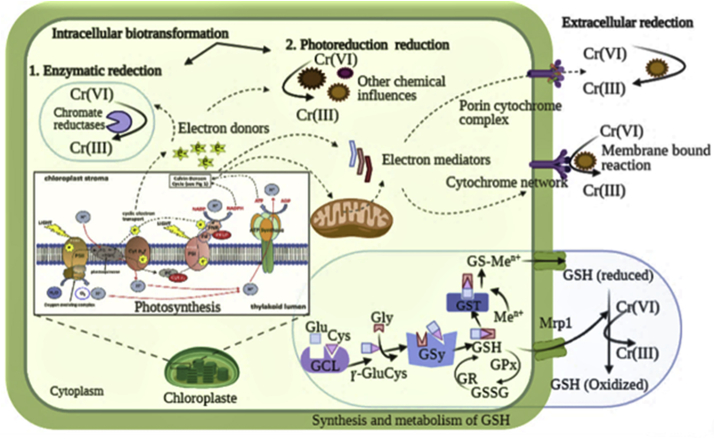
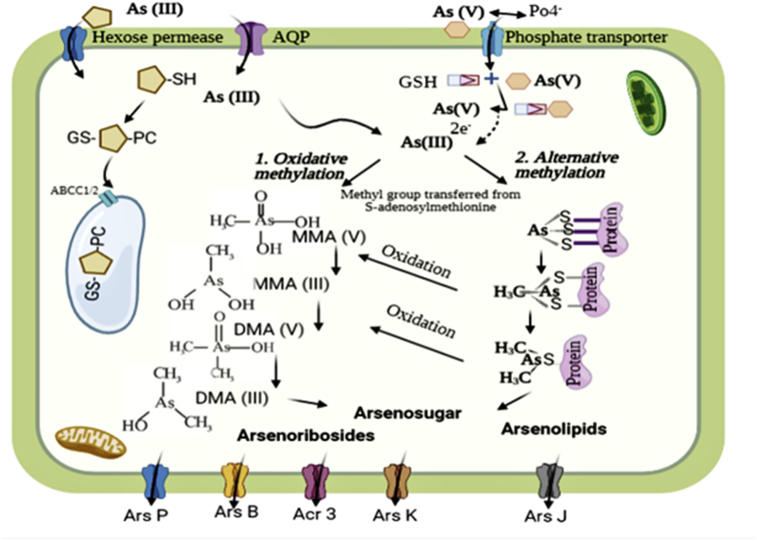
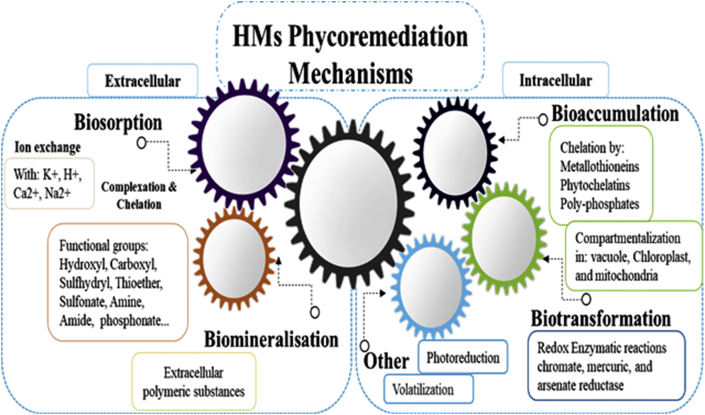
Heavy metal (HM) contamination of water bodies is a serious global environmental problem. Because they are not biodegradable, they can accumulate in food chains, causing various signs of toxicity to exposed organisms, including humans. Due to its effectiveness, low cost, and ecological aspect, phycoremediation, or the use of microalgae's ecological functions in the treatment of HMs contaminated wastewater, is one of the most recommended processes. This study aims to examine in depth the mechanisms involved in the phycoremediation of HMs by microalgae, it also provides an overview of the prospects for improving the productivity, selectivity, and cost-effectiveness of this bioprocess through physicochemical and genetic engineering applications. Firstly, this review proposes a detailed examination of the biosorption interactions between cell wall functional groups and HMs, and their complexation with extracellular polymeric substances released by microalgae in the extracellular environment under stress conditions. Subsequently, the metal transporters involved in the intracellular bioaccumulation of HMs as well as the main intracellular mechanisms including compartmentalization in cell organelles, enzymatic biotransformation, or photoreduction of HMs were also extensively reviewed. In the last section, future perspectives of physicochemical and genetic approaches that could be used to improve the phytoremediation process in terms of removal efficiency, selectivity for a targeted metal, or reduction of treatment time and cost are discussed, which paves the way for large-scale application of phytoremediation processes.

摘要

水体中的重金属(HM)污染是一个严重的全球环境问题。由于它们不可生物降解,会在食物链中积累,对包括人类在内的受暴露生物造成各种毒性迹象。由于其有效性、低成本和生态方面的优势,藻类修复,即利用微藻的生态功能处理受重金属污染的废水,是最值得推荐的方法之一。本研究旨在深入研究微藻对重金属进行藻类修复的相关机制,还概述了通过物理化学和基因工程应用提高该生物过程的生产力、选择性和成本效益的前景。首先,本综述详细探讨了细胞壁官能团与重金属之间的生物吸附相互作用,以及在应激条件下微藻在细胞外环境中释放的细胞外聚合物与重金属的络合作用。随后,还广泛综述了参与重金属细胞内生物积累的金属转运蛋白以及主要的细胞内机制,包括细胞器中的区室化、酶促生物转化或重金属的光还原。在最后一部分,讨论了可用于在去除效率、对目标金属的选择性或减少处理时间和成本方面改善植物修复过程的物理化学和基因方法的未来前景,这为植物修复过程的大规模应用铺平了道路。
https://cdn.ncbi.nlm.nih.gov/pmc/blobs/5635/8322293/61411cfb64f3/gr7.jpg
https://cdn.ncbi.nlm.nih.gov/pmc/blobs/5635/8322293/8b2dd0bccc37/gr1.jpg
https://cdn.ncbi.nlm.nih.gov/pmc/blobs/5635/8322293/e30e8c359c7c/gr2.jpg
https://cdn.ncbi.nlm.nih.gov/pmc/blobs/5635/8322293/a1afe10a7e76/gr3.jpg
https://cdn.ncbi.nlm.nih.gov/pmc/blobs/5635/8322293/64fe0ed85204/gr4.jpg
https://cdn.ncbi.nlm.nih.gov/pmc/blobs/5635/8322293/82f5b0ef7c85/gr5.jpg
https://cdn.ncbi.nlm.nih.gov/pmc/blobs/5635/8322293/82f8e1ad23a9/gr6.jpg
https://cdn.ncbi.nlm.nih.gov/pmc/blobs/5635/8322293/61411cfb64f3/gr7.jpg
https://cdn.ncbi.nlm.nih.gov/pmc/blobs/5635/8322293/8b2dd0bccc37/gr1.jpg
https://cdn.ncbi.nlm.nih.gov/pmc/blobs/5635/8322293/e30e8c359c7c/gr2.jpg
https://cdn.ncbi.nlm.nih.gov/pmc/blobs/5635/8322293/a1afe10a7e76/gr3.jpg
https://cdn.ncbi.nlm.nih.gov/pmc/blobs/5635/8322293/64fe0ed85204/gr4.jpg
https://cdn.ncbi.nlm.nih.gov/pmc/blobs/5635/8322293/82f5b0ef7c85/gr5.jpg
https://cdn.ncbi.nlm.nih.gov/pmc/blobs/5635/8322293/82f8e1ad23a9/gr6.jpg
https://cdn.ncbi.nlm.nih.gov/pmc/blobs/5635/8322293/61411cfb64f3/gr7.jpg

相似文献

1
Phycoremediation mechanisms of heavy metals using living green microalgae: physicochemical and molecular approaches for enhancing selectivity and removal capacity.利用活的绿色微藻进行重金属的藻类修复机制:提高选择性和去除能力的物理化学及分子方法
Heliyon. 2021 Jul 16;7(7):e07609. doi: 10.1016/j.heliyon.2021.e07609. eCollection 2021 Jul.
2
Is Genetic Engineering a Route to Enhance Microalgae-Mediated Bioremediation of Heavy Metal-Containing Effluents?基因工程是否是增强微藻介导的含重金属废水生物修复的途径?
Molecules. 2022 Feb 22;27(5):1473. doi: 10.3390/molecules27051473.
3
Algae as a green technology for heavy metals removal from various wastewater.藻类作为一种绿色技术,可从各种废水中去除重金属。
World J Microbiol Biotechnol. 2019 May 3;35(5):75. doi: 10.1007/s11274-019-2648-3.
4
Phytoremediation of Heavy Metal-Contaminated Sites: Eco-environmental Concerns, Field Studies, Sustainability Issues, and Future Prospects.受重金属污染场地的植物修复:生态环境问题、实地研究、可持续性问题和未来展望。
Rev Environ Contam Toxicol. 2020;249:71-131. doi: 10.1007/398_2019_24.
5
Phycoremediation of wastewater for pollutant removal: A green approach to environmental protection and long-term remediation.废水的藻体修复:一种用于环境保护和长期修复的绿色方法。
Environ Pollut. 2021 Dec 1;290:117989. doi: 10.1016/j.envpol.2021.117989. Epub 2021 Aug 17.
6
Mycoremediation of heavy metals: processes, mechanisms, and affecting factors.重金属的菌根修复:过程、机制和影响因素。
Environ Sci Pollut Res Int. 2021 Mar;28(9):10375-10412. doi: 10.1007/s11356-020-11491-8. Epub 2021 Jan 6.
7
Microalgae biofilm cultured in nutrient-rich water as a tool for the phycoremediation of petroleum-contaminated water.富营养化水中培养的微藻生物膜作为石油污染水的光修复工具。
Int J Phytoremediation. 2021;23(11):1175-1183. doi: 10.1080/15226514.2021.1882934. Epub 2021 Feb 9.
8
The role of metal transporters in phytoremediation: A closer look at Arabidopsis.金属转运蛋白在植物修复中的作用:以拟南芥为例的深入探讨。
Chemosphere. 2023 Jan;310:136881. doi: 10.1016/j.chemosphere.2022.136881. Epub 2022 Oct 15.
9
Bioremediation of heavy metals using microalgae: Recent advances and mechanisms.利用微藻进行重金属的生物修复:最新进展与机制。
Bioresour Technol. 2020 May;303:122886. doi: 10.1016/j.biortech.2020.122886. Epub 2020 Jan 23.
10
Perspectives on nanomaterial-empowered bioremediation of heavy metals by photosynthetic microorganisms.利用光合微生物进行纳米材料增强的重金属生物修复的观点。
Plant Physiol Biochem. 2024 Nov;216:109090. doi: 10.1016/j.plaphy.2024.109090. Epub 2024 Sep 3.

引用本文的文献

1
Comprehensive heavy metal remediation mechanisms with insights into CRISPR-Cas9 and biochar innovations.具有对CRISPR-Cas9和生物炭创新见解的综合重金属修复机制。
Biodegradation. 2025 Jul 25;36(4):69. doi: 10.1007/s10532-025-10165-x.
2
Diversity of Mercury-Tolerant Microorganisms.耐汞微生物的多样性
Microorganisms. 2025 Jun 10;13(6):1350. doi: 10.3390/microorganisms13061350.
3
The Strategies Microalgae Adopt to Counteract the Toxic Effect of Heavy Metals.微藻对抗重金属毒性作用所采用的策略。

本文引用的文献

1
The cell wall of green microalgae and its role in heavy metal removal.绿藻细胞壁及其在重金属去除中的作用。
Physiol Plant. 2021 Oct;173(2):526-535. doi: 10.1111/ppl.13405. Epub 2021 Apr 4.
2
Chemical-Assisted Microbially Mediated Chromium (Cr) (VI) Reduction Under the Influence of Various Electron Donors, Redox Mediators, and Other Additives: An Outlook on Enhanced Cr(VI) Removal.各种电子供体、氧化还原介质和其他添加剂影响下的化学辅助微生物介导的铬(Cr)(VI)还原:强化Cr(VI)去除的展望
Front Microbiol. 2021 Jan 28;11:619766. doi: 10.3389/fmicb.2020.619766. eCollection 2020.
3
Contrasting detoxification mechanisms of Chlamydomonas reinhardtii under Cd and Pb stress.
Microorganisms. 2025 Apr 25;13(5):989. doi: 10.3390/microorganisms13050989.
4
Ecofriendly remediation of cadmium, lead, and zinc using dead cells of Microcystis aeruginosa.利用铜绿微囊藻死细胞对镉、铅和锌进行生态友好型修复。
Sci Rep. 2025 Jan 29;15(1):3677. doi: 10.1038/s41598-025-86884-1.
5
Fundamentals of bio-based technologies for selective metal recovery from bio-leachates and liquid waste streams.用于从生物浸出液和液体废物流中选择性回收金属的生物基技术基础。
Front Bioeng Biotechnol. 2025 Jan 9;12:1528992. doi: 10.3389/fbioe.2024.1528992. eCollection 2024.
6
A Biorefinery Approach Integrating Lipid and EPS Augmentation Along with Cr (III) Mitigation by .一种整合脂质和胞外聚合物强化以及铬(III)缓解的生物精炼方法 。 (原文结尾不完整,翻译可能会有些生硬,你可补充完整原文以便更准确翻译)
Cells. 2024 Dec 11;13(24):2047. doi: 10.3390/cells13242047.
7
The molecular insights of cyanobacterial bioremediations of heavy metals: the current and the future challenges.蓝藻对重金属进行生物修复的分子见解:当前挑战与未来挑战
Front Microbiol. 2024 Oct 11;15:1450992. doi: 10.3389/fmicb.2024.1450992. eCollection 2024.
8
Methods Using Marine Aquatic Photoautotrophs along the Qatari Coastline to Remediate Oil and Gas Industrial Water.利用卡塔尔海岸线的海洋光合自养生物修复石油和天然气工业用水的方法。
Toxics. 2024 Aug 24;12(9):625. doi: 10.3390/toxics12090625.
9
Plants' molecular behavior to heavy metals: from criticality to toxicity.植物对重金属的分子行为:从临界状态到毒性
Front Plant Sci. 2024 Aug 30;15:1423625. doi: 10.3389/fpls.2024.1423625. eCollection 2024.
10
Removal of Cadmium (II) from Aqueous Solution Using CCMEE 5587.1.使用CCMEE 5587.1从水溶液中去除镉(II)
BioTech (Basel). 2024 Aug 1;13(3):28. doi: 10.3390/biotech13030028.
在 Cd 和 Pb 胁迫下莱茵衣藻解毒机制的对比研究。
Chemosphere. 2021 Jul;274:129771. doi: 10.1016/j.chemosphere.2021.129771. Epub 2021 Jan 25.
4
An Overview of the Algae-Mediated Biosynthesis of Nanoparticles and Their Biomedical Applications.藻类介导的纳米颗粒生物合成及其在生物医学中的应用概述。
Biomolecules. 2020 Oct 30;10(11):1498. doi: 10.3390/biom10111498.
5
Cyanobacteria - A Promising Platform in Green Nanotechnology: A Review on Nanoparticles Fabrication and Their Prospective Applications.蓝藻——绿色纳米技术中的有前景的平台:纳米颗粒制造及其潜在应用的综述。
Int J Nanomedicine. 2020 Aug 13;15:6033-6066. doi: 10.2147/IJN.S256134. eCollection 2020.
6
Microalgal biosorption of heavy metals: A comprehensive bibliometric review.微藻对重金属的生物吸附:全面的文献计量学综述。
J Hazard Mater. 2021 Jan 15;402:123431. doi: 10.1016/j.jhazmat.2020.123431. Epub 2020 Jul 27.
7
Polyphosphate: A Multifunctional Metabolite in Cyanobacteria and Algae.多聚磷酸盐:蓝藻和藻类中的一种多功能代谢物。
Front Plant Sci. 2020 Jun 26;11:938. doi: 10.3389/fpls.2020.00938. eCollection 2020.
8
Increased metal tolerance and bioaccumulation of zinc and cadmium in Chlamydomonas reinhardtii expressing a AtHMA4 C-terminal domain protein.表达 AtHMA4 C 端结构域蛋白的莱茵衣藻对锌和镉的金属耐受性和生物积累增加。
Biotechnol Bioeng. 2020 Oct;117(10):2996-3005. doi: 10.1002/bit.27476. Epub 2020 Jul 5.
9
Increased removal of cadmium by modified with a synthetic gene for γ-glutamylcysteine synthetase.经合成的γ-谷氨酰半胱氨酸合成酶基因修饰后,镉的去除率增加。
Int J Phytoremediation. 2020;22(12):1269-1277. doi: 10.1080/15226514.2020.1765138. Epub 2020 May 23.
10
Microalgal Metallothioneins and Phytochelatins and Their Potential Use in Bioremediation.微藻金属硫蛋白和植物螯合肽及其在生物修复中的潜在应用。
Front Microbiol. 2020 Apr 28;11:517. doi: 10.3389/fmicb.2020.00517. eCollection 2020.