Carney Olivia, Hughes Emer, Tusor Nora, Dimitrova Ralica, Arulkumaran Sophie, Baruteau Kelly Pegoretti, Collado Alexia Egloff, Cordero-Grande Lucilio, Chew Andrew, Falconer Shona, Allsop Joanna M, Rueckert Daniel, Hajnal Joseph, Edwards A David, Rutherford Mary
Centre for the Developing Brain, Department of Perinatal Imaging and Health, School of Biomedical Engineering and Imaging Sciences, King's College London, London, United Kingdom.
Department of Radiology, Great Ormond Street Hospital for Children NHS Foundation Trust, London, United Kingdom.
EClinicalMedicine. 2021 Jul 20;38:100984. doi: 10.1016/j.eclinm.2021.100984. eCollection 2021 Aug.
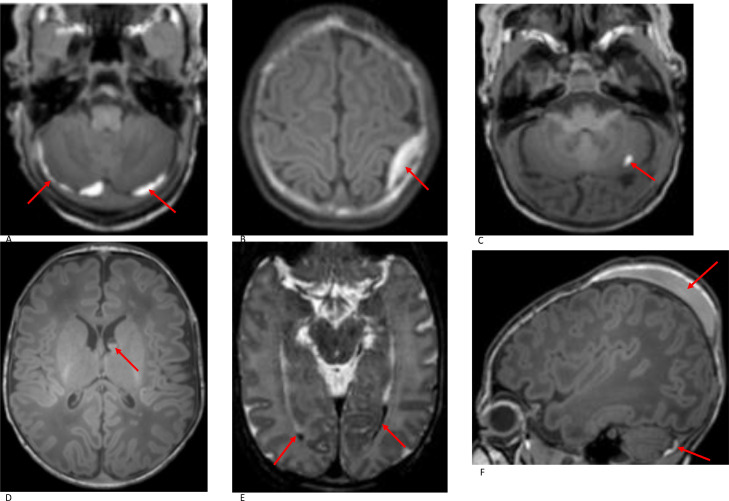
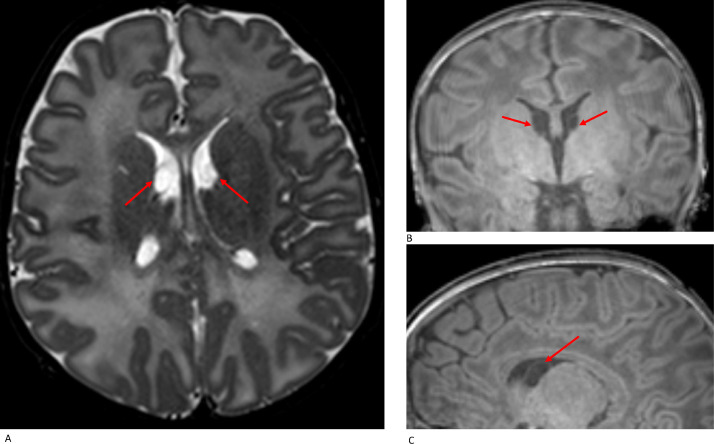
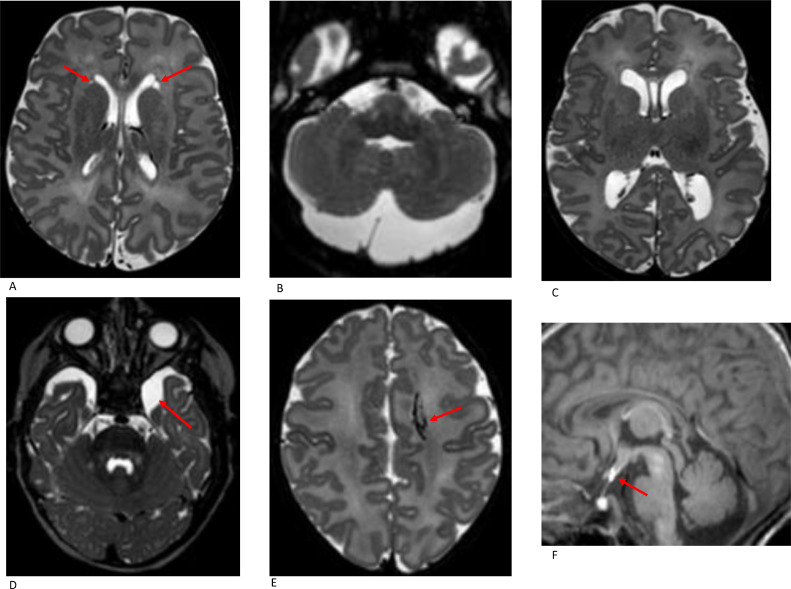
Interpretation of incidental findings on term neonatal MRI brain imaging can be challenging as there is a paucity of published normative data on asymptomatic term neonates. Reporting radiologists and clinicians need to be familiar with these incidental findings to avoid over-investigation and misinterpretation particularly in relation to neurodevelopmental outcome. This study aimed to determine the prevalence of incidental findings in a large group of asymptomatic term neonates participating in the Developing Human Connectome Project (dHCP) who were invited for neurodevelopmental assessment at 18 months.
We retrospectively reviewed MRI brain scans performed on 500 term neonates enrolled in the dHCP study between 2015 and 2019 with normal clinical examination. We reviewed the results of the Bayley Scales of Infant and Toddler Development (Bayley III) applied to participants who attended for neurodevelopmental follow-up at 18 months. Scores considered "delayed" if <70 on language, cognitive or motor scales.
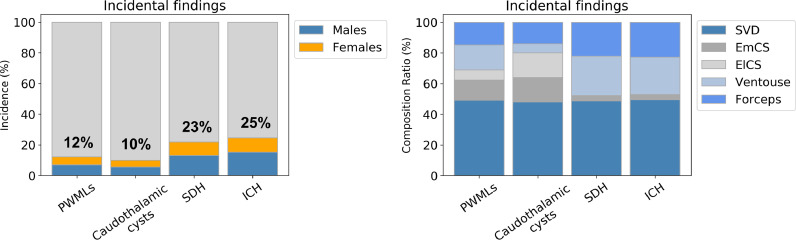
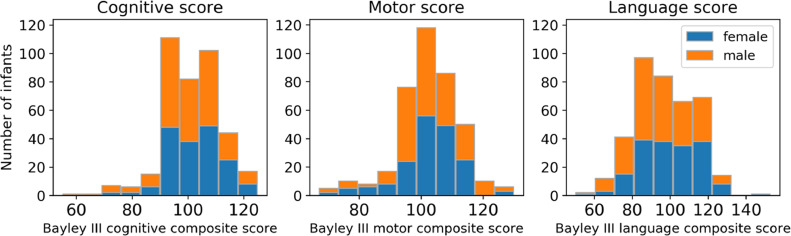
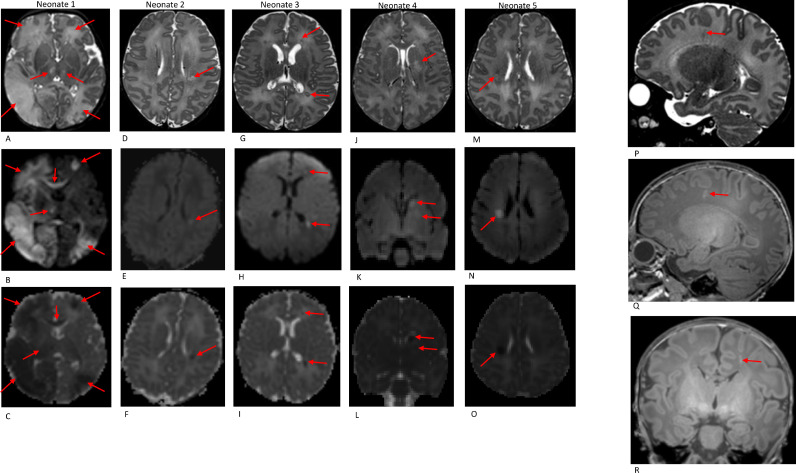
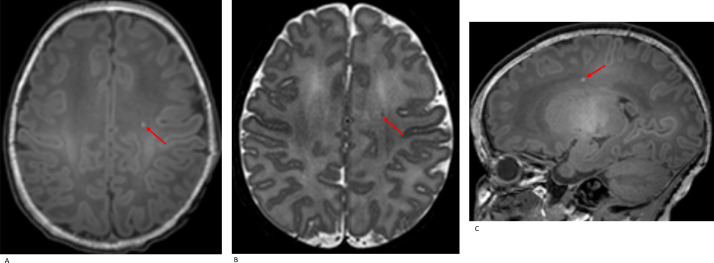
Incidental findings were observed in 47% of term infants. Acute cerebral infarcts were incidentally noted in five neonates (1%). More common incidental findings included punctate white matter lesions (PWMLs) (12%) and caudothalamic subependymal cysts (10%). The most frequent incidental finding was intracranial haemorrhage (25%), particularly subdural haemorrhage (SDH). SDH and PWMLs were more common in infants delivered with ventouse-assistance versus other delivery methods.Neurodevelopmental results were available on 386/500 (77%). 14 infants had a language score < 70 (2 SD below the mean). Of the 386 infants with neurodevelopmental follow up at 18 months, group differences in motor and language scores between infants with and without incidental findings were not significant ( = 0·17 and = 0·97 respectively). Group differences in cognitive scores at 18 months between infants with (median (interquartile range) -100 (95-105)) and without (100 (95-110)) incidental findings were of small effect size to suggest clinical significance (Cliff's = 0·15; <0·05).
Incidental findings are relatively common on brain MRI in asymptomatic term neonates, majority are clinically insignificant with normal neurodevelopment at 18 months.
This work was supported by the European Research Council under the European Union's Seventh Framework Programme (FP7/20072013/ERC grant agreement no. [319456] dHCP project), by core funding from the Wellcome/EPSRC Centre for Medical Engineering [WT203148/Z/16/Z] and by the National Institute for Health Research (NIHR) Biomedical Research Centre based at Guy's and St Thomas' NHS Foundation Trust and King's College London and/or the NIHR Clinical Research Facility. The views expressed are those of the authors and not necessarily those of the NHS, the NIHR or the Department of Health and Social Care.
足月新生儿脑部磁共振成像(MRI)检查中偶然发现的结果解读具有挑战性,因为关于无症状足月新生儿的已发表规范数据较少。报告放射科医生和临床医生需要熟悉这些偶然发现,以避免过度检查和错误解读,特别是在与神经发育结局相关的方面。本研究旨在确定参与人类连接组发展项目(dHCP)的一大组无症状足月新生儿中偶然发现的发生率,这些新生儿在18个月时被邀请进行神经发育评估。
我们回顾性分析了2015年至2019年期间纳入dHCP研究的500名足月新生儿的脑部MRI扫描结果,这些新生儿临床检查正常。我们回顾了应用于18个月时进行神经发育随访的参与者的贝利婴幼儿发展量表(贝利III)结果。如果语言、认知或运动量表得分低于70分,则认为是“延迟”。
47%的足月儿有偶然发现。五名新生儿(1%)偶然发现急性脑梗死。更常见的偶然发现包括点状白质病变(PWMLs)(12%)和丘脑尾状核室管膜下囊肿(10%)。最常见的偶然发现是颅内出血(25%),尤其是硬膜下出血(SDH)。与其他分娩方式相比,使用吸引器辅助分娩的婴儿中SDH和PWMLs更为常见。386/500(77%)的婴儿有神经发育结果。14名婴儿的语言得分低于70分(比平均水平低2个标准差)。在18个月进行神经发育随访的386名婴儿中,有和没有偶然发现的婴儿在运动和语言得分上的组间差异不显著(分别为P = 0.17和P = 0.97)。有偶然发现(中位数(四分位间距)-100(95 - 105))和没有偶然发现(100(95 - 110))的婴儿在18个月时的认知得分组间差异效应量较小,不具有临床意义(克利夫效应量 = 0.15;P < 0.05)。
无症状足月新生儿脑部MRI上的偶然发现相对常见,大多数在18个月时神经发育正常,临床意义不大。
这项工作得到了欧盟第七框架计划下的欧洲研究理事会(FP7/2007 - 2013/ERC资助协议编号[319456] dHCP项目)、惠康基金会/工程和物理科学研究委员会医学工程中心的核心资助[WT203148/Z/16/Z]以及基于盖伊和圣托马斯国民保健服务基金会信托基金和伦敦国王学院的国家卫生研究院(NIHR)生物医学研究中心和/或NIHR临床研究设施的支持。所表达的观点是作者的观点,不一定是国民保健服务、NIHR或卫生与社会保健部的观点。