Blanco-Salas José, Hortigón-Vinagre María P, Morales-Jadán Diana, Ruiz-Téllez Trinidad
Department of Vegetal Biology, Ecology and Earth Science, Faculty of Sciences, University of Extremadura, 06006 Badajoz, Spain.
Department of Biochemistry, Molecular Biology and Genetics, Faculty of Sciences, University of Extremadura, 06006 Badajoz, Spain.
Biology (Basel). 2021 Jul 2;10(7):618. doi: 10.3390/biology10070618.
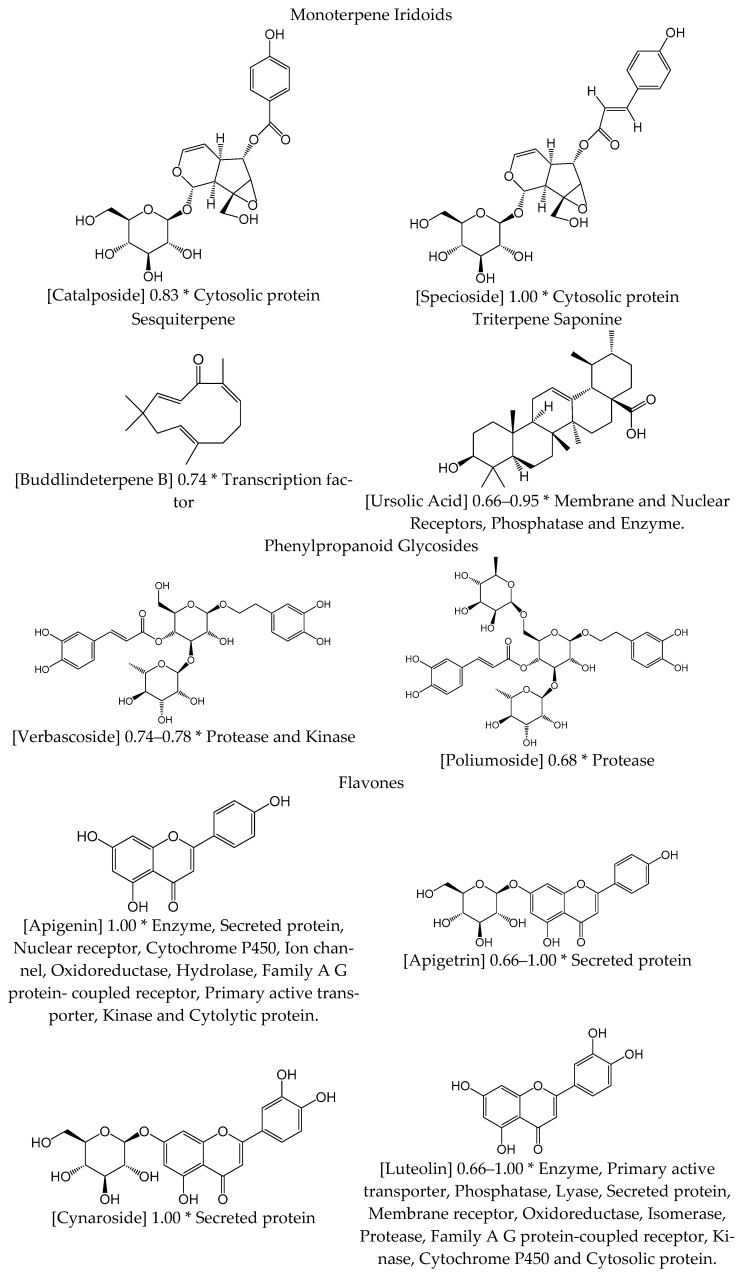
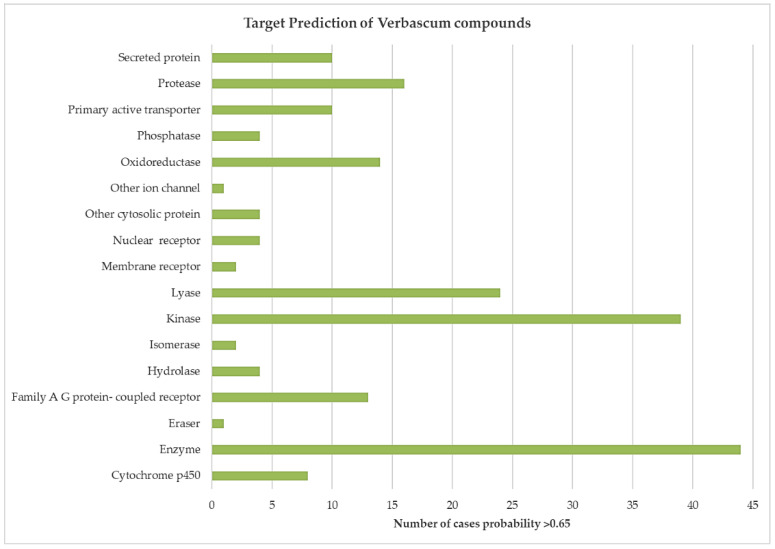
species (common mullein) have been widely used in Spanish folk medicine to treat pathologies related to the musculature, skeleton, and circulatory, digestive, and respiratory systems, as well as to treat infectious diseases and organ-sense illnesses. These applications support the potential anti-inflammatory action of Verbascum phytochemicals. Based on the aforementioned facts, and following a deep bibliographic review of the chemical composition of the 10 species of Verbascum catalogued by the Spanish Inventory of Traditional Knowledge related to Biodiversity, we look for scientific evidences to correlate the traditional medical uses with the chemical components of these plants. To support these findings, in silico simulations were performed to investigate molecular interactions between Verbascum phytochemicals and cellular components. Most of common mullein traditional uses could rely on the anti-inflammatory action of phytochemicals, such as quercetin, and it could explain the employment of these plants to treat a wide range of diseases mediated by inflammatory processes such as respiratory diseases, otitis, arthrosis, and rheumatism among others.
毛蕊花属植物(毛蕊花)在西班牙民间医学中被广泛用于治疗与肌肉组织、骨骼以及循环、消化和呼吸系统相关的病症,还用于治疗传染病和器官感觉疾病。这些应用支持了毛蕊花植物化学物质潜在的抗炎作用。基于上述事实,并在对西班牙传统生物多样性知识清单中列出的10种毛蕊花属植物的化学成分进行深入文献综述之后,我们寻找科学证据来关联这些植物的传统医学用途与其化学成分。为支持这些发现,进行了计算机模拟以研究毛蕊花植物化学物质与细胞成分之间的分子相互作用。毛蕊花的大多数传统用途可能依赖于植物化学物质(如槲皮素)的抗炎作用,这可以解释使用这些植物来治疗由炎症过程介导的多种疾病,如呼吸系统疾病、中耳炎、关节病和风湿病等。