Azbukina Nadezhda V, Chistyakov Dmitry V, Goriainov Sergei V, Kotelin Vladislav I, Fedoseeva Elena V, Petrov Sergey Yu, Sergeeva Marina G, Iomdina Elena N, Zernii Evgeni Yu
Faculty of Bioengineering and Bioinformatics, Moscow Lomonosov State University, 119234 Moscow, Russia.
Belozersky Institute of Physico-Chemical Biology, Lomonosov Moscow State University, 119992 Moscow, Russia.
Biology (Basel). 2021 Jul 13;10(7):658. doi: 10.3390/biology10070658.
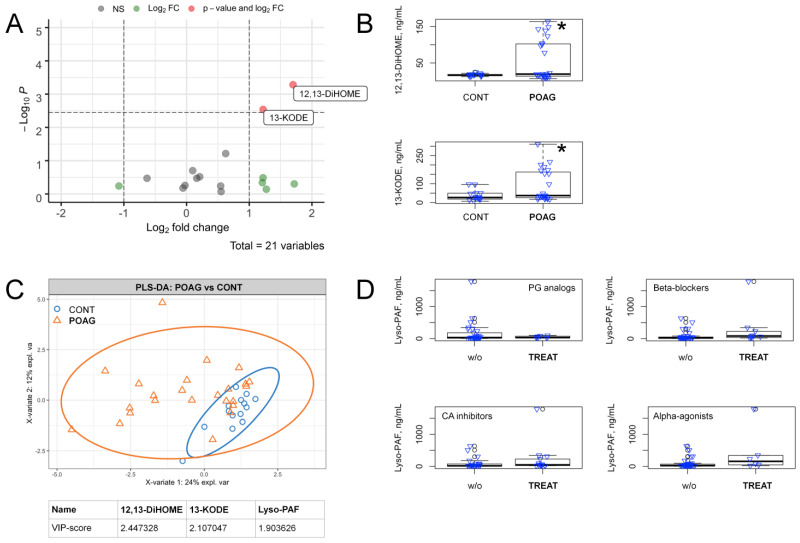
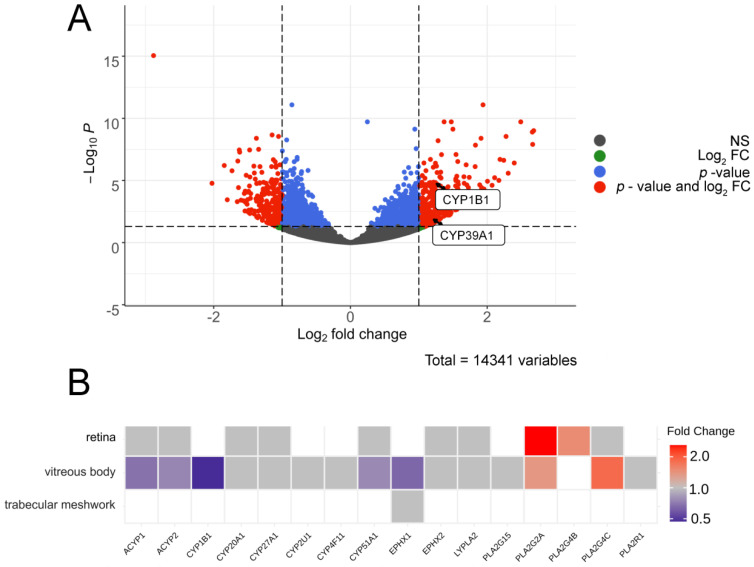
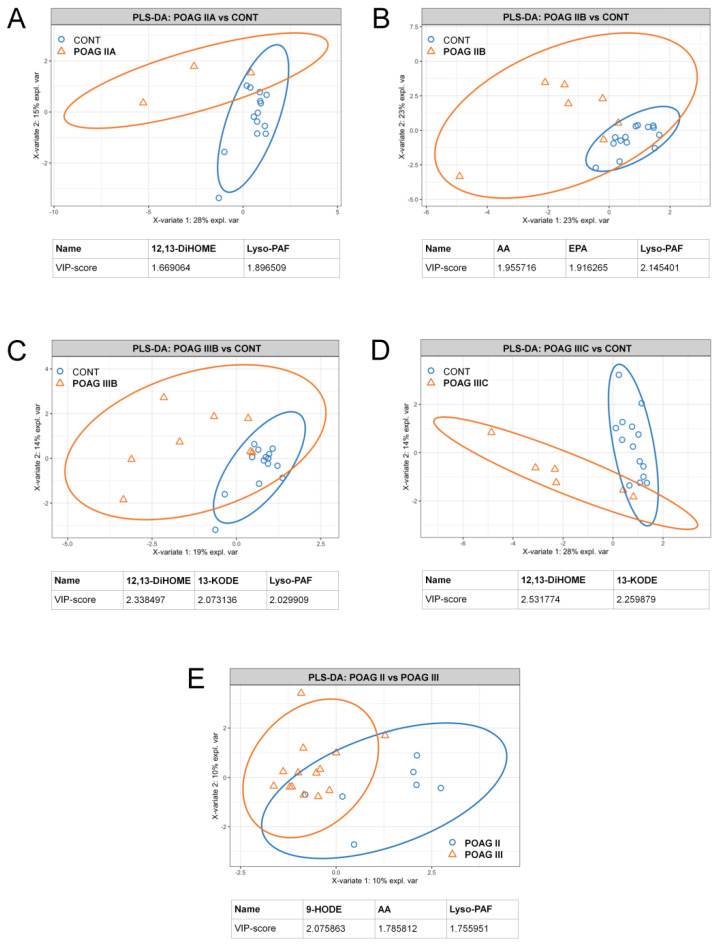
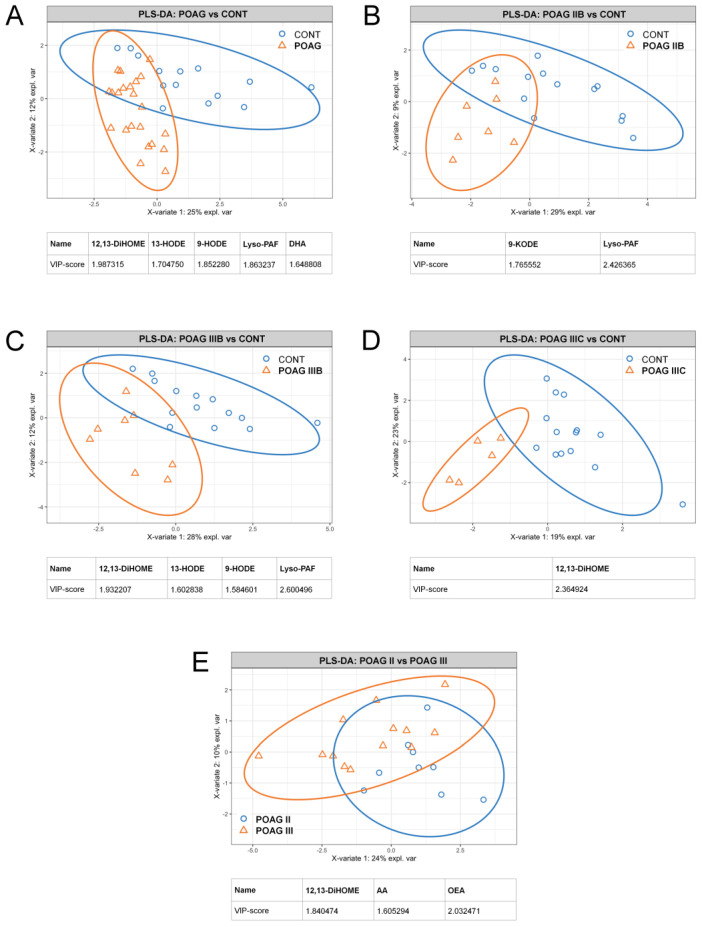
Primary open-angle glaucoma (POAG) is characterized by degeneration of retinal ganglion cells associated with an increase in intraocular pressure (IOP) due to hindered aqueous humor (AH) drainage through the trabecular meshwork and uveoscleral pathway. Polyunsaturated fatty acids and oxylipins are signaling lipids regulating neuroinflammation, neuronal survival and AH outflow. Among them, prostaglandins have been previously implicated in glaucoma and employed for its treatment. This study addressed the role of signaling lipids in glaucoma by determining their changes in AH accompanying IOP growth and progression of the disease. Eye liquids were collected from patients with POAG of different stages and cataract patients without glaucoma. Lipids were identified and quantified by UPLC-MS/MS. The compounds discriminating glaucoma groups were recognized using ANCOVA and PLS-DA statistic approaches and their biosynthetic pathways were predicted by bioinformatics. Among 22 signaling lipids identified in AH, stage/IOP-dependent alterations in glaucoma were provided by a small set of mediators, including 12,13-DiHOME, 9- and 13-HODE/KODE, arachidonic acid and lyso-PAF. These observations correlated with the expression of cytochromes P450 (CYPs) and phospholipases A2 in the ocular tissues. Interestingly, tear fluid exhibited similar lipidomic alterations in POAG. Overall, POAG may involve arachidonic acid/PAF-dependent pathways and oxidative stress as evidenced from an increase in its markers, KODEs and 12,13-DiHOME. The latter is a product of CYPs, one of which, CYP1B1, is known as POAG and primary congenital glaucoma-associated gene. These data provide novel targets for glaucoma treatment. Oxylipin content of tear fluid may have diagnostic value in POAG.
原发性开角型青光眼(POAG)的特征是视网膜神经节细胞变性,这与眼内压(IOP)升高有关,而IOP升高是由于房水(AH)通过小梁网和葡萄膜巩膜途径引流受阻所致。多不饱和脂肪酸和氧化脂质是调节神经炎症、神经元存活和房水流出的信号脂质。其中,前列腺素此前已被认为与青光眼有关并用于其治疗。本研究通过确定AH中信号脂质随IOP升高和疾病进展的变化,探讨了信号脂质在青光眼中的作用。从不同阶段的POAG患者和无青光眼的白内障患者中收集眼液。通过超高效液相色谱-串联质谱法(UPLC-MS/MS)鉴定和定量脂质。使用协方差分析(ANCOVA)和偏最小二乘判别分析(PLS-DA)统计方法识别区分青光眼组的化合物,并通过生物信息学预测其生物合成途径。在AH中鉴定出的22种信号脂质中,一小部分介质呈现出青光眼阶段/IOP依赖性改变,包括12,13-二羟基十八碳二烯酸(12,13-DiHOME)、9-和13-羟基十八碳烯酸/酮基十八碳烯酸(9-和13-HODE/KODE)、花生四烯酸和溶血血小板活化因子(lyso-PAF)。这些观察结果与眼组织中细胞色素P450(CYPs)和磷脂酶A2的表达相关。有趣的是,泪液在POAG中表现出类似的脂质组学改变。总体而言,POAG可能涉及花生四烯酸/血小板活化因子依赖性途径和氧化应激,这从其标志物酮基十八碳烯酸(KODEs)和12,13-DiHOME的增加中得到证明。后者是CYPs的产物,其中一种,即CYP1B1,是已知的与POAG和原发性先天性青光眼相关的基因。这些数据为青光眼治疗提供了新的靶点。泪液中氧化脂质含量可能对POAG具有诊断价值。