Pawar Ravindra, Gavade Vijay, Patil Nivedita, Mali Vijay, Girwalkar Amol, Tarkasband Vyankatesh, Loya Sanjog, Chavan Amit, Nanivadekar Narendra, Shinde Rahul, Patil Uday, Lakshminrusimha Satyan
Department of Pediatrics, Dr. D Y Patil Medical College Hospital and Research Institute, Kolhapur 416003, MH, India.
Masai Children's Hospital, Kolhapur 416002, MH, India.
Children (Basel). 2021 Jul 2;8(7):572. doi: 10.3390/children8070572.
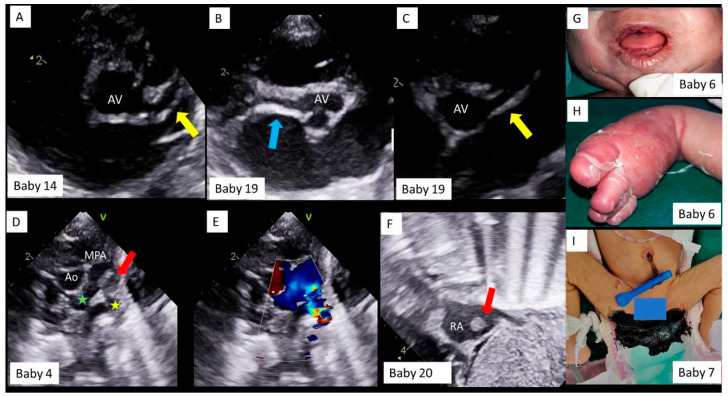
Multisystem inflammatory syndrome in children (MIS-C) is a post-infectious immune-mediated condition, seen 3-5 weeks after COVID-19. Maternal SARS-CoV-2 may potentially cause a similar hyperinflammatory syndrome in neonates due to transplacental transfer of antibodies. We reviewed the perinatal history, clinical features, and outcomes of 20 neonates with features consistent with MIS-C related to maternal SARS-CoV-2 in Kolhapur, India, from 1 September 2020 to 30 April 2021. Anti-SARS-CoV-2 IgG and IgM antibodies were tested in all neonates. Fifteen singletons and five twins born to eighteen mothers with a history of COVID-19 disease or exposure during pregnancy presented with features consistent with MIS-C during the first 5 days after birth. Nineteen were positive for anti-SARS-CoV-2 IgG and all were negative for IgM antibodies. All mothers were asymptomatic and therefore not tested by RTPCR-SARS-CoV-2 at delivery. Eighteen neonates (90%) had cardiac involvement with prolonged QTc, 2:1 AV block, cardiogenic shock, or coronary dilatation. Other findings included respiratory failure (40%), fever (10%), feeding intolerance (30%), melena (10%), and renal failure (5%). All infants had elevated inflammatory biomarkers and received steroids and IVIG. Two infants died. We speculate that maternal SARS-CoV-2 and transplacental antibodies cause multisystem inflammatory syndrome in neonates (MIS-N). Immunomodulation may be beneficial in some cases, but further studies are needed.
儿童多系统炎症综合征(MIS-C)是一种感染后免疫介导的病症,在新冠病毒病(COVID-19)感染后3至5周出现。由于抗体经胎盘转移,母体感染严重急性呼吸综合征冠状病毒2(SARS-CoV-2)可能会在新生儿中引发类似的高炎症综合征。我们回顾了2020年9月1日至2021年4月30日期间在印度科尔哈布尔的20例新生儿的围产期病史、临床特征及转归,这些新生儿具有与母体SARS-CoV-2相关的MIS-C特征。对所有新生儿进行了抗SARS-CoV-2 IgG和IgM抗体检测。18名有COVID-19疾病史或孕期接触史的母亲所生的15名单胎和5对双胞胎在出生后的前5天出现了与MIS-C一致的特征。19例抗SARS-CoV-2 IgG呈阳性,所有IgM抗体均为阴性。所有母亲均无症状,因此在分娩时未进行SARS-CoV-2逆转录聚合酶链反应(RTPCR)检测。18例新生儿(90%)有心脏受累,表现为QTc延长、二度房室传导阻滞、心源性休克或冠状动脉扩张。其他表现包括呼吸衰竭(40%)、发热(10%)、喂养不耐受(30%)、黑便(10%)和肾衰竭(5%)。所有婴儿炎症生物标志物均升高,并接受了类固醇和静脉注射免疫球蛋白(IVIG)治疗。2例婴儿死亡。我们推测母体SARS-CoV-2和经胎盘抗体可导致新生儿多系统炎症综合征(MIS-N)。免疫调节在某些情况下可能有益,但仍需进一步研究。