Faculty of Medicine, Poznan University of Medical Sciences, 60-812 Poznan, Poland.
Department of Medical Chemistry and Laboratory Medicine, Poznan University of Medical Sciences, Rokietnicka 8, 60-806 Poznan, Poland.
Medicina (Kaunas). 2021 Jul 8;57(7):701. doi: 10.3390/medicina57070701.
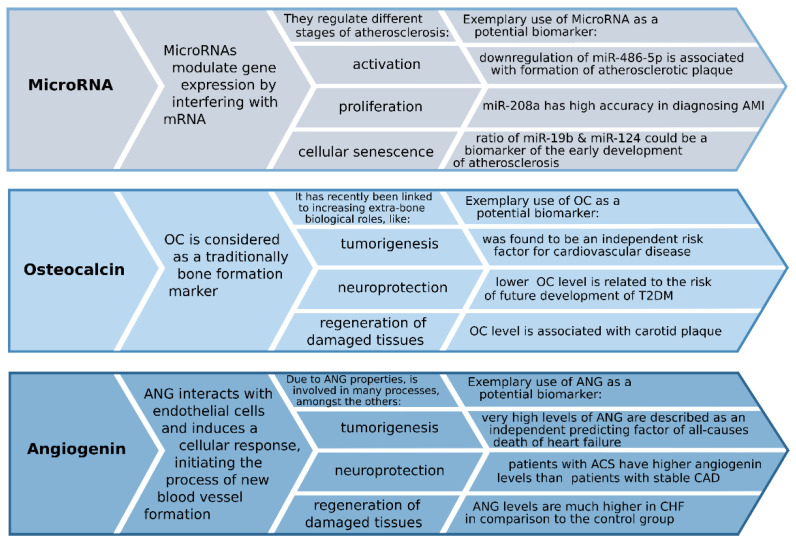
Atherosclerosis and its consequences are the leading cause of mortality in the world. For this reason, we have reviewed atherosclerosis biomarkers and selected the most promising ones for review. We focused mainly on biomarkers related to inflammation and oxidative stress, such as the highly sensitive C-reactive protein (hs-CRP), interleukin 6 (IL-6), and lipoprotein-associated phospholipase A2 (Lp-PLA2). The microRNA (miRNA) and the usefulness of the bone mineralization, glucose, and lipid metabolism marker osteocalcin (OC) were also reviewed. The last biomarker we considered was angiogenin (ANG). Our review shows that due to the multifactorial nature of atherosclerosis, no single marker is known so far, the determination of which would unambiguously assess the severity of atherosclerosis and help without any doubt in the prognosis of cardiovascular risk.
动脉粥样硬化及其后果是世界上主要的死亡原因。出于这个原因,我们复习了动脉粥样硬化生物标志物,并选择了最有前途的生物标志物进行综述。我们主要关注与炎症和氧化应激相关的生物标志物,如高敏 C 反应蛋白(hs-CRP)、白细胞介素 6(IL-6)和脂蛋白相关磷脂酶 A2(Lp-PLA2)。我们还回顾了微小 RNA(miRNA)和骨矿化、葡萄糖和脂质代谢标志物骨钙素(OC)的用途。我们考虑的最后一个生物标志物是血管生成素(ANG)。我们的综述表明,由于动脉粥样硬化的多因素性质,目前还没有单一的标志物可以明确评估动脉粥样硬化的严重程度,并有助于心血管风险的预后。