Conti Valeria, Corbi Graziamaria, Sellitto Carmine, Sabbatino Francesco, Maci Chiara, Bertini Nicola, De Bellis Emanuela, Iuliano Antonio, Davinelli Sergio, Pagliano Pasquale, Filippelli Amelia
Department of Medicine, Surgery and Dentistry "Scuola Medica Salernitana", University of Salerno, 84081 Salerno, Italy.
Clinical Pharmacology and Pharmacogenetics Unit, University Hospital "San Giovanni di Dio e Ruggi D'Aragona", 84125 Salerno, Italy.
J Pers Med. 2021 Jul 1;11(7):628. doi: 10.3390/jpm11070628.
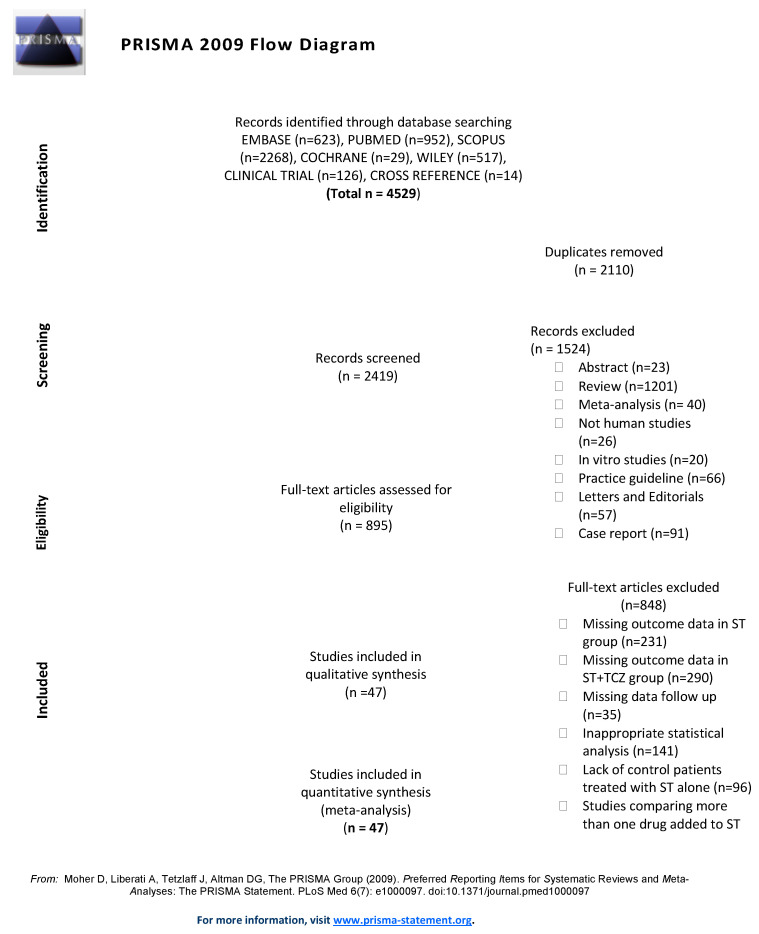
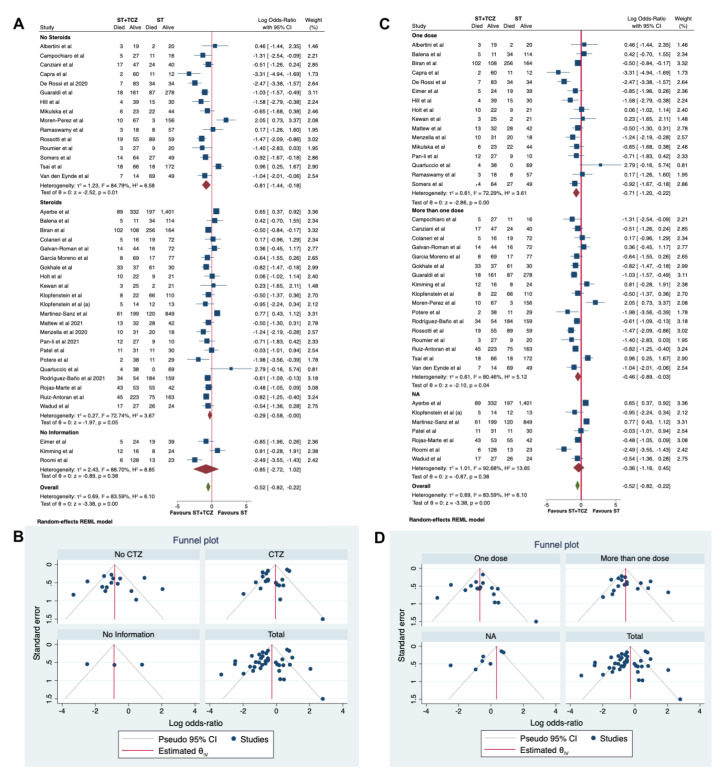
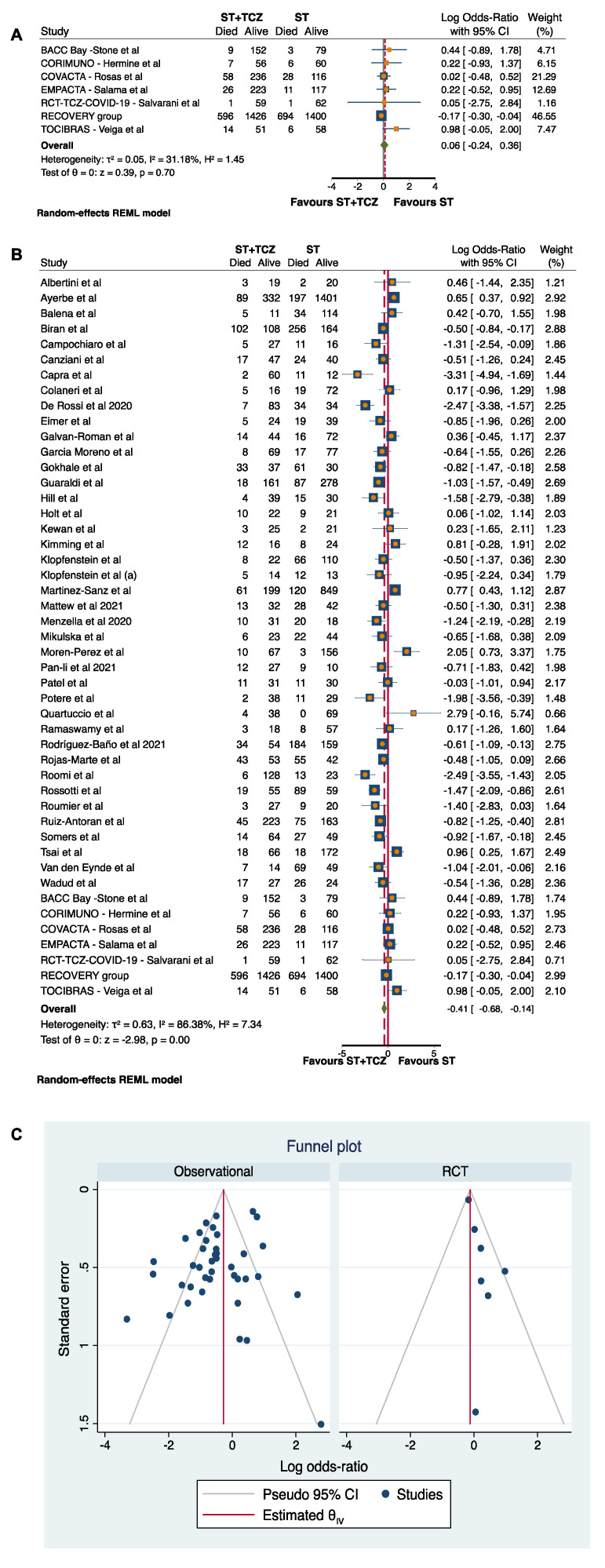
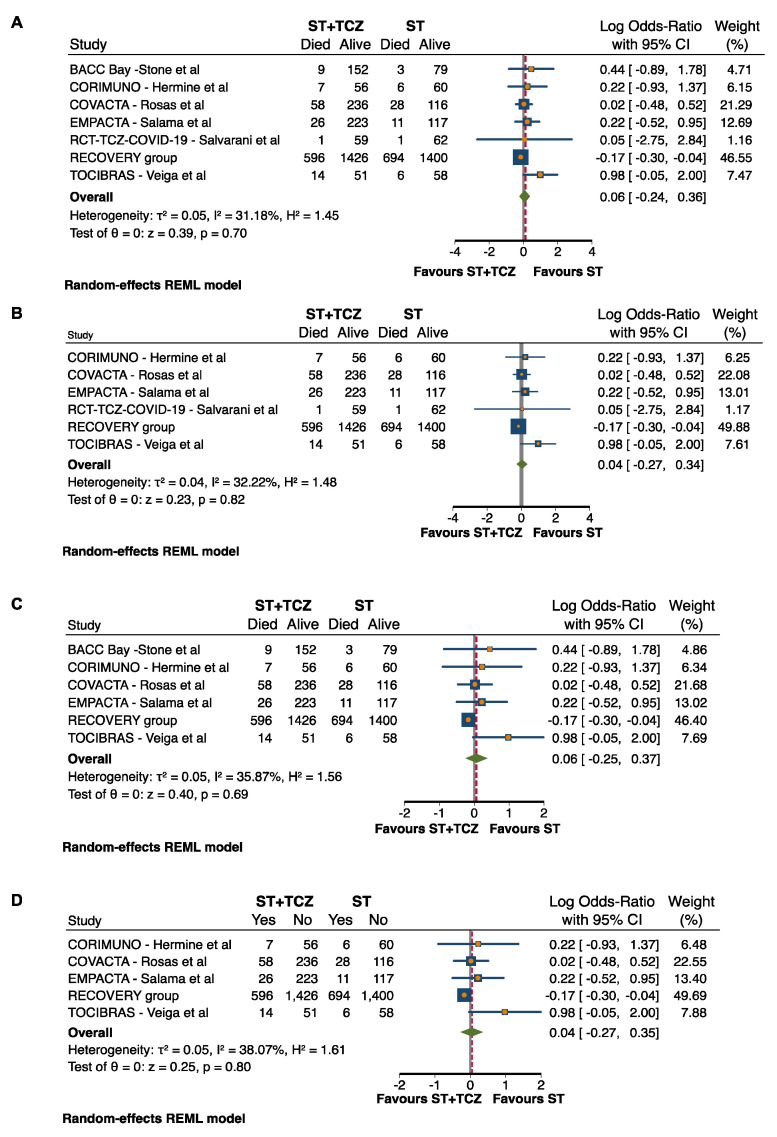
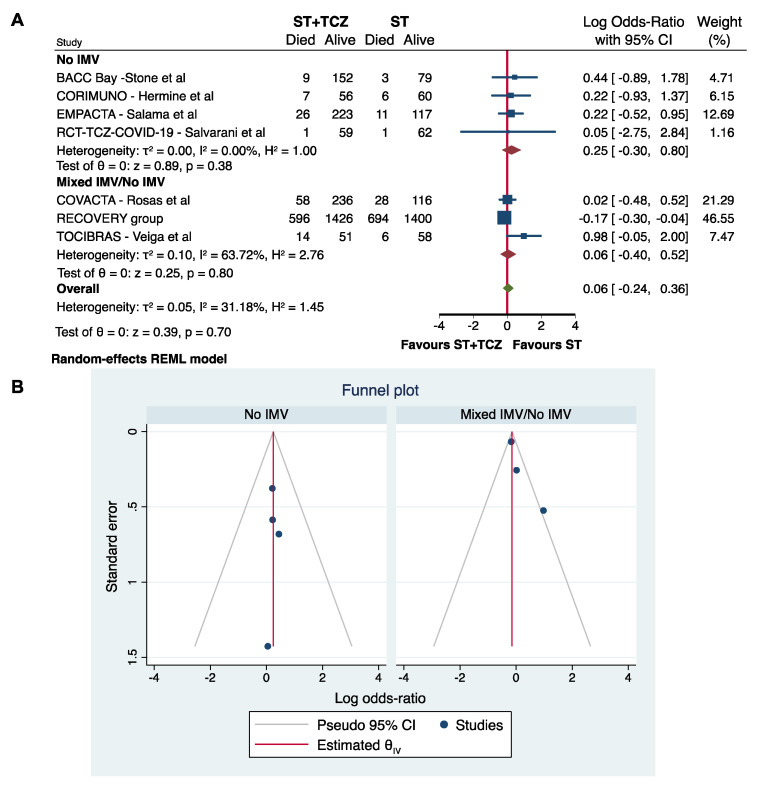
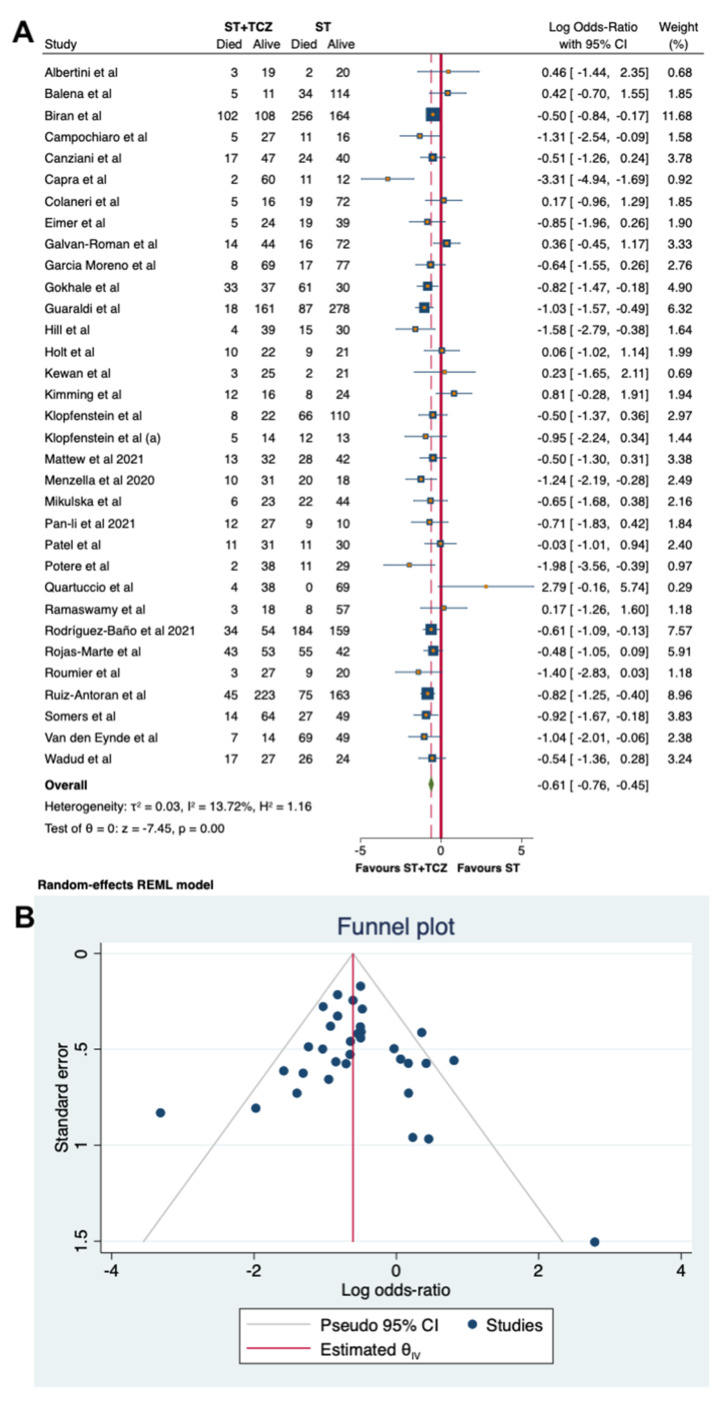
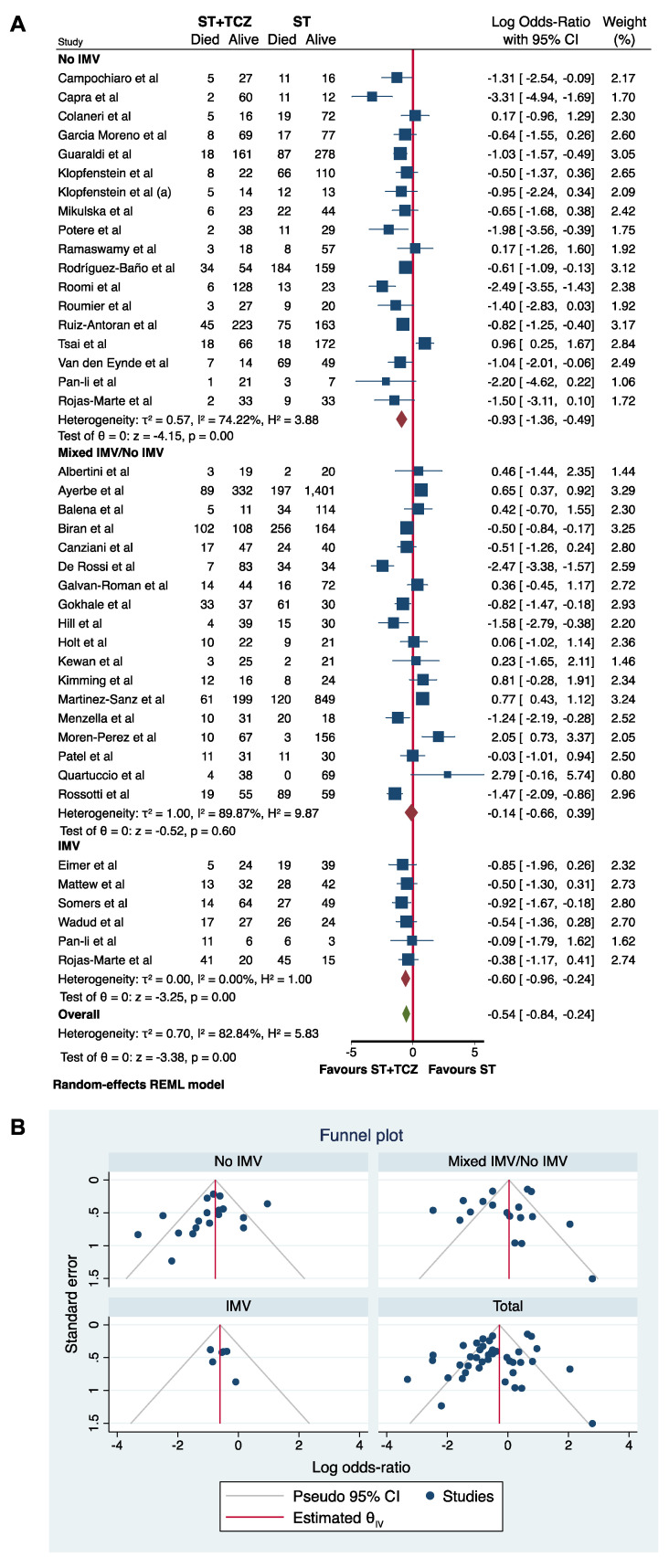
Data supporting the use of Tocilizumab (TCZ) in COVID-19 are contrasting and inconclusive. This meta-analysis aimed to assess TCZ effectiveness in reducing the mortality rate in COVID-19 patients. PubMed, Scopus, Embase, Cochrane, WILEY, and ClinicalTrials.gov were searched to evaluate observational studies and RCTs. The outcome was the mortality rate. Forty observational studies and seven RCTs, involving 9640 and 5556 subjects treated with Standard Therapy (ST) + TCZ or ST alone, respectively, were included. In patients treated with ST+TCZ, a higher survival (Log odds ratio = -0.41; 95% CI: -0.68 -0.14; < 0.001) was found. Subgroups analyses were performed to better identify the possible interference of some parameters in modifying the efficacy of TCZ therapy on COVID-19 mortality. Separating observational from RCTs, no statistically significant ( = 0.70) TCZ-related reduction of mortality regarding RCTs was found, while a significant reduction (Log odds ratio = -0.52; 95% CI: -0.82 -0.22, < 0.001) was achieved regarding the observational studies. Stratifying for the use of Invasive Mechanic Ventilation (IMV), a higher survival was found in patients treated with TCZ in the No-IMV and IMV groups (both < 0.001), but not in the No-IMV/IMV group. Meta-regression analyses were also performed. The meta-analysis of observational studies reveals that TCZ is associated with reducing the mortality rate in both severe and critically ill patients. Although the largest RCT, RECOVERY, is in line with this result, the meta-analysis of RCTs failed to found any difference between ST + TCZ and ST. It is crucial to personalize the therapy considering the patients' characteristics.
支持在新型冠状病毒肺炎(COVID-19)中使用托珠单抗(TCZ)的数据存在矛盾且尚无定论。本荟萃分析旨在评估TCZ在降低COVID-19患者死亡率方面的有效性。检索了PubMed、Scopus、Embase、Cochrane、WILEY和ClinicalTrials.gov以评估观察性研究和随机对照试验(RCT)。结局指标为死亡率。纳入了40项观察性研究和7项RCT,分别涉及9640名和5556名接受标准治疗(ST)+TCZ或仅接受ST治疗的受试者。在接受ST+TCZ治疗的患者中,发现生存率更高(对数比值比=-0.41;95%置信区间:-0.68至-0.14;P<0.001)。进行亚组分析以更好地确定某些参数对TCZ治疗COVID-19死亡率疗效的可能干扰。将观察性研究与RCT分开分析,未发现RCT中与TCZ相关的死亡率降低具有统计学意义(P=0.70),而观察性研究则有显著降低(对数比值比=-0.52;95%置信区间:-0.82至-0.22,P<0.001)。根据有创机械通气(IMV)的使用情况进行分层,在非IMV组和IMV组中接受TCZ治疗的患者生存率更高(均P<0.001),但在非IMV/IMV组中并非如此。还进行了meta回归分析。观察性研究的荟萃分析表明,TCZ与降低重症和危重症患者的死亡率相关。尽管最大的RCT“康复”试验(RECOVERY)与这一结果一致,但RCT的荟萃分析未能发现ST+TCZ与ST之间存在任何差异。考虑患者特征进行个性化治疗至关重要。