Department of Medicine, Surgery, and Dentistry, Scuola Medica Salernitana, University of Salerno, Baronissi, Italy.
Clinical Pharmacology Unit, San Giovanni di Dio e Ruggi d'Aragona University Hospital, Salerno, Italy.
JAMA Netw Open. 2022 Apr 1;5(4):e227970. doi: 10.1001/jamanetworkopen.2022.7970.
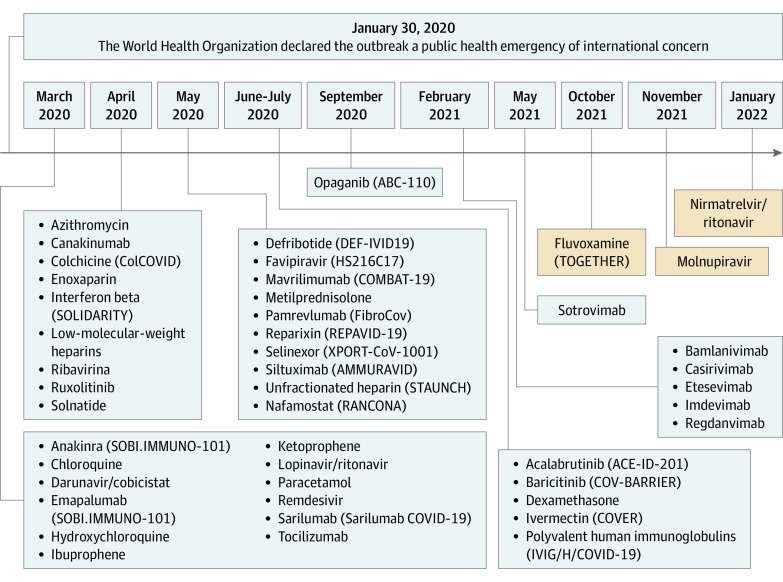
During the COVID-19 pandemic, urgent clinical management of patients has mainly included drugs currently administered for other diseases, referred to as repositioned drugs. As a result, some of these drugs have proved to be not only ineffective but also harmful because of adverse events associated with drug-drug interactions (DDIs).
To identify DDIs that led to adverse clinical outcomes and/or adverse drug reactions in patients with COVID-19 by systematically reviewing the literature and assessing the value of drug interaction checkers in identifying such events.
After identification of the drugs used during the COVID-19 pandemic, the drug interaction checkers Drugs.com, COVID-19 Drug Interactions, LexiComp, Medscape, and WebMD were consulted to analyze theoretical DDI-associated adverse events in patients with COVID-19 from March 1, 2020, through February 28, 2022. A systematic literature review was performed by searching the databases PubMed, Scopus, and Cochrane for articles published from March 1, 2020, through February 28, 2022, to retrieve articles describing actual adverse events associated with DDIs. The drug interaction checkers were consulted again to evaluate their potential to assess such events.
The DDIs identified in the reviewed articles involved 46 different drugs. In total, 575 DDIs for 58 drug pairs (305 associated with at least 1 adverse drug reaction) were reported. The drugs most involved in DDIs were lopinavir and ritonavir. Of the 6917 identified studies, 20 met the inclusion criteria. These studies, which enrolled 1297 patients overall, reported 115 DDI-related adverse events: 15 (26%) were identifiable by all tools analyzed, 29 (50%) were identifiable by at least 1 of them, and 14 (24%) remained nonidentifiable.
The main finding of this systematic review is that the use of drug interaction checkers could have identified several DDI-associated adverse drug reactions, including severe and life-threatening events. Both the interactions between the drugs used to treat COVID-19 and between the COVID-19 drugs and those already used by the patients should be evaluated.
在 COVID-19 大流行期间,对患者的紧急临床治疗主要包括目前用于其他疾病的药物,这些药物被称为重新定位药物。因此,由于药物-药物相互作用(DDI)相关的不良事件,其中一些药物不仅无效,而且有害。
通过系统审查文献并评估药物相互作用检查器在识别此类事件中的价值,确定导致 COVID-19 患者出现不良临床结局和/或不良药物反应的 DDI。
确定 COVID-19 大流行期间使用的药物后,查阅 Drugs.com、COVID-19 药物相互作用、LexiComp、Medscape 和 WebMD 等药物相互作用检查器,分析 2020 年 3 月 1 日至 2022 年 2 月 28 日期间 COVID-19 患者中与理论 DDI 相关的不良事件。通过在 PubMed、Scopus 和 Cochrane 数据库中进行系统文献检索,检索 2020 年 3 月 1 日至 2022 年 2 月 28 日期间发表的描述与 DDI 相关的实际不良事件的文章,进行系统文献综述。再次查阅药物相互作用检查器,评估其评估此类事件的能力。
综述文章中确定的 DDI 涉及 46 种不同的药物。总共报告了 58 对药物的 575 种 DDI(305 种与至少 1 种不良药物反应相关)。涉及 DDI 的药物主要是洛匹那韦和利托那韦。在确定的 6917 项研究中,有 20 项符合纳入标准。这些研究共纳入 1297 例患者,报告了 115 例与 DDI 相关的不良事件:15 例(26%)可被所有分析的工具识别,29 例(50%)可被至少 1 种工具识别,14 例(24%)仍无法识别。
这项系统综述的主要发现是,使用药物相互作用检查器可以识别出几种与 DDI 相关的不良药物反应,包括严重和危及生命的事件。应评估用于治疗 COVID-19 的药物之间以及 COVID-19 药物与患者已用药物之间的相互作用。