Charité - Universitätsmedizin Berlin, Diagnostic and Interventional Radiology and Nuclear Medicine, corporate member of Freie Universität Berlin, Humboldt-Universität zu Berlin, and Berlin Institute of Health, Augustenburger Platz 1, 13353, Berlin, Germany.
Charité - Universitätsmedizin Berlin, Center for Musculoskeletal Surgery, corporate member of Freie Universität Berlin, Humboldt-Universität zu Berlin, and Berlin Institute of Health, Augustenburger Platz 1, 13353, Berlin, Germany.
Int Orthop. 2021 Dec;45(12):3213-3219. doi: 10.1007/s00264-021-05135-w. Epub 2021 Aug 6.
Lisfranc injuries are rare and often pose a challenge for surgeons, particularly in initially missed or neglected cases. The evidence on which subtypes of Lisfranc injuries are suitable for conservative treatment or should undergo surgery is low. The aim of this study was to retrospectively analyze treatment decisions of Lisfranc injuries and the clinical outcome of these patients within the last ten years.
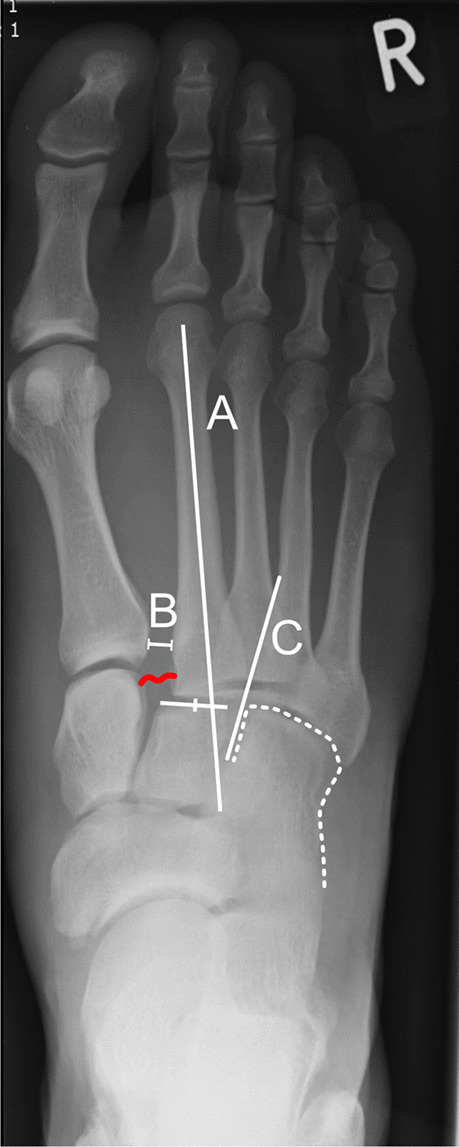
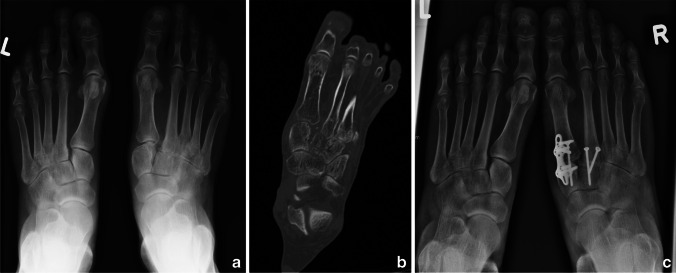
All patients treated due to a Lisfranc injury in a German level I trauma centre from January 2011 until December 2020 were included in this study. Radiologic images and medical data from the patient files were analyzed concerning the classification of injury, specific radiologic variables, such as the Buehren criteria, patient baseline characteristics, and patient outcome reported with the Foot Function Index (FFI).
Ninety-nine patients were included in this study (conservative = 20, operative = 79). The overall clinical outcome assessed by the FFI was good (FFI sum 23.93, SD 24.93); patients that were identified as suitable for conservative treatment did not show inferior functional results. Qualitative radiological factors like the grade of displacement and the trauma mechanism were more strongly associated with the decision for surgical treatment than quantitative radiologic factors such as the distance from the first to the second metatarsal bone.
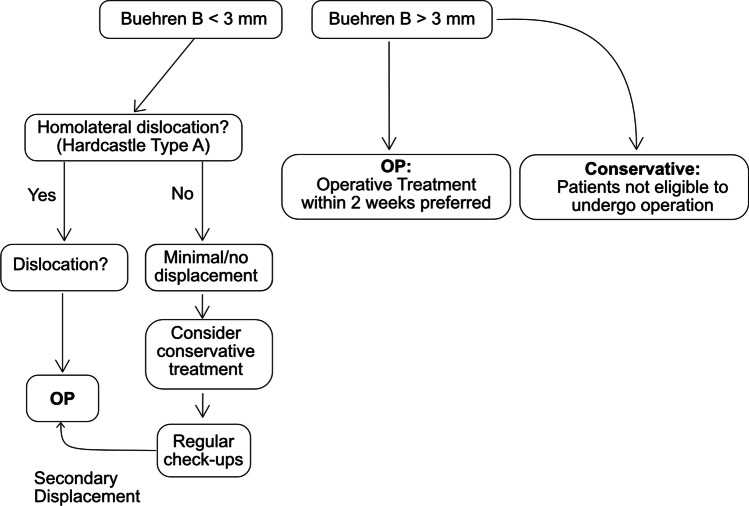
If the indication for conservative or operative treatment of Lisfranc injuries is determined correctly, the clinical outcome can be comparable. These decisions should be based on several factors including quantitative and qualitative radiologic criteria, as well as the trauma mechanism.
跖跗关节损伤较为罕见,且常令外科医生感到棘手,尤其是在最初漏诊或处理不当的情况下。对于适合保守治疗或应行手术治疗的跖跗关节损伤的亚类,相关证据有限。本研究旨在回顾性分析过去十年间跖跗关节损伤的治疗决策以及这些患者的临床转归。
本研究纳入了 2011 年 1 月至 2020 年 12 月期间在德国一级创伤中心因跖跗关节损伤而接受治疗的所有患者。分析了患者病历中的影像学图像和医疗数据,包括损伤分类、特定影像学变量(如 Buehren 标准)、患者基线特征以及采用足功能指数(FFI)报告的患者结局。
本研究共纳入了 99 例患者(保守治疗 20 例,手术治疗 79 例)。采用 FFI 评估的总体临床转归良好(FFI 总分 23.93,SD 24.93);适合保守治疗的患者并未显示出功能结果较差的情况。定性影像学因素(如移位程度和创伤机制)与手术治疗决策的相关性强于定量影像学因素(如第一和第二跖骨之间的距离)。
如果正确确定了跖跗关节损伤的保守治疗或手术治疗适应证,则临床转归可能具有可比性。这些决策应基于包括定量和定性影像学标准以及创伤机制在内的多种因素。