Schultz Emily M, Jones TyAnthony J, Xu Sibei, Dean Dana D, Zechmann Bernd, Barr Kelli L
Department of Biology, Baylor University, Waco, TX 76706, USA.
Center for Microscopy and Imaging, Baylor University, Waco, TX 76706, USA.
Pathogens. 2021 Jul 20;10(7):913. doi: 10.3390/pathogens10070913.
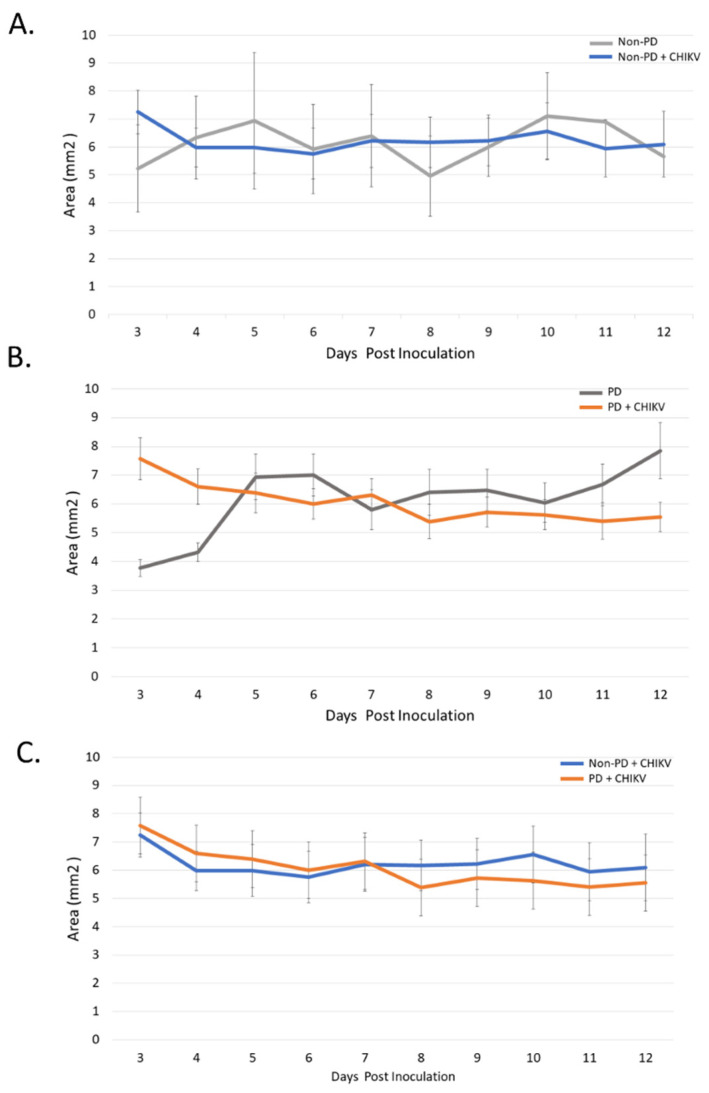
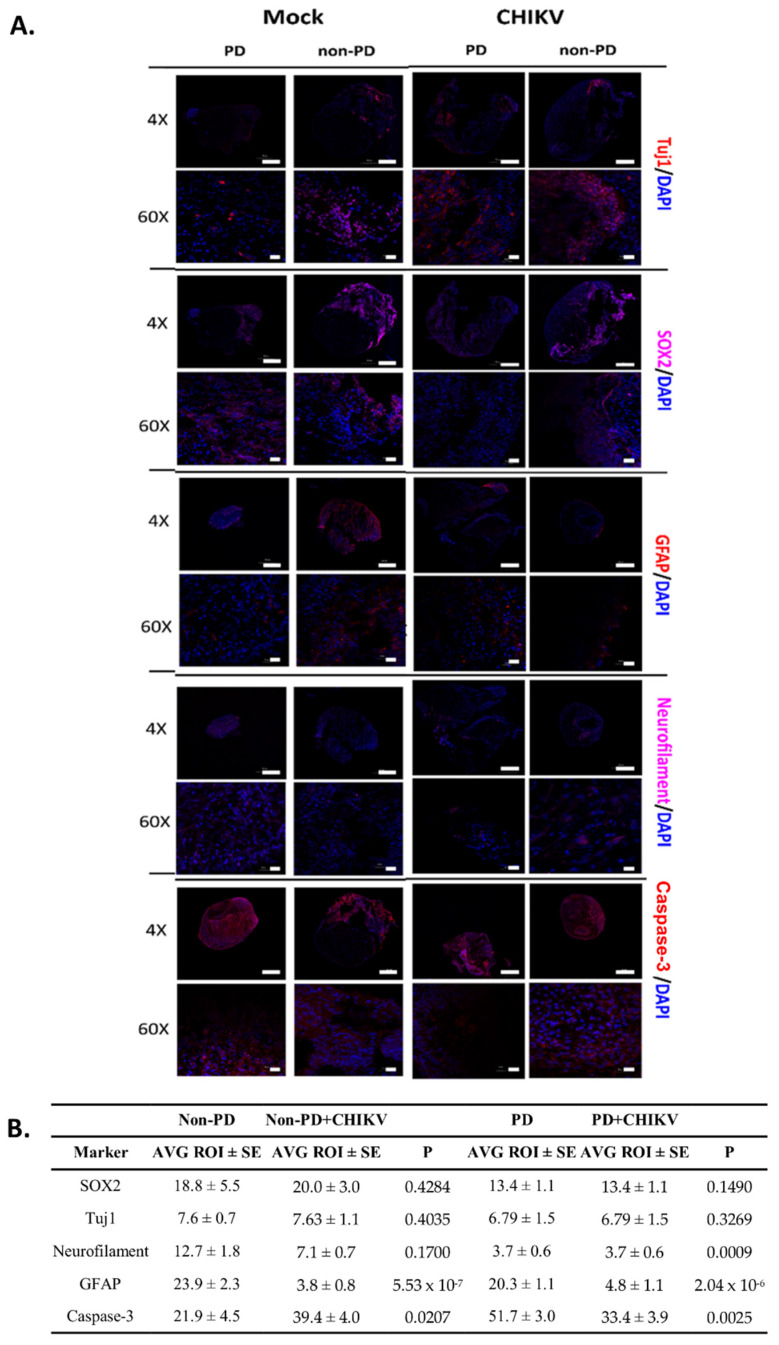
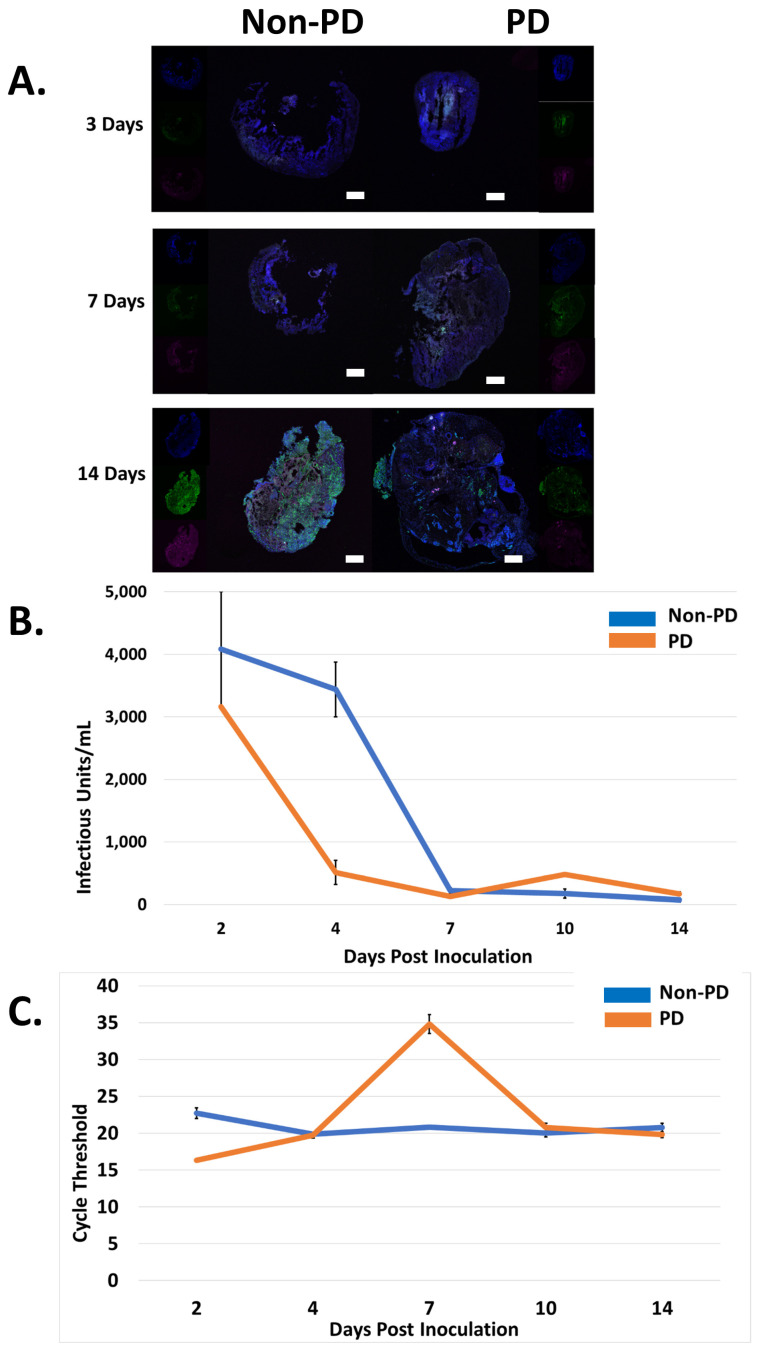
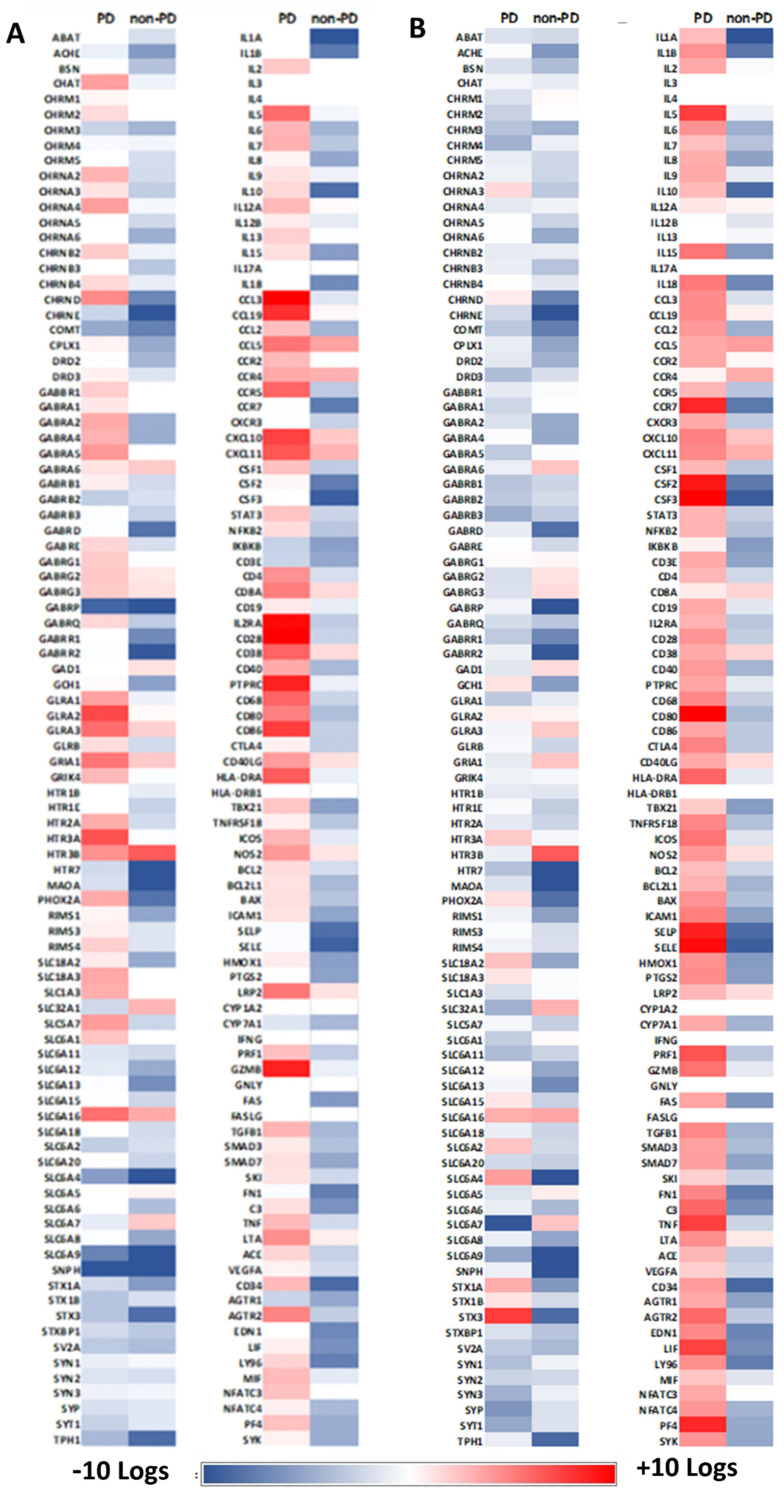
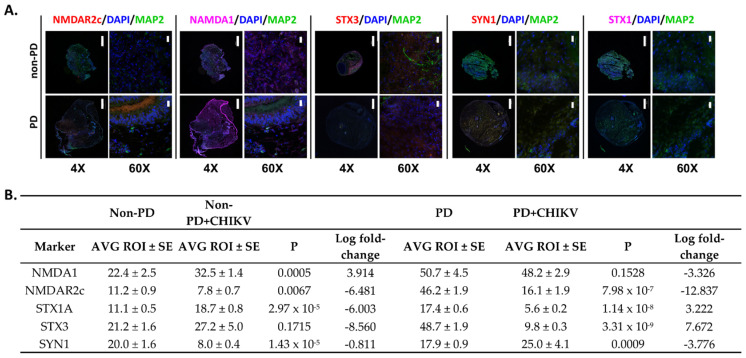
(1) Background: Arboviruses of medical and veterinary significance have been identified on all seven continents, with every human and animal population at risk for exposure. Like arboviruses, chronic neurodegenerative diseases, like Alzheimer's and Parkinson's disease, are found wherever there are humans. Significant differences in baseline gene and protein expression have been determined between human-induced pluripotent stem cell lines derived from non-Parkinson's disease individuals and from individuals with Parkinson's disease. It was hypothesized that these inherent differences could impact cerebral organoid responses to viral infection. (2) Methods: In this study, cerebral organoids from a non-Parkinson's and Parkinson's patient were infected with Chikungunya virus and observed for two weeks. (3) Results: Parkinson's organoids lost mass and exhibited a differential antiviral response different from non-Parkinson's organoids. Neurotransmission data from both infected non-Parkinson's and Parkinson's organoids had dysregulation of IL-1, IL-10, and IL-6. These cytokines are associated with mood and could be contributing to persistent depression seen in patients following CHIKV infection. Both organoid types had increased expression of CXCL10, which is linked to demyelination. (4) Conclusions: The differential antiviral response of Parkinson's organoids compared with non-Parkinson's organoids highlights the need for more research in neurotropic infections in a neurologically compromised host.
(1)背景:具有医学和兽医学意义的虫媒病毒已在所有七大洲被发现,每个人类和动物群体都有接触风险。与虫媒病毒一样,阿尔茨海默病和帕金森病等慢性神经退行性疾病在有人类的任何地方都有发现。已确定源自非帕金森病个体和帕金森病个体的人类诱导多能干细胞系之间在基线基因和蛋白质表达上存在显著差异。据推测,这些内在差异可能会影响脑类器官对病毒感染的反应。(2)方法:在本研究中,用基孔肯雅病毒感染一名非帕金森病患者和一名帕金森病患者的脑类器官,并观察两周。(3)结果:帕金森病类器官质量减轻,并表现出与非帕金森病类器官不同的抗病毒反应差异。来自受感染的非帕金森病和帕金森病类器官的神经传递数据显示白细胞介素-1、白细胞介素-10和白细胞介素-6失调。这些细胞因子与情绪有关,可能导致基孔肯雅病毒感染患者出现持续性抑郁。两种类器官类型中趋化因子CXCL10的表达均增加,这与脱髓鞘有关。(4)结论:与非帕金森病类器官相比,帕金森病类器官的抗病毒反应差异突出表明,需要对神经功能受损宿主中的嗜神经感染进行更多研究。