Proctor Martina, Gonzalez Cruz Jazmina L, Daignault-Mill Sheena M, Veitch Margaret, Zeng Bijun, Ehmann Anna, Sabdia Muhammed, Snell Cameron, Keane Colm, Dolcetti Riccardo, Haass Nikolas K, Wells James W, Gabrielli Brian
Mater Research Institute, The University of Queensland, Brisbane, QLD 4102, Australia.
The University of Queensland Diamantina Institute, The University of Queensland, Brisbane, QLD 4102, Australia.
Cancers (Basel). 2021 Jul 25;13(15):3733. doi: 10.3390/cancers13153733.
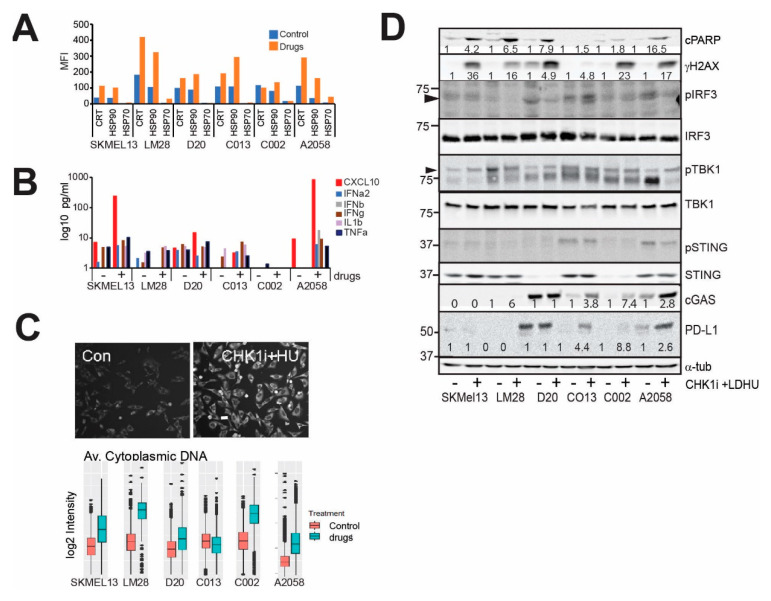
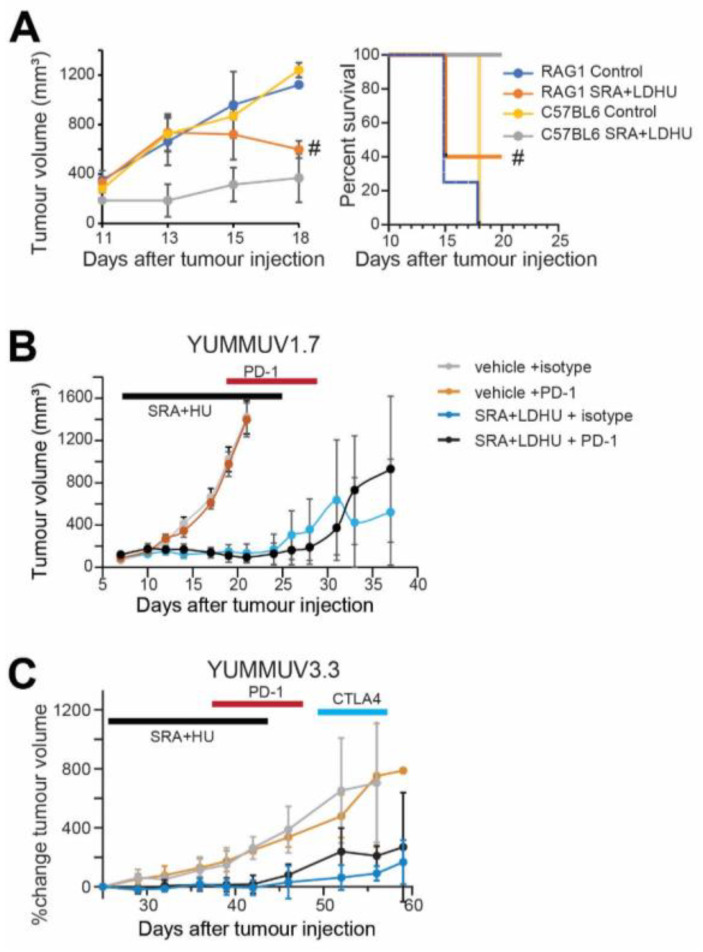
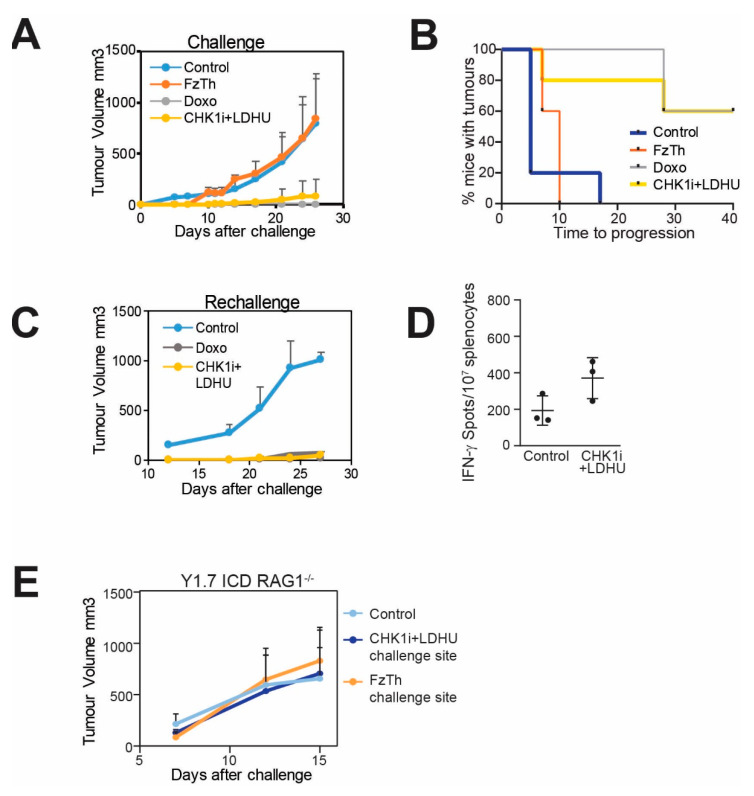
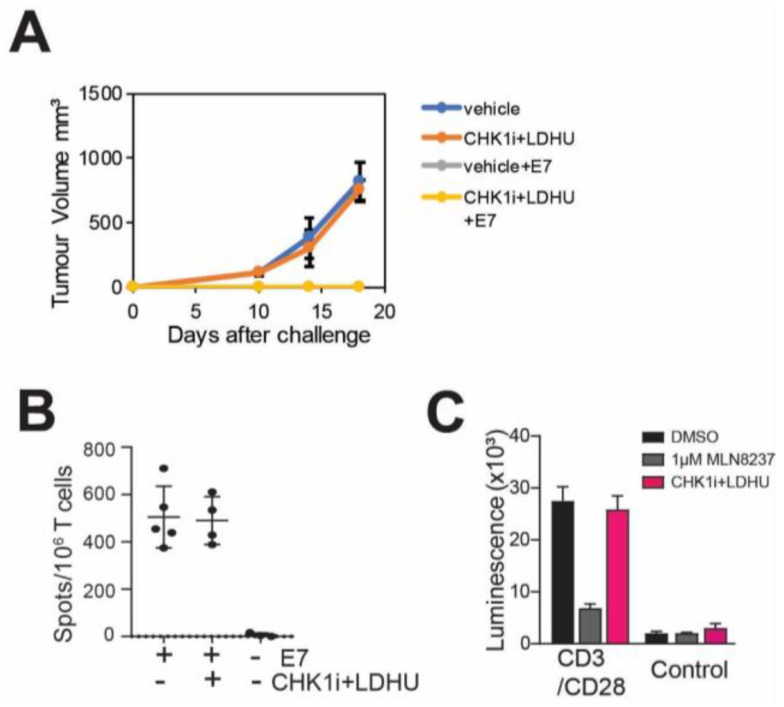
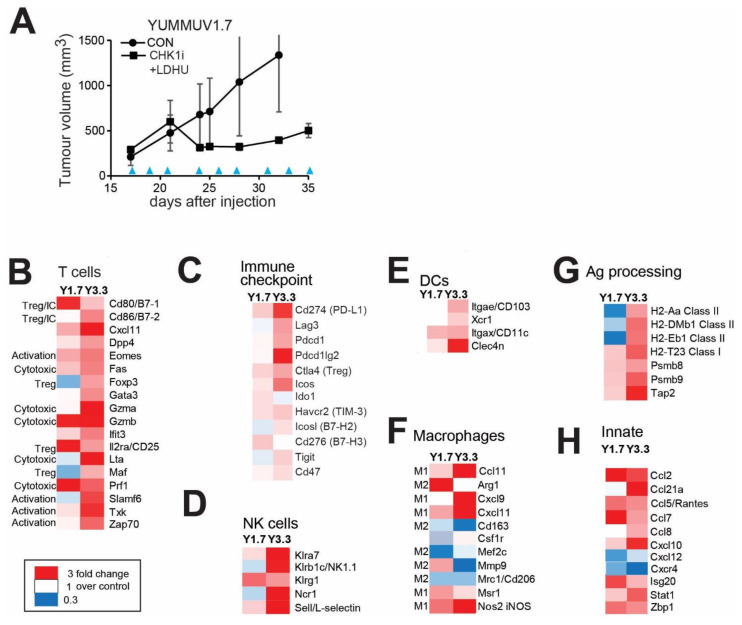
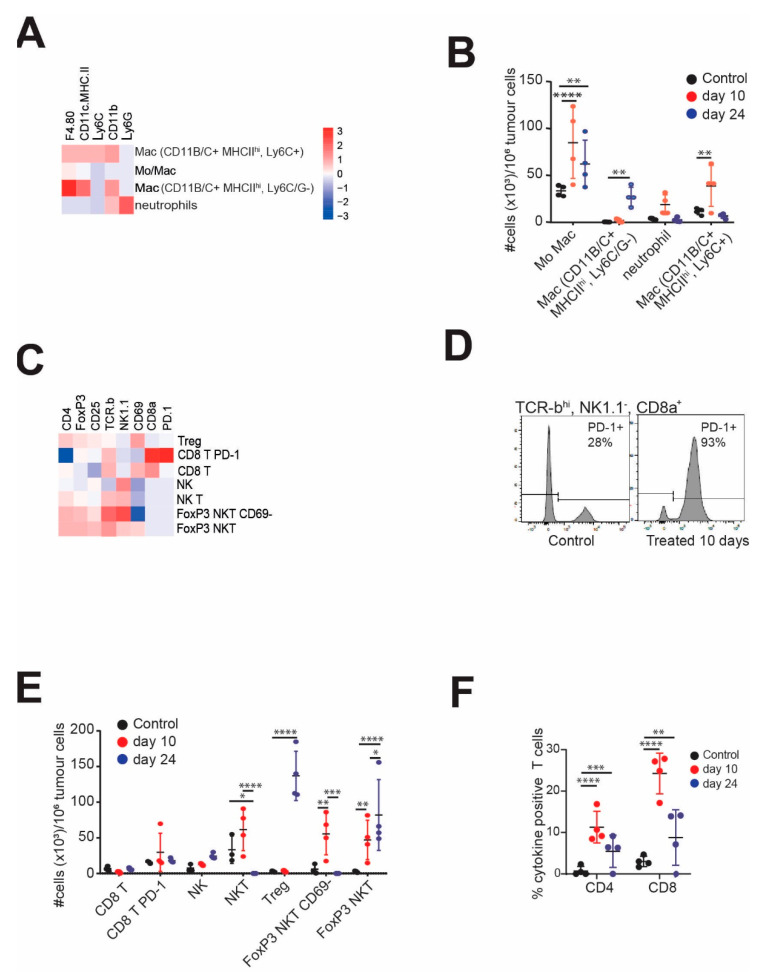
Drugs selectively targeting replication stress have demonstrated significant preclinical activity, but this has not yet translated into an effective clinical treatment. Here we report that targeting increased replication stress with a combination of Checkpoint kinase 1 inhibitor (CHK1i) with a subclinical dose of hydroxyurea targets also promotes pro-inflammatory cytokine/chemokine expression that is independent of cGAS-STING pathway activation and immunogenic cell death in human and murine melanoma cells. In vivo, this drug combination induces tumour regression which is dependent on an adaptive immune response. It increases cytotoxic CD8 T cell activity, but the major adaptive immune response is a pronounced NKT cell tumour infiltration. Treatment also promotes an immunosuppressive tumour microenvironment through CD4 Treg and FoxP3 NKT cells. The number of these accumulated during treatment, the increase in FoxP3 NKT cells numbers correlates with the decrease in activated NKT cells, suggesting they are a consequence of the conversion of effector to suppressive NKT cells. Whereas tumour infiltrating CD8 T cell PD-1 and tumour PD-L1 expression was increased with treatment, peripheral CD4 and CD8 T cells retained strong anti-tumour activity. Despite increased CD8 T cell PD-1, combination with anti-PD-1 did not improve response, indicating that immunosuppression from Tregs and FoxP3 NKT cells are major contributors to the immunosuppressive tumour microenvironment. This demonstrates that therapies targeting replication stress can be well tolerated, not adversely affect immune responses, and trigger an effective anti-tumour immune response.
选择性靶向复制应激的药物已在临床前研究中显示出显著活性,但尚未转化为有效的临床治疗方法。在此,我们报告,将检查点激酶1抑制剂(CHK1i)与亚临床剂量的羟基脲联合使用以靶向增加的复制应激,还会促进人源和鼠源黑色素瘤细胞中促炎细胞因子/趋化因子的表达,这种表达独立于cGAS-STING途径激活和免疫原性细胞死亡。在体内,这种药物组合可诱导肿瘤消退,且该消退依赖于适应性免疫反应。它会增加细胞毒性CD8 T细胞活性,但主要的适应性免疫反应是明显的NKT细胞肿瘤浸润。治疗还通过CD4 Treg和FoxP3 NKT细胞促进免疫抑制性肿瘤微环境的形成。在治疗过程中这些细胞会积累,FoxP3 NKT细胞数量的增加与活化NKT细胞数量的减少相关,这表明它们是效应性NKT细胞向抑制性NKT细胞转化的结果。虽然治疗后肿瘤浸润性CD8 T细胞的PD-1和肿瘤的PD-L1表达增加,但外周CD4和CD8 T细胞仍保留强大的抗肿瘤活性。尽管CD8 T细胞的PD-1增加,但与抗PD-1联合使用并未改善疗效,这表明Tregs和FoxP3 NKT细胞引起的免疫抑制是免疫抑制性肿瘤微环境的主要促成因素。这表明靶向复制应激的疗法耐受性良好,不会对免疫反应产生不利影响,并能触发有效的抗肿瘤免疫反应。