Key Laboratory of Neuroregeneration of Jiangsu and Ministry of Education, Co-Innovation Center of Neuroregeneration, Nantong University, 19 Qixiu Road, Nantong 226001, China.
CAS Key Laboratory of Separation Sciences of Analytical Chemistry, Dalian Institute of Chemical Physics, Chinese Academy of Sciences, Zhongshan Road 457, Dalian 116023, China.
Int J Mol Sci. 2021 Jul 26;22(15):7977. doi: 10.3390/ijms22157977.
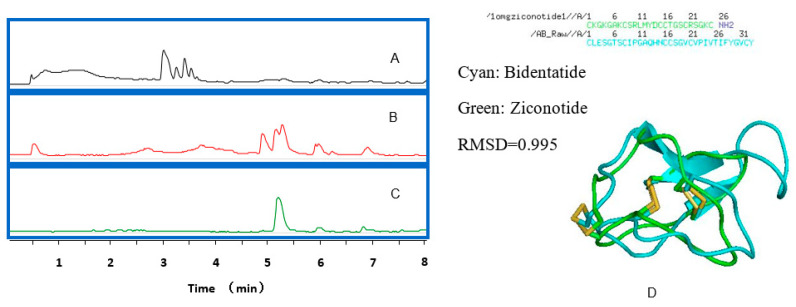
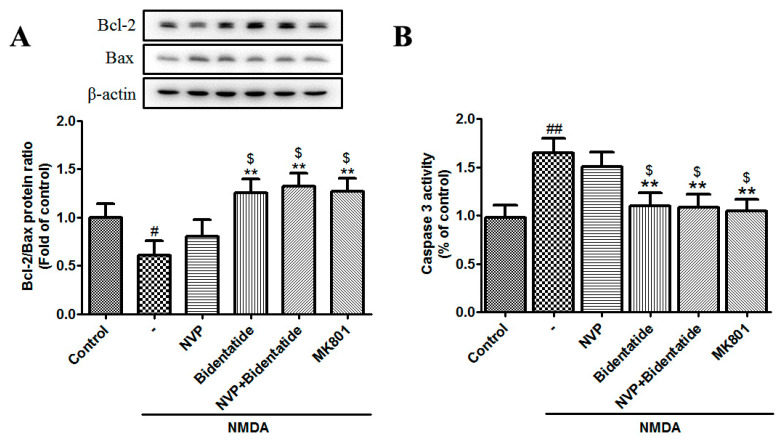
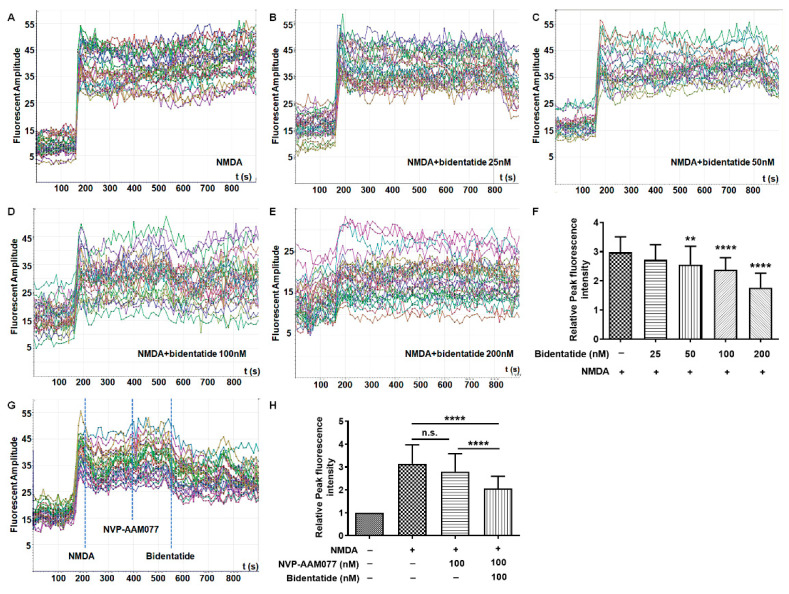
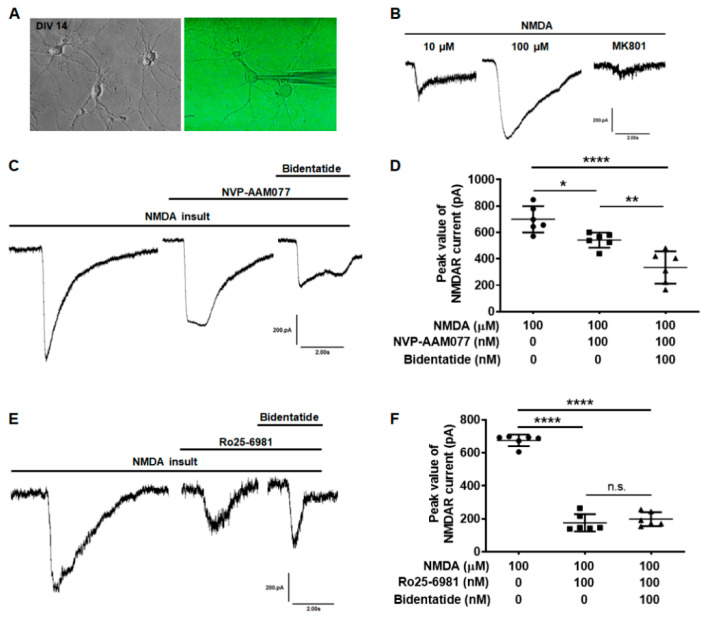
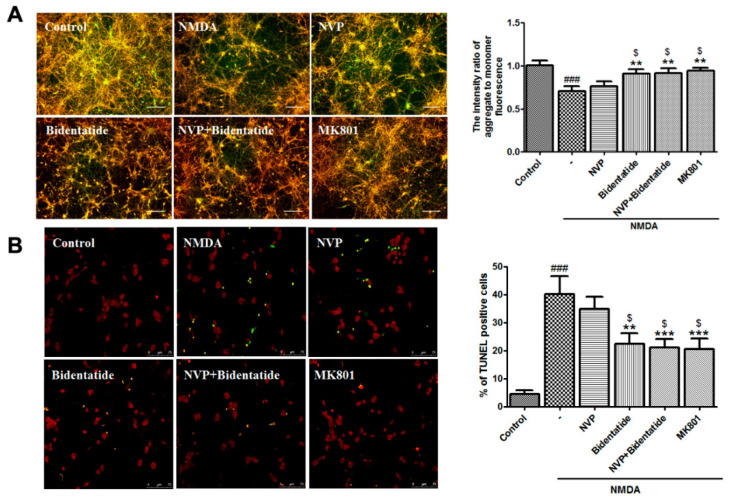
Increasing attention is being focused on the use of polypeptide-based N-methyl-d-aspartate (NMDA) receptor antagonists for the treatment of nervous system disorders. In our study on Blume, we identified an NMDA receptor subtype 2B (NR2B) antagonist that exerts distinct neuroprotective actions. This antagonist is a 33 amino acid peptide, named bidentatide, which contains three disulfide bridges that form a cysteine knot motif. We determined the neuroactive potential of bidentatide by evaluating its in vitro effects against NMDA-mediated excitotoxicity. The results showed that pretreating primary cultured hippocampal neurons with bidentatide prevented NMDA-induced cell death and apoptosis via multiple mechanisms that involved intracellular Ca inhibition, NMDA current inhibition, and apoptosis-related protein expression regulation. These mechanisms were all dependent on bidentatide-induced inhibitory regulation of NR2B-containing NMDA receptors; thus, bidentatide may contribute to the development of neuroprotective agents that would likely possess the high selectivity and safety profiles inherent in peptide drugs.
人们越来越关注使用基于多肽的 N-甲基-D-天冬氨酸(NMDA)受体拮抗剂来治疗神经系统疾病。在我们对 Blume 的研究中,我们发现了一种 NMDA 受体亚型 2B(NR2B)拮抗剂,它具有独特的神经保护作用。这种拮抗剂是一种 33 个氨基酸的肽,名为双去甲替肽,它含有三个二硫键,形成半胱氨酸结基序。我们通过评估其对 NMDA 介导的兴奋性毒性的体外作用来确定双去甲替肽的神经活性潜力。结果表明,用双去甲替肽预处理原代培养的海马神经元可以通过多种机制预防 NMDA 诱导的细胞死亡和细胞凋亡,这些机制涉及细胞内 Ca 抑制、NMDA 电流抑制和凋亡相关蛋白表达调节。所有这些机制都依赖于双去甲替肽诱导的含 NR2B 的 NMDA 受体抑制调节;因此,双去甲替肽可能有助于开发具有肽类药物固有高选择性和安全性特征的神经保护剂。