Department for Molecular Biology, Ruđer Bošković Institute, Bijenička Cesta 54, 10000 Zagreb, Croatia.
Department for Molecular Biology, Faculty of Science, University of Zagreb, Horvatovac 102, 10000 Zagreb, Croatia.
Int J Mol Sci. 2021 Jul 27;22(15):7993. doi: 10.3390/ijms22157993.
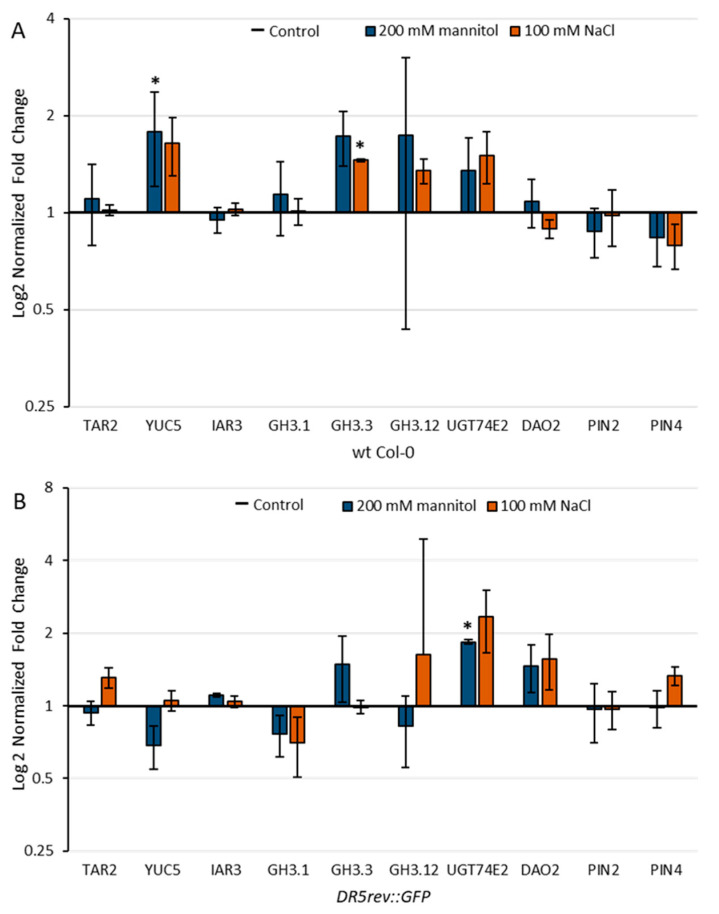
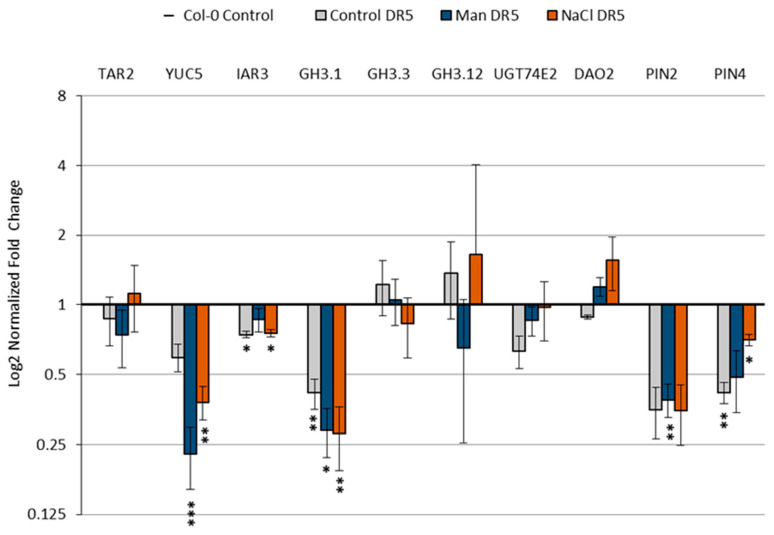
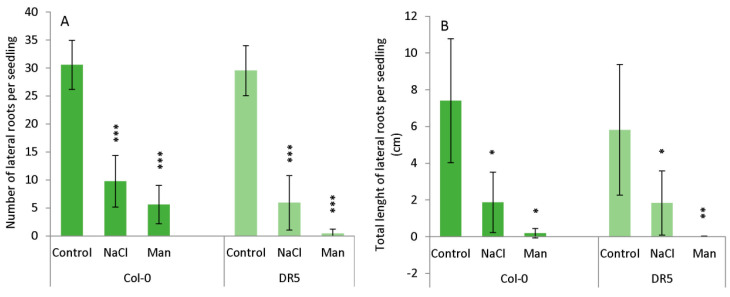
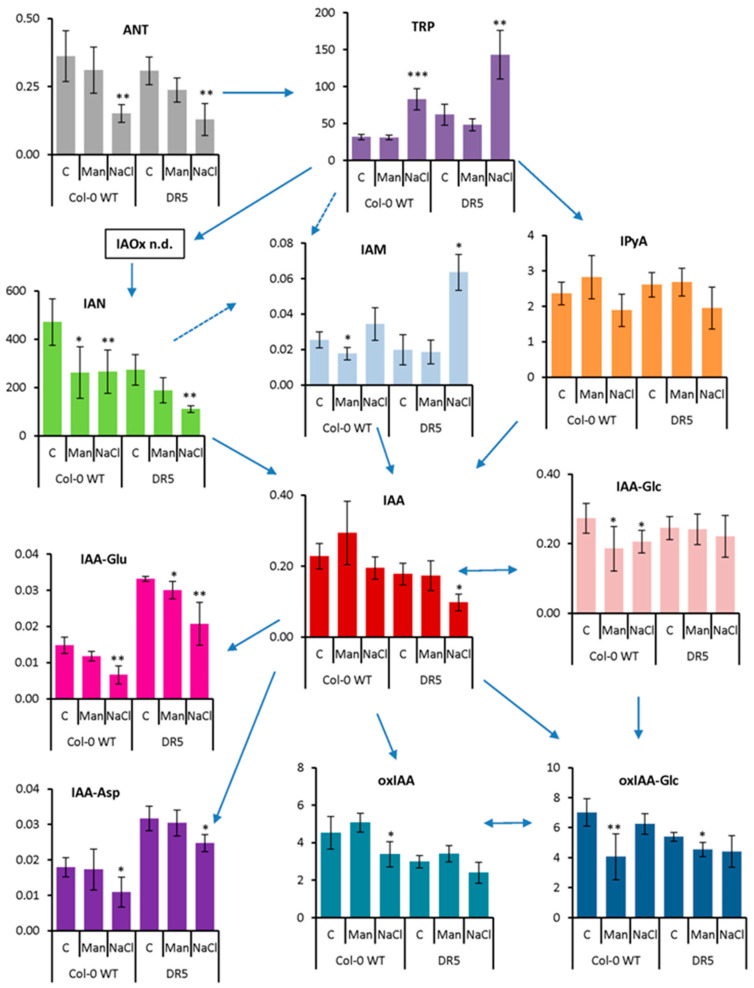
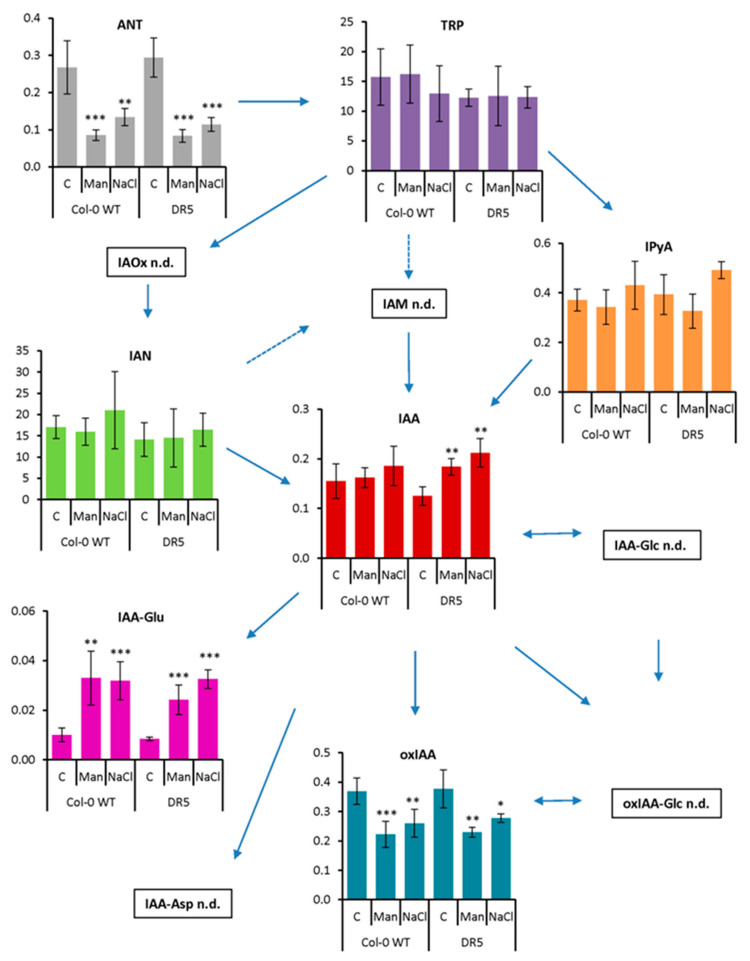
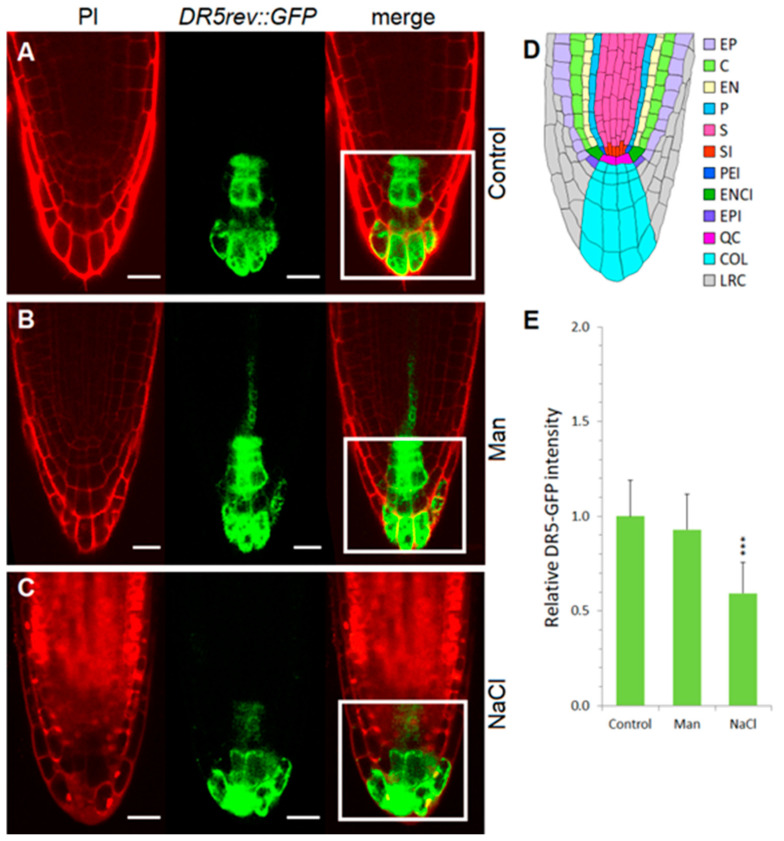
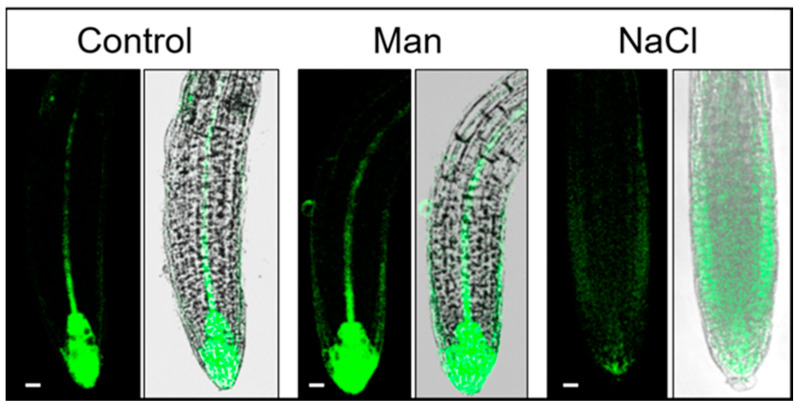
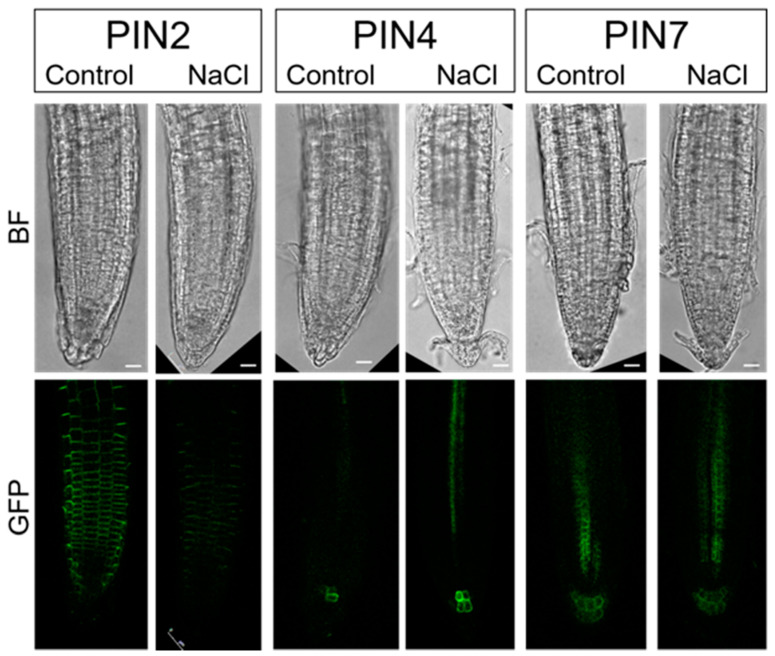
Salt and osmotic stress are the main abiotic stress factors affecting plant root growth and architecture. We investigated the effect of salt (100 mM NaCl) and osmotic (200 mM mannitol) stress on the auxin metabolome by UHPLC-MS/MS, auxin distribution by confocal microscopy, and transcript levels of selected genes by qRT-PCR in ecotype Columbia-0 (Col-0) and (DR5) line. During long-term stress (13 days), a stability of the auxin metabolome and a tendency to increase indole-3-acetic acid (IAA) were observed, especially during salt stress. Short-term stress (3 h) caused significant changes in the auxin metabolome, especially NaCl treatment resulted in a significant reduction of IAA. The data derived from auxin profiling were consistent with gene expressions showing the most striking changes in the transcripts of , , and transcripts, suggesting disruption of auxin biosynthesis, but especially in the processes of amide and ester conjugation. These data were consistent with the auxin distribution observed in the DR5 line. Moreover, NaCl treatment caused a redistribution of auxin signals from the quiescent center and the inner layers of the root cap to the epidermal and cortical cells of the root elongation zone. The distribution of PIN proteins was also disrupted by salt stress; in particular, PIN2 was suppressed, even after 5 min of treatment. Based on our results, the DR5 line was more sensitive to the applied stresses than Col-0, although both lines showed similar trends in root morphology, as well as transcriptome and metabolome parameters under stress conditions.
盐和渗透胁迫是影响植物根系生长和结构的主要非生物胁迫因素。我们通过 UHPLC-MS/MS 研究了盐(100 mM NaCl)和渗透(200 mM 甘露醇)胁迫对生长素代谢组的影响,通过共聚焦显微镜研究了生长素的分布,通过 qRT-PCR 研究了选定基因的转录水平,在生态型哥伦比亚-0 (Col-0) 和 (DR5) 系中。在长期胁迫(13 天)期间,观察到生长素代谢组的稳定性和生长素(IAA)增加的趋势,尤其是在盐胁迫期间。短期胁迫(3 h)导致生长素代谢组发生显著变化,尤其是 NaCl 处理导致 IAA 显著减少。生长素分析数据与基因表达数据一致,表明生长素生物合成的中断,但特别是在酰胺和酯结合过程中,基因表达显示 、 和 转录本的转录变化最为明显。这些数据与在 DR5 系中观察到的生长素分布一致。此外,NaCl 处理导致生长素信号从静止中心和根冠内层重新分配到根伸长区的表皮和皮层细胞。盐胁迫也破坏了 PIN 蛋白的分布;特别是,PIN2 甚至在处理 5 分钟后就被抑制。根据我们的结果,DR5 系比 Col-0 对施加的胁迫更敏感,尽管在胁迫条件下,这两种系的根形态以及转录组和代谢组参数都表现出相似的趋势。