• 文献检索
  • 文档翻译
  • 深度研究
  • 学术资讯
  • Suppr Zotero 插件Zotero 插件
  • 邀请有礼
  • 套餐&价格
  • 历史记录
应用&插件
Suppr Zotero 插件Zotero 插件浏览器插件Mac 客户端Windows 客户端微信小程序
定价
高级版会员购买积分包购买API积分包
服务
文献检索文档翻译深度研究API 文档MCP 服务
关于我们
关于 Suppr公司介绍联系我们用户协议隐私条款
关注我们

Suppr 超能文献

核心技术专利:CN118964589B侵权必究
粤ICP备2023148730 号-1Suppr @ 2026

文献检索

告别复杂PubMed语法,用中文像聊天一样搜索,搜遍4000万医学文献。AI智能推荐,让科研检索更轻松。

立即免费搜索

文件翻译

保留排版,准确专业,支持PDF/Word/PPT等文件格式,支持 12+语言互译。

免费翻译文档

深度研究

AI帮你快速写综述,25分钟生成高质量综述,智能提取关键信息,辅助科研写作。

立即免费体验

亚美尼亚和纳戈尔诺-卡拉巴赫陆地温泉的微生物多样性:综述

Microbial Diversity of Terrestrial Geothermal Springs in Armenia and Nagorno-Karabakh: A Review.

作者信息

Saghatelyan Ani, Margaryan Armine, Panosyan Hovik, Birkeland Nils-Kåre

机构信息

Department of Biochemistry, Microbiology and Biotechnology, Yerevan State University, Alex Manoogian 1, Yerevan 0025, Armenia.

Research Institute of Biology, Yerevan State University, Alex Manoogian 1, Yerevan 0025, Armenia.

出版信息

Microorganisms. 2021 Jul 9;9(7):1473. doi: 10.3390/microorganisms9071473.

DOI:10.3390/microorganisms9071473
PMID:34361908
原文链接:https://pmc.ncbi.nlm.nih.gov/articles/PMC8307006/
Abstract

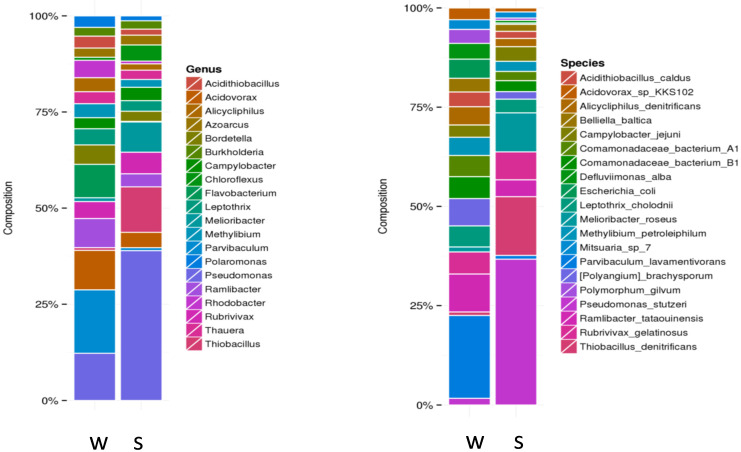
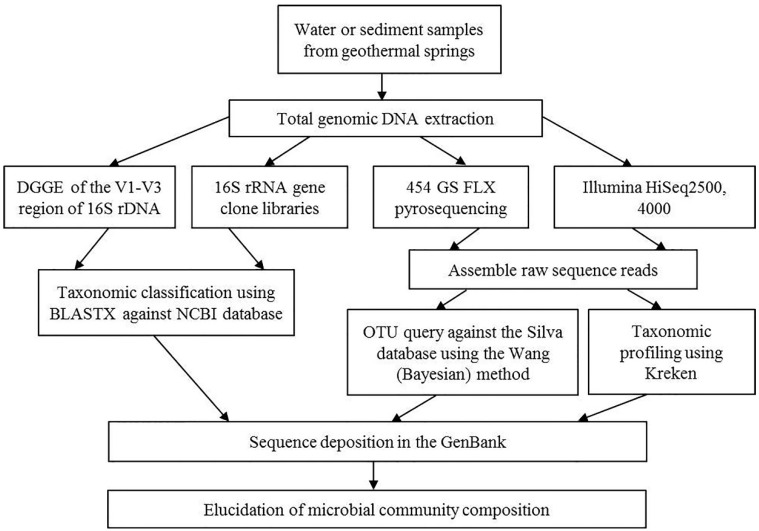
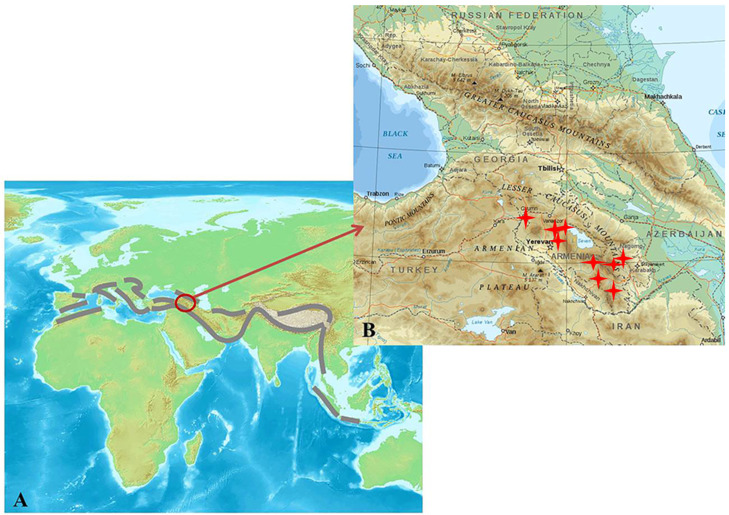
The microbial diversity of high-altitude geothermal springs has been recently assessed to explore their biotechnological potential. However, little is known regarding the microbiota of similar ecosystems located on the Armenian Highland. This review summarizes the known information on the microbiota of nine high-altitude mineralized geothermal springs (temperature range 25.8-70 °C and pH range 6.0-7.5) in Armenia and Nagorno-Karabakh. All these geothermal springs are at altitudes ranging from 960-2090 m above sea level and are located on the Alpide (Alpine-Himalayan) orogenic belt, a seismically active region. A mixed-cation mixed-anion composition, with total mineralization of 0.5 mg/L, has been identified for these thermal springs. The taxonomic diversity of hot spring microbiomes has been examined using culture-independent approaches, including denaturing gradient gel electrophoresis (DGGE), 16S rRNA gene library construction, 454 pyrosequencing, and Illumina HiSeq. The bacterial phyla Proteobacteria, Bacteroidetes, Cyanobacteria, and Firmicutes are the predominant life forms in the studied springs. Archaea mainly include the phyla Euryarchaeota, Crenarchaeota, and Thaumarchaeota, and comprise less than 1% of the prokaryotic community. Comparison of microbial diversity in springs from Karvachar with that described for other terrestrial hot springs revealed that Proteobacteria, Bacteroidetes, Actinobacteria, and Deinococcus-Thermus are the common bacterial groups in terrestrial hot springs. Contemporaneously, specific bacterial and archaeal taxa were observed in different springs. Evaluation of the carbon, sulfur, and nitrogen metabolism in these hot spring communities has revealed diversity in terms of metabolic activity. Temperature seems to be an important factor in shaping the microbial communities of these springs. Overall, the diversity and richness of the microbiota are negatively affected by increasing temperature. Other abiotic factors, including pH, mineralization, and geological history, also impact the structure and function of the microbial community. More than 130 bacterial and archaeal strains (, , and ) have been reported, some of which may be representative of novel species (sharing 91-97% sequence identity with their closest matches in GenBank) and producers of thermozymes and biomolecules with potential biotechnological applications. Whole-genome shotgun sequencing of K1, as well as of the potentially new sp. J25 and sp. K1, were performed. Most of the phyla identified by 16S rRNA were also identified using metagenomic approaches. Detailed characterization of thermophilic isolates indicate the potential of the studied springs as a source of biotechnologically valuable microbes and biomolecules.

摘要

最近对高海拔地热泉的微生物多样性进行了评估,以探索其生物技术潜力。然而,对于亚美尼亚高原类似生态系统的微生物群落却知之甚少。本综述总结了亚美尼亚和纳戈尔诺-卡拉巴赫九个高海拔矿化地热泉(温度范围25.8-70°C,pH范围6.0-7.5)微生物群落的已知信息。所有这些地热泉海拔在海平面以上960-2090米之间,位于阿尔卑斯-喜马拉雅造山带这一地震活跃区域。已确定这些温泉具有混合阳离子-混合阴离子组成,总矿化度为0.5毫克/升。已使用非培养方法研究了温泉微生物群落的分类多样性,包括变性梯度凝胶电泳(DGGE)、16S rRNA基因文库构建、454焦磷酸测序和Illumina HiSeq。变形菌门、拟杆菌门、蓝细菌门和厚壁菌门是所研究温泉中的主要生命形式。古菌主要包括广古菌门、泉古菌门和奇古菌门,占原核生物群落的比例不到1%。将卡尔瓦恰尔温泉的微生物多样性与其他陆地温泉的微生物多样性进行比较发现,变形菌门、拟杆菌门、放线菌门和嗜热栖热菌-嗜热放线菌是陆地温泉中常见的细菌类群。同时,在不同温泉中观察到了特定的细菌和古菌类群。对这些温泉群落中碳、硫和氮代谢的评估揭示了代谢活性方面的多样性。温度似乎是塑造这些温泉微生物群落的一个重要因素。总体而言,微生物群落的多样性和丰富度受到温度升高的负面影响。其他非生物因素,包括pH值、矿化度和地质历史,也会影响微生物群落的结构和功能。已报道了130多种细菌和古菌菌株(、和),其中一些可能代表新物种(与GenBank中最相似的序列具有91-97%的序列同一性)以及具有潜在生物技术应用的热酶和生物分子的生产者。对K1以及潜在的新种J25和种K1进行了全基因组鸟枪法测序。通过16S rRNA鉴定的大多数门类也使用宏基因组学方法进行了鉴定。嗜热分离株的详细表征表明,所研究的温泉有潜力成为具有生物技术价值的微生物和生物分子的来源。
https://cdn.ncbi.nlm.nih.gov/pmc/blobs/bf68/8307006/5ca96f7d58c4/microorganisms-09-01473-g003.jpg
https://cdn.ncbi.nlm.nih.gov/pmc/blobs/bf68/8307006/b35ccdaece47/microorganisms-09-01473-g001.jpg
https://cdn.ncbi.nlm.nih.gov/pmc/blobs/bf68/8307006/7e22f3fbc29f/microorganisms-09-01473-g002.jpg
https://cdn.ncbi.nlm.nih.gov/pmc/blobs/bf68/8307006/5ca96f7d58c4/microorganisms-09-01473-g003.jpg
https://cdn.ncbi.nlm.nih.gov/pmc/blobs/bf68/8307006/b35ccdaece47/microorganisms-09-01473-g001.jpg
https://cdn.ncbi.nlm.nih.gov/pmc/blobs/bf68/8307006/7e22f3fbc29f/microorganisms-09-01473-g002.jpg
https://cdn.ncbi.nlm.nih.gov/pmc/blobs/bf68/8307006/5ca96f7d58c4/microorganisms-09-01473-g003.jpg

相似文献

1
Microbial Diversity of Terrestrial Geothermal Springs in Armenia and Nagorno-Karabakh: A Review.亚美尼亚和纳戈尔诺-卡拉巴赫陆地温泉的微生物多样性:综述
Microorganisms. 2021 Jul 9;9(7):1473. doi: 10.3390/microorganisms9071473.
2
Geothermal springs in Armenia and Nagorno-Karabakh: potential sources of hydrolase-producing thermophilic bacilli.亚美尼亚和纳戈尔诺-卡拉巴赫的地热水泉:产水解酶的嗜热杆菌的潜在来源。
Extremophiles. 2020 Jul;24(4):519-536. doi: 10.1007/s00792-020-01173-1. Epub 2020 May 11.
3
Microbial diversity in an Armenian geothermal spring assessed by molecular and culture-based methods.通过分子和基于培养的方法评估亚美尼亚地热泉中的微生物多样性。
J Basic Microbiol. 2014 Nov;54(11):1240-50. doi: 10.1002/jobm.201300999. Epub 2014 Apr 16.
4
Diversity and enzymatic potential of thermophilic bacteria associated with terrestrial hot springs in Algeria.与阿尔及利亚陆地温泉相关的耐热细菌的多样性和酶潜能。
Braz J Microbiol. 2020 Dec;51(4):1987-2007. doi: 10.1007/s42770-020-00376-0. Epub 2020 Sep 21.
5
Bacteria and Archaea diversity within the hot springs of Lake Magadi and Little Magadi in Kenya.肯尼亚马加迪湖和小马加迪湖温泉中的细菌和古菌多样性。
BMC Microbiol. 2016 Jul 7;16(1):136. doi: 10.1186/s12866-016-0748-x.
6
An integrated study reveals diverse methanogens, Thaumarchaeota, and yet-uncultivated archaeal lineages in Armenian hot springs.一项综合研究揭示了亚美尼亚温泉中多样的产甲烷菌、泉古菌门以及尚未培养的古菌谱系。
Antonie Van Leeuwenhoek. 2013 Jul;104(1):71-82. doi: 10.1007/s10482-013-9927-z. Epub 2013 Apr 30.
7
Bacterial and archaeal diversities in Yunnan and Tibetan hot springs, China.中国云南和西藏温泉中的细菌和古菌多样性。
Environ Microbiol. 2013 Apr;15(4):1160-75. doi: 10.1111/1462-2920.12025. Epub 2012 Nov 6.
8
Microbial diversity analysis of Chumathang geothermal spring, Ladakh, India.印度拉达克楚玛汤温泉微生物多样性分析。
Braz J Microbiol. 2024 Jun;55(2):1545-1555. doi: 10.1007/s42770-024-01284-3. Epub 2024 Feb 29.
9
Metagenomics revealing molecular profiling of community structure and metabolic pathways in natural hot springs of the Sikkim Himalaya.宏基因组学揭示了锡金喜马拉雅地区天然温泉群落结构和代谢途径的分子特征。
BMC Microbiol. 2020 Aug 10;20(1):246. doi: 10.1186/s12866-020-01923-3.
10
Identification and sequence analyses of novel lipase encoding novel thermophillic bacilli isolated from Armenian geothermal springs.从亚美尼亚地热泉中分离出的新型嗜热芽孢杆菌的新型脂肪酶编码基因的鉴定及序列分析。
BMC Microbiol. 2017 May 2;17(1):103. doi: 10.1186/s12866-017-1016-4.

引用本文的文献

1
A novel acidic laminarinase derived from Jermuk hot spring metagenome.一种源自杰尔穆克温泉宏基因组的新型酸性海带多糖酶。
Appl Microbiol Biotechnol. 2025 Jul 26;109(1):172. doi: 10.1007/s00253-025-13557-4.
2
Bacterial community profile of three Ethiopian hot springs based on 16S rRNA gene nanopore sequencing.基于16S rRNA基因纳米孔测序的三个埃塞俄比亚温泉细菌群落概况
Sci Rep. 2025 Jul 2;15(1):23491. doi: 10.1038/s41598-025-05139-1.
3
Taxonomic Diversity and Antimicrobial Potential of Thermophilic Bacteria from Two Extreme Algerian Hot Springs.

本文引用的文献

1
Characteristics of DNA polymerase I from an extreme thermophile, Thermus scotoductus strain K1.来自极端嗜热菌Thermus scotoductus 株 K1 的 DNA 聚合酶 I 的特性。
Microbiologyopen. 2021 Jan;10(1):e1149. doi: 10.1002/mbo3.1149. Epub 2021 Jan 7.
2
Metagenomics revealing molecular profiling of community structure and metabolic pathways in natural hot springs of the Sikkim Himalaya.宏基因组学揭示了锡金喜马拉雅地区天然温泉群落结构和代谢途径的分子特征。
BMC Microbiol. 2020 Aug 10;20(1):246. doi: 10.1186/s12866-020-01923-3.
3
Geothermal springs in Armenia and Nagorno-Karabakh: potential sources of hydrolase-producing thermophilic bacilli.
来自阿尔及利亚两个极端温泉的嗜热细菌的分类多样性和抗菌潜力。
Microorganisms. 2025 Jun 19;13(6):1425. doi: 10.3390/microorganisms13061425.
4
The Bacterial Genus Ramlibacter: Betaproteobacteria Capable of Surviving in Oligotrophic Environments Thanks to Several Shared Genetic Adaptation Traits.拉米杆菌属:由于具有多种共同的遗传适应特征而能够在贫营养环境中生存的β-变形菌纲细菌。
Environ Microbiol. 2025 Feb;27(2):e70059. doi: 10.1111/1462-2920.70059.
5
Characterization by 16S Amplicon Sequencing of Bacterial Communities Overall and During the Maturation Process of Peloids in Two Spas of an Italian Thermal Complex.通过16S扩增子测序对意大利一个温泉综合体两个温泉中球粒整体及成熟过程中细菌群落的特征分析。
Microb Ecol. 2024 Dec 5;87(1):152. doi: 10.1007/s00248-024-02469-x.
6
Characterization of prokaryotic communities from Italian super-heated fumaroles.意大利超高温喷气孔原核生物群落特征。
Extremophiles. 2024 Nov 23;29(1):4. doi: 10.1007/s00792-024-01371-1.
7
Comparing microbial populations from diverse hydrothermal features in Yellowstone National Park: hot springs and mud volcanoes.比较黄石国家公园不同热液特征区域的微生物种群:温泉和泥火山。
Front Microbiol. 2024 Jun 27;15:1409664. doi: 10.3389/fmicb.2024.1409664. eCollection 2024.
8
Abridgement of Microbial Esterases and Their Eminent Industrial Endeavors.微生物酯酶及其卓越工业应用概述
Mol Biotechnol. 2025 Mar;67(3):817-833. doi: 10.1007/s12033-024-01108-7. Epub 2024 Mar 9.
9
Enrichment of microbial consortia for MEOR in crude oil phase of reservoir-produced liquid and their response to environmental disturbance.在油藏产出液的原油相中富集微生物群落进行 MEOR 及其对环境干扰的响应。
Int Microbiol. 2024 Aug;27(4):1049-1062. doi: 10.1007/s10123-023-00458-7. Epub 2023 Nov 27.
10
Mining thermophiles for biotechnologically relevant enzymes: evaluating the potential of European and Caucasian hot springs.从嗜热微生物中挖掘具有生物技术应用价值的酶:评估欧洲和高加索温泉的潜力。
Extremophiles. 2023 Nov 22;28(1):5. doi: 10.1007/s00792-023-01321-3.
亚美尼亚和纳戈尔诺-卡拉巴赫的地热水泉:产水解酶的嗜热杆菌的潜在来源。
Extremophiles. 2020 Jul;24(4):519-536. doi: 10.1007/s00792-020-01173-1. Epub 2020 May 11.
4
Extremophilic models for astrobiology: haloarchaeal survival strategies and pigments for remote sensing.极端微生物模型在天体生物学中的应用:盐杆菌的生存策略和用于遥感的色素。
Extremophiles. 2020 Jan;24(1):31-41. doi: 10.1007/s00792-019-01126-3. Epub 2019 Aug 28.
5
Microbial biogeography of 925 geothermal springs in New Zealand.新西兰 925 处地热泉的微生物生物地理学
Nat Commun. 2018 Jul 23;9(1):2876. doi: 10.1038/s41467-018-05020-y.
6
Production and characterization of exopolysaccharides by Geobacillus thermodenitrificans ArzA-6 and Geobacillus toebii ArzA-8 strains isolated from an Armenian geothermal spring.从亚美尼亚地热泉分离出的嗜热栖热放线菌ArzA-6菌株和嗜热栖热放线菌ArzA-8菌株胞外多糖的生产与表征
Extremophiles. 2018 Sep;22(5):725-737. doi: 10.1007/s00792-018-1032-9. Epub 2018 May 19.
7
Microbiological studies of hot springs in India: a review.印度温泉的微生物学研究:综述
Arch Microbiol. 2018 Jan;200(1):1-18. doi: 10.1007/s00203-017-1429-3. Epub 2017 Sep 8.
8
Exploring the microbial diversity in Jordanian hot springs by comparative metagenomic analysis.通过比较宏基因组分析探索约旦温泉中的微生物多样性。
Microbiologyopen. 2017 Dec;6(6). doi: 10.1002/mbo3.521. Epub 2017 Aug 10.
9
Effects of Physiochemical Factors on Prokaryotic Biodiversity in Malaysian Circumneutral Hot Springs.理化因素对马来西亚中性温泉中原核生物多样性的影响。
Front Microbiol. 2017 Jul 6;8:1252. doi: 10.3389/fmicb.2017.01252. eCollection 2017.
10
Hot springs of Indian Himalayas: potential sources of microbial diversity and thermostable hydrolytic enzymes.印度喜马拉雅地区的温泉:微生物多样性和热稳定水解酶的潜在来源。
3 Biotech. 2017 Jun;7(2):118. doi: 10.1007/s13205-017-0762-1. Epub 2017 May 31.