Department of Medical Sciences of Basis, Neurosciences and Organs of Sense, General Hospital, Faculty of Medicine and Surgery, University of Study of Bari, Bari, Italy.
Department of Orthopedic and Trauma Unit, AOU Policlinico Consorziale Hospital, P.zza G. Cesare 11, 70124, Bari, BA, Italy.
Musculoskelet Surg. 2022 Dec;106(4):457-467. doi: 10.1007/s12306-021-00725-8. Epub 2021 Aug 7.
The exact nature of sex and gender differences in knee osteoarthritis (OA) among patient candidates for total knee arthroplasty (TKA) remains unclear and requires better elucidation to guide clinical practice. The purpose of this investigation was to survey physician practices and perceptions about the influence of sex and gender on knee OA presentation, care, and outcomes after TKA.
The survey questions were elaborated by a multidisciplinary scientific board composed of 1 pain specialist, 4 orthopedic specialists, 2 physiatrists, and 1 expert in gender medicine. The survey included 5 demographic questions and 20 topic questions. Eligible physician respondents were those who treat patients during all phases of care (pain specialists, orthopedic specialists, and physiatrists). All survey responses were anonymized and handled via remote dispersed geographic participation.
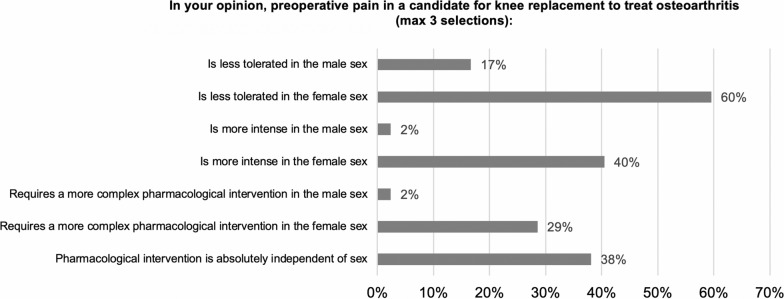
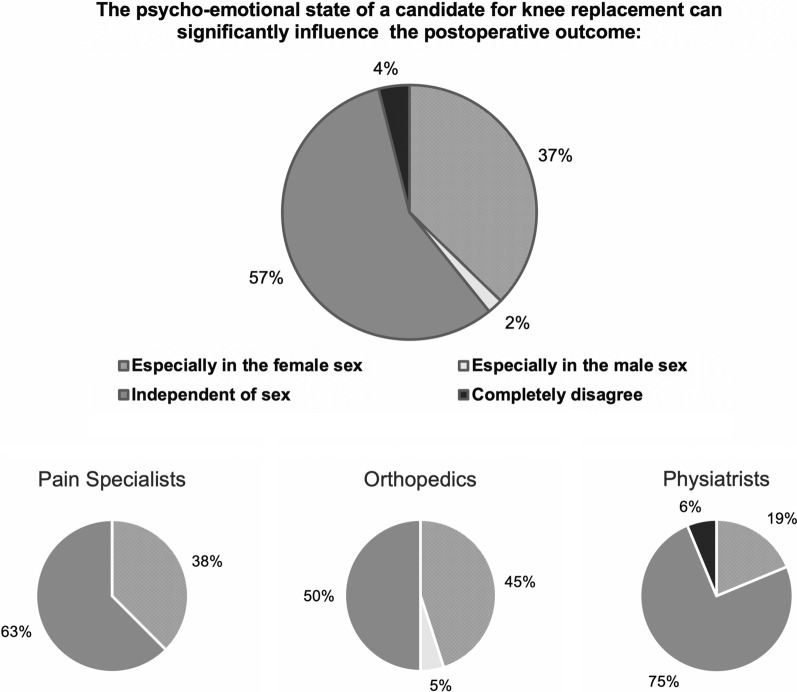
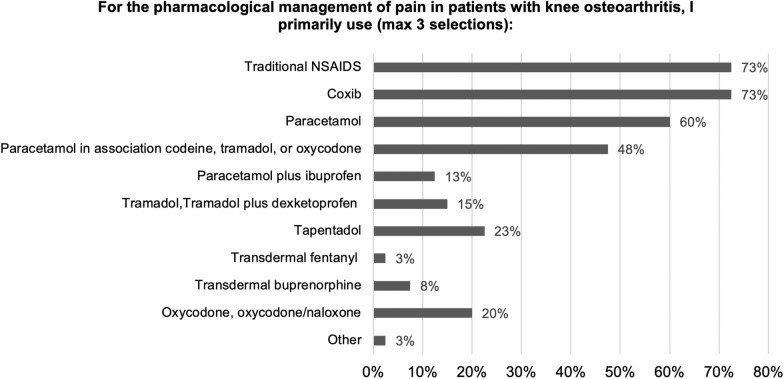
Fifty-six physicians (71% male) accepted the invitation to complete the survey. In general, healthcare professionals expressed that women presented worse symptomology, higher pain intensity, and lower pain tolerance and necessitated a different pharmacological approach compared to men. Pain and orthopedic specialists were more likely to indicate sex and gender differences in knee OA than physiatrists. Physicians expressed that the absence of sex and gender-specific instruments and indications is an important limitation on available studies.
Healthcare professionals perceive multiple sex and gender-related differences in patients with knee OA, especially in the pre- and perioperative phases of TKA. Sex and gender bias sensitivity training for physicians can potentially improve the objectivity of care for knee OA among TKA candidates.
全膝关节置换术(TKA)患者候选人群中膝关节骨关节炎(OA)的性别差异的确切性质仍不清楚,需要更好地阐明,以指导临床实践。本研究旨在调查医生对性别的影响在膝关节 OA 表现、治疗和 TKA 后结果方面的实践和看法。
由 1 名疼痛专家、4 名骨科专家、2 名物理治疗师和 1 名性别医学专家组成的多学科科学委员会详细制定了调查问题。该调查包括 5 个人口统计学问题和 20 个主题问题。符合条件的医生受访者是那些在所有治疗阶段(疼痛专家、骨科专家和物理治疗师)都治疗患者的医生。所有调查回复均匿名处理,并通过远程分散地理参与进行。
56 名医生(71%为男性)接受了完成调查的邀请。总的来说,医疗保健专业人员表示,与男性相比,女性的症状表现更差、疼痛强度更高、疼痛耐受性更低,需要采取不同的药物治疗方法。疼痛和骨科专家比物理治疗师更有可能指出膝关节 OA 中的性别差异。医生表示,缺乏针对性别差异的特定工具和指征是现有研究的一个重要限制。
医疗保健专业人员认为膝关节 OA 患者存在多种与性别相关的差异,尤其是在 TKA 的术前和围手术期。对医生进行性别偏见敏感培训可以提高 TKA 候选患者膝关节 OA 护理的客观性。