Baweja Raman, Waschbusch Daniel A, Pelham William E, Pelham William E, Waxmonsky James G
Department of Psychiatry and Behavioral Health, Penn State College of Medicine, Hershey, PA, United States.
Center of Human Development, University of California, San Diego, San Diego, CA, United States.
Front Psychiatry. 2021 Jul 21;12:699687. doi: 10.3389/fpsyt.2021.699687. eCollection 2021.
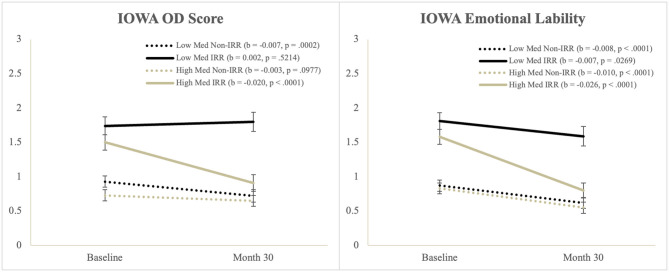
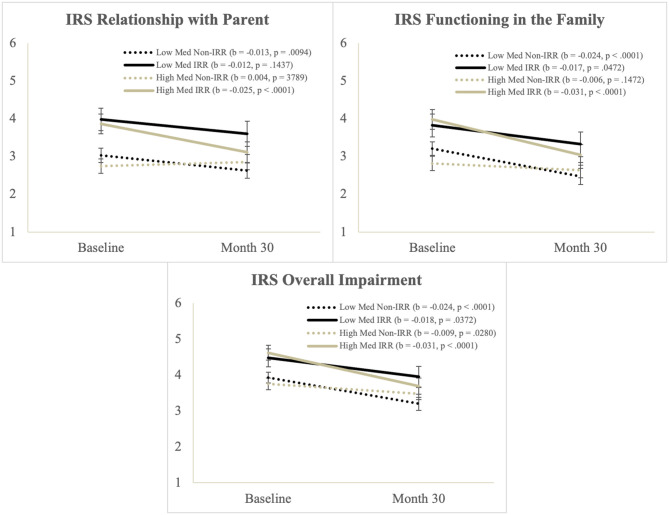
This study compares the efficacy and tolerability of central nervous system (CNS) stimulants in children with attention deficit hyperactivity disorder (ADHD) with and without prominent irritability (IRR) over the course of 30 months. This is a secondary analysis of a study examining growth patterns in medication naïve children with ADHD subsequently treated with CNS stimulants (predominantly OROS-Methylphenidate, up to 54 mg per day) for 30 months. Participants had to meet full diagnostic criteria for ADHD and been treated with CNS stimulants for under 30 days. Children were classified as IRR if they were rated as or on either of the "often angry" or easily annoyed" items plus "lose temper," items of the Disruptive Behavior Disorders Rating Scale (DBDRS). Structured ratings of ADHD symptoms, impairment, side effects, and symptoms of oppositional defiant disorder (ODD) were collected every 2-12 weeks for the duration of the study. Medication use was measured by pill count and parent report. The IRR group comprised 28% of all participants. The IRR group had significantly higher levels of ADHD and ODD symptoms, impairment, and side effects ratings at baseline. In the IRR group, ODD symptoms, emotional lability, and impairment significantly decreased for participants with higher medication use. Total side effects increased for non-IRR participants with higher medication use. Emotional side effects decreased for IRR participants with higher medication use. Central nervous system stimulants were a tolerable and efficacious treatment in treatment naïve youth with ADHD with irritability. NCT01109849.
本研究比较了中枢神经系统(CNS)兴奋剂在伴或不伴明显易激惹(IRR)的注意力缺陷多动障碍(ADHD)儿童中30个月疗程的疗效和耐受性。这是一项对研究的二次分析,该研究考察了未使用过药物治疗的ADHD儿童的生长模式,这些儿童随后接受中枢神经系统兴奋剂(主要是OROS-哌甲酯,每日剂量高达54毫克)治疗30个月。参与者必须符合ADHD的完整诊断标准,且接受中枢神经系统兴奋剂治疗少于30天。如果儿童在破坏性行为障碍评定量表(DBDRS)的“经常生气”或“容易烦恼”项目加上“发脾气”项目中被评为3或4,则被归类为IRR。在研究期间,每2至12周收集一次ADHD症状、损害、副作用和对立违抗障碍(ODD)症状的结构化评定。通过药丸计数和家长报告来测量药物使用情况。IRR组占所有参与者的28%。IRR组在基线时ADHD和ODD症状、损害及副作用评定水平显著更高。在IRR组中,药物使用量较高的参与者的ODD症状、情绪不稳定和损害显著减轻。药物使用量较高的非IRR参与者的总副作用增加。药物使用量较高的IRR参与者的情绪副作用减少。中枢神经系统兴奋剂对未使用过药物治疗的伴有易激惹的ADHD青少年是一种可耐受且有效的治疗方法。 临床试验编号:NCT01109849