The Comparative Health Outcomes, Policy, and Economics (CHOICE) Institute, University of Washington, 1959 NE Pacific Street, H-375T, Box 357630, Seattle, WA, 98195-7630, USA.
Department of Health Services, University of Washington, Seattle, USA.
Pharmacoeconomics. 2021 Nov;39(11):1225-1241. doi: 10.1007/s40273-021-01072-z. Epub 2021 Aug 9.
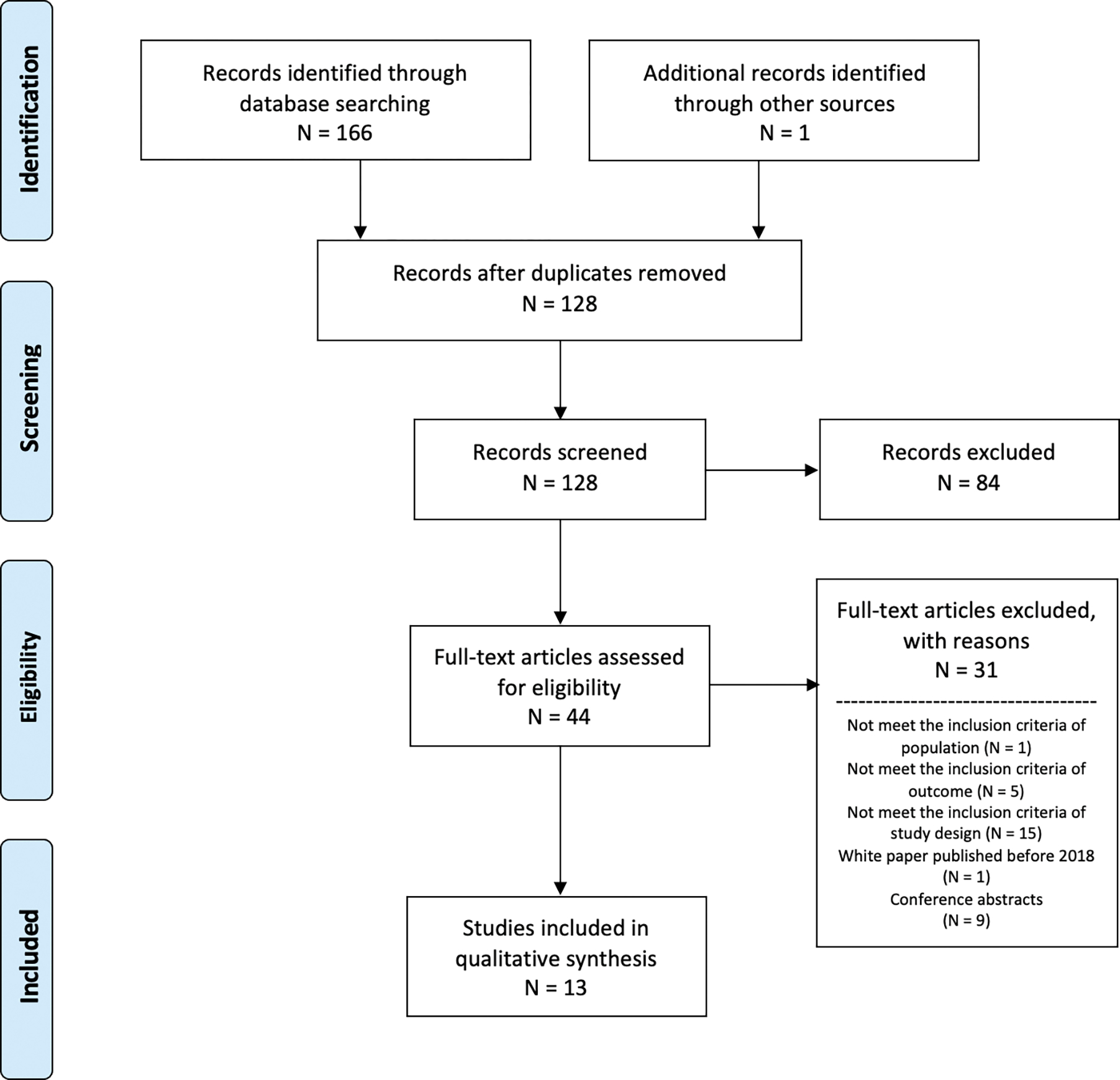
Novel interventions for sickle cell disease (SCD) bring hope to patients, yet concern about the associated economic costs exists. Cost-effectiveness analysis (CEA) uses standardized methods, with robust underpinnings in health economics, to estimate the value of these interventions compared with usual care. However, because of the complexity and lifetime trajectory of SCD, CEAs are challenging to conduct. The objectives of this rapid review were to summarize the main characteristics, components, and results of published CEAs of existing interventions for SCD, identify research gaps, and provide directions for future analyses. We identified records through searches of bibliographic databases, from reference lists of relevant review articles, and through consultation with experts. A total of 13 CEAs met our inclusion criteria and were qualitatively synthesized. These evaluated blood transfusions (n = 2), hematopoietic stem cell transplantation (n = 1), pharmaceuticals (n = 2), hypothetical cell or genetic therapy (n = 1), screening programs (n = 4), and interventions for SCD treatment complications (n = 3). A limited number of potential SCD and treatment complications were evaluated. No study adopted a societal perspective in the base case, six studies examined lifetime cost-effectiveness, seven studies employed a Markov or discrete-event simulation model, and eight studies used an outcome metric that captured both quality and length of life. To better compare the value of emerging and current therapies, future CEAs should adopt a societal perspective incorporating both medical and nonmedical costs, comprehensively model SCD complexity using robust health economic simulation models over the patient's entire lifespan, and capture the intervention's effect on both survival and quality of life.
新型干预措施为镰状细胞病(SCD)患者带来了希望,但人们对相关经济成本仍存在担忧。成本效益分析(CEA)使用标准化方法,并在健康经济学中具有稳健的基础,用于估算这些干预措施与常规护理相比的价值。然而,由于 SCD 的复杂性和终生轨迹,CEA 的实施具有挑战性。本快速综述的目的是总结已发表的 SCD 现有干预措施的 CEA 的主要特征、组成部分和结果,确定研究差距,并为未来分析提供方向。我们通过对文献数据库的搜索、相关综述文章的参考文献列表以及与专家的咨询来确定记录。共有 13 项 CEA 符合我们的纳入标准,并进行了定性综合分析。这些评估了输血(n=2)、造血干细胞移植(n=1)、药物(n=2)、假设的细胞或基因治疗(n=1)、筛查计划(n=4)和 SCD 治疗并发症干预措施(n=3)。评估了有限数量的潜在 SCD 和治疗并发症。在基础情况下,没有研究采用社会视角,6 项研究考察了终生成本效益,7 项研究采用了马尔可夫或离散事件模拟模型,8 项研究使用了同时捕捉生活质量和寿命的结果指标。为了更好地比较新兴和现有疗法的价值,未来的 CEA 应采用社会视角,纳入医疗和非医疗成本,使用稳健的健康经济模拟模型全面模拟 SCD 复杂性,跨越患者的整个生命周期,并捕捉干预措施对生存和生活质量的影响。