Inusa Baba P D, Hsu Lewis L, Kohli Neeraj, Patel Anissa, Ominu-Evbota Kilali, Anie Kofi A, Atoyebi Wale
Paediatric Haematology, Evelina London Children's Hospital, Guy's and St Thomas NHS Trust, London SE1 7EH, UK.
Pediatric Hematology-Oncology, University of Illinois at Chicago, Chicago, IL 60612, USA.
Int J Neonatal Screen. 2019 May 7;5(2):20. doi: 10.3390/ijns5020020. eCollection 2019 Jun.
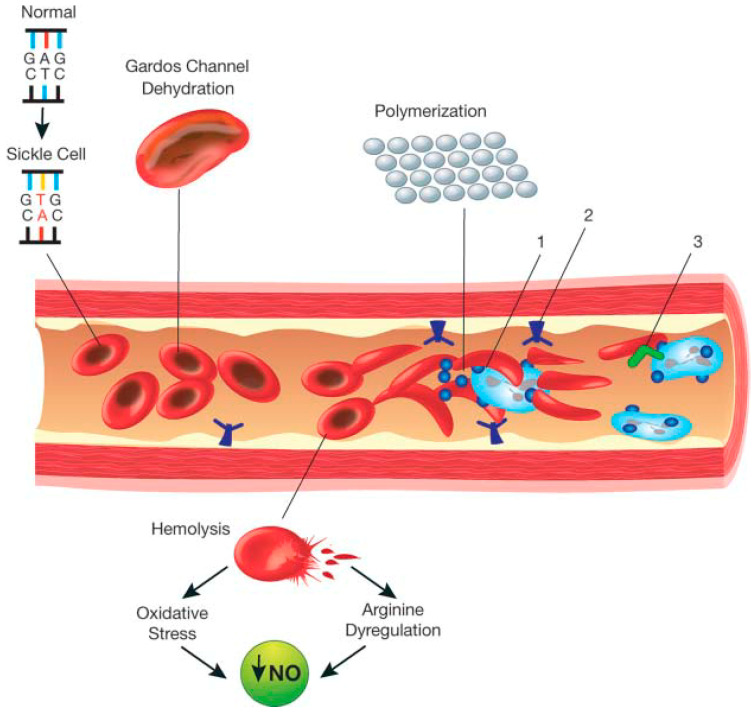
Sickle cell disease (SCD) is a monogenetic disorder due to a single base-pair point mutation in the β-globin gene resulting in the substitution of the amino acid valine for glutamic acid in the β-globin chain. Phenotypic variation in the clinical presentation and disease outcome is a characteristic feature of the disorder. Understanding the pathogenesis and pathophysiology of the disorder is central to the choice of therapeutic development and intervention. In this special edition for newborn screening for haemoglobin disorders, it is pertinent to describe the genetic, pathologic and clinical presentation of sickle cell disease as a prelude to the justification for screening. Through a systematic review of the literature using search terms relating to SCD up till 2019, we identified relevant descriptive publications for inclusion. The scope of this review is mainly an overview of the clinical features of pain, the cardinal symptom in SCD, which present following the drop in foetal haemoglobin as young as five to six months after birth. The relative impact of haemolysis and small-vessel occlusive pathology remains controversial, a combination of features probably contribute to the different pathologies. We also provide an overview of emerging therapies in SCD.
镰状细胞病(SCD)是一种单基因疾病,由β-珠蛋白基因中的单个碱基对突变引起,导致β-珠蛋白链中的谷氨酸被缬氨酸取代。临床表现和疾病转归的表型变异是该疾病的一个特征。了解该疾病的发病机制和病理生理学是选择治疗方法和干预措施的核心。在这个关于血红蛋白疾病新生儿筛查的特刊中,描述镰状细胞病的遗传、病理和临床表现,作为筛查合理性的前奏是很有必要的。通过使用与SCD相关的检索词对截至2019年的文献进行系统综述,我们确定了相关的描述性出版物以供纳入。本综述的范围主要是对疼痛这一SCD主要症状的临床特征进行概述,疼痛在出生后五到六个月胎儿血红蛋白下降后出现。溶血和小血管阻塞性病变的相对影响仍存在争议,多种特征的组合可能导致了不同的病理变化。我们还概述了SCD的新兴疗法。