Department of Psychiatry, Xijing Hospital, The Fourth Military Medical University, Xi'an, China.
Department of Anesthesiology and Perioperative Medicine, Xijing Hospital, The Fourth Military Medical University, Xi'an, China.
CNS Neurosci Ther. 2021 Nov;27(11):1348-1365. doi: 10.1111/cns.13715. Epub 2021 Aug 9.
Sevoflurane preconditioning (SPC) results in cerebral ischemic tolerance; however, the mechanism remains unclear. Promoting microglia/macrophages polarization from pro-inflammatory state to anti-inflammatory phenotype has been indicated as a potential treatment target against ischemic stroke. In this study, we aimed to assess the effect of SPC on microglia polarization after stroke and which signaling pathway was involved in this transition.
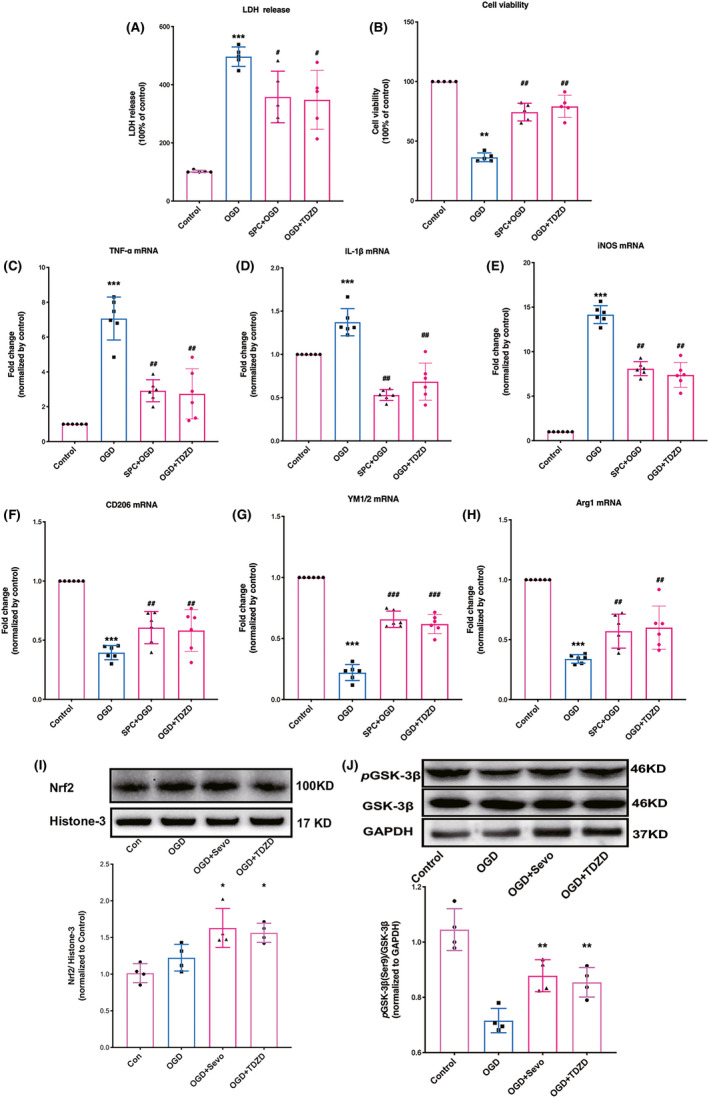
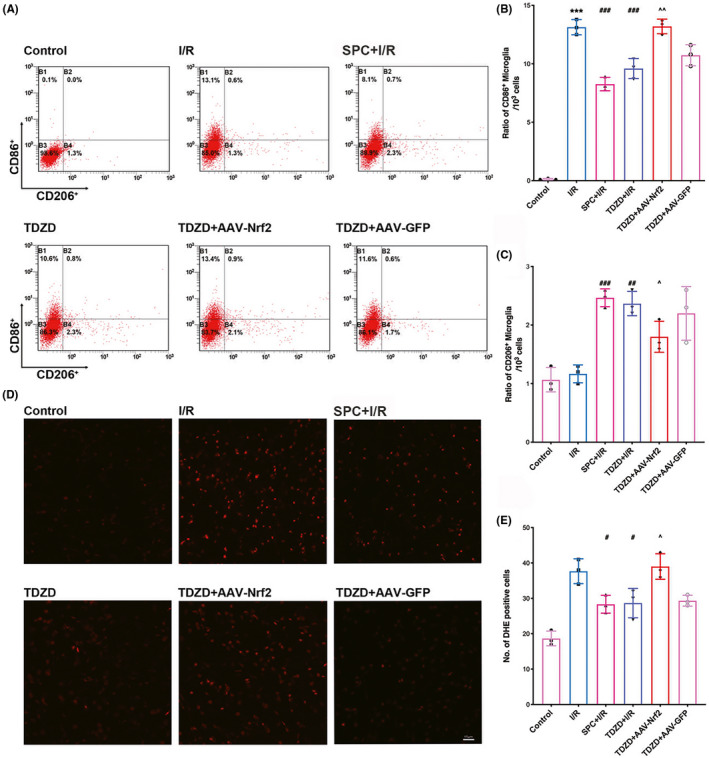
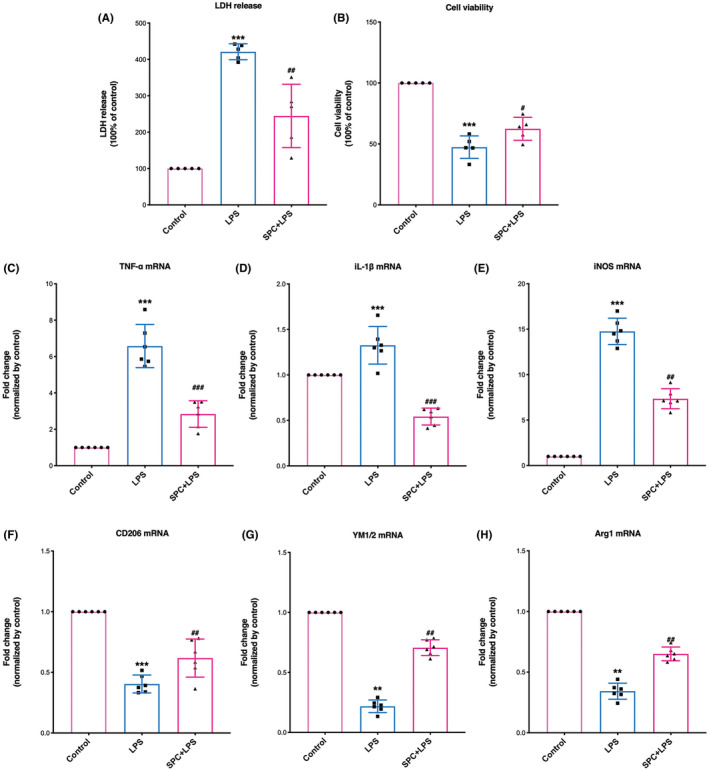
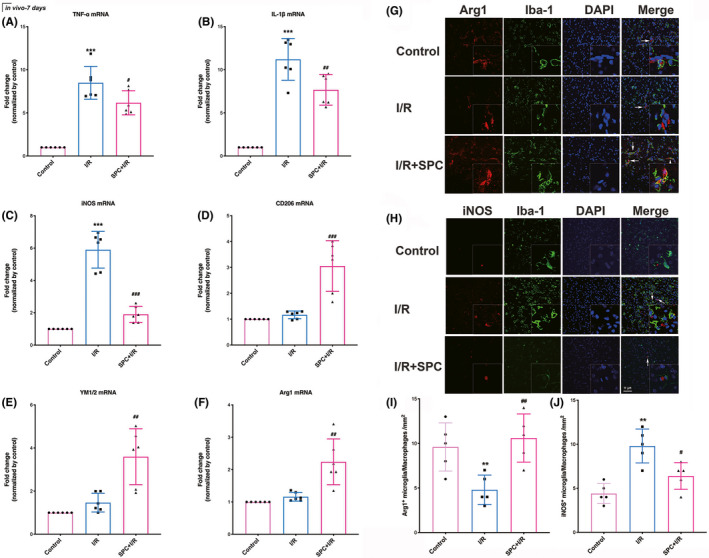
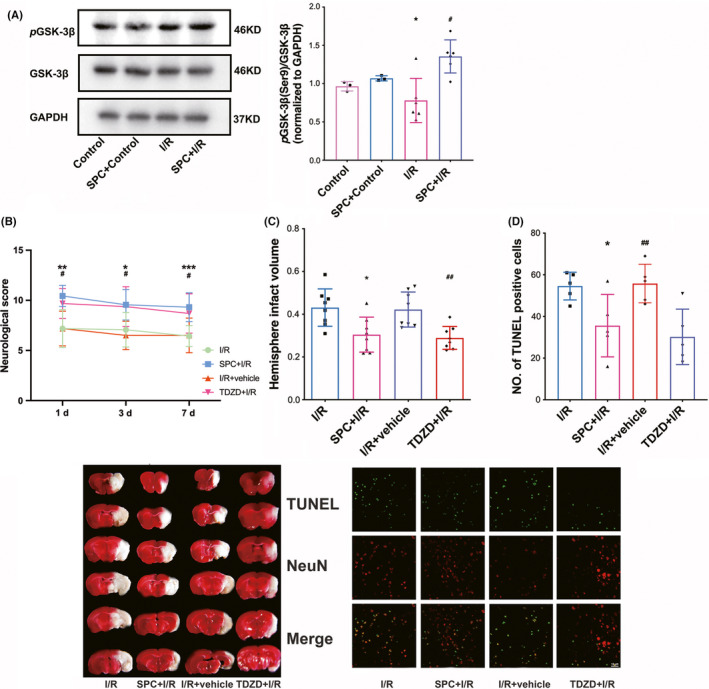
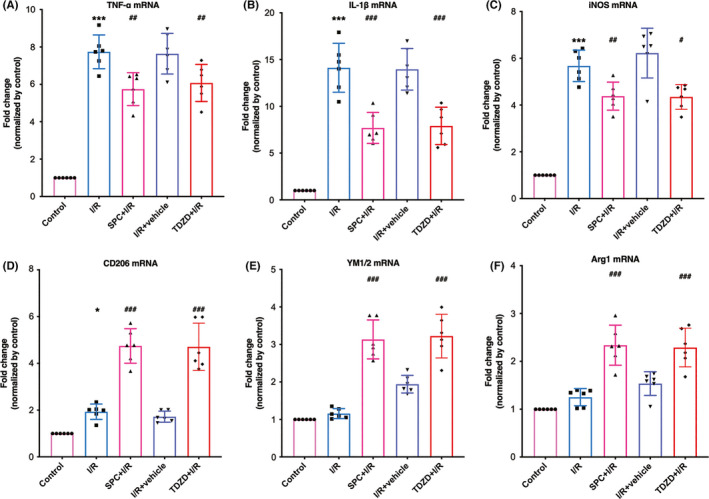
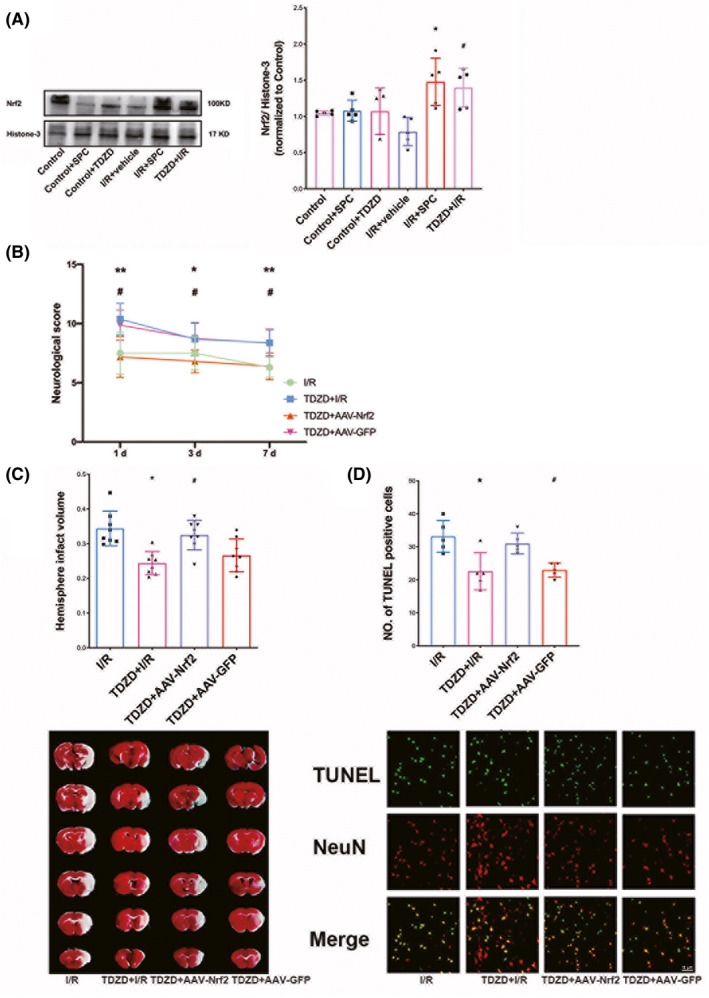
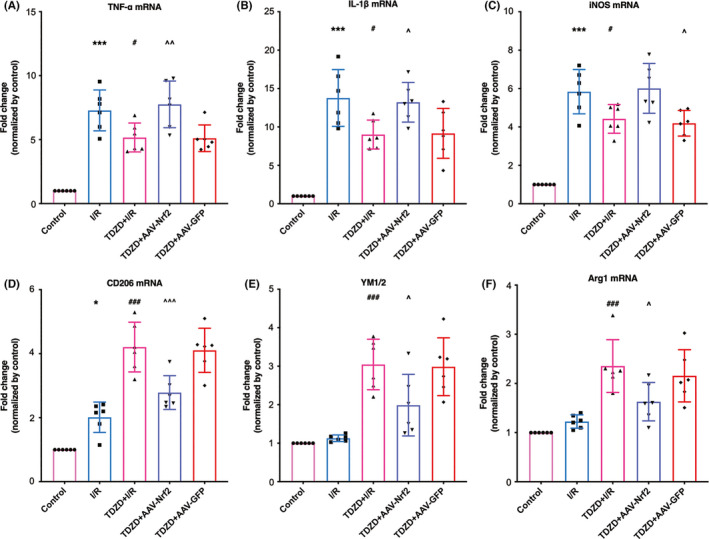
Mouse primary microglia with SPC were challenged by oxygen-glucose deprivation (OGD) or lipopolysaccharide (LPS), and mice with SPC were subjected to middle cerebral artery occlusion (MCAO). Then, the mRNA and protein levels of pro-inflammatory/anti-inflammatory factors were analyzed. GSK-3β phosphorylation and Nrf2 nuclear translocation were measured. The mRNA and protein expression of pro-inflammatory/anti-inflammatory factors, neurological scores, infarct volume, cellular apoptosis, the proportion of pro-inflammatory/anti-inflammatory microglia/macrophages, and the generation of super-oxidants were examined after SPC or GSK-3β inhibitor TDZD treatment with or without Nrf2 deficiency.
Sevoflurane preconditioning promoted anti-inflammatory and inhibited pro-inflammatory microglia/macrophages phenotype both in vitro and in vivo. GSK-3β phosphorylation at Ser9 was increased after SPC. Both SPC and TDZD administration enhanced Nrf2 nuclear translocation, reduced pro-inflammatory microglia/macrophages markers expression, promoted anti-inflammatory markers level, and elicited a neuroprotective effect. Nrf2 deficiency abolished the promoted anti-inflammatory microglia/macrophages polarization and ischemic tolerance induced by TDZD treatment. The reduced percentage of pro-inflammatory positive cells and super-oxidants generation induced by SFC or TDZD was also reversed by Nrf2 knockdown.
Our results indicated that SPC exerts brain ischemic tolerance and promotes anti-inflammatory microglia/macrophages polarization by GSK-3β-dependent Nrf2 activation, which provides a novel mechanism for SPC-induced neuroprotection.
七氟醚预处理(SPC)可导致脑缺血耐受;然而,其机制尚不清楚。促进小胶质细胞/巨噬细胞从促炎状态向抗炎表型极化已被认为是一种针对缺血性中风的潜在治疗靶点。在这项研究中,我们旨在评估 SPC 对中风后小胶质细胞极化的影响,以及哪种信号通路参与了这种转变。
用 SPC 预处理小鼠原代小胶质细胞,然后用氧葡萄糖剥夺(OGD)或脂多糖(LPS)进行挑战,并用 SPC 处理小鼠大脑中动脉闭塞(MCAO)。然后,分析促炎/抗炎因子的 mRNA 和蛋白水平。测量 GSK-3β磷酸化和 Nrf2 核易位。检查 SPC 或 GSK-3β抑制剂 TDZD 处理后(或不进行 Nrf2 缺陷处理)的促炎/抗炎因子的 mRNA 和蛋白表达、神经评分、梗死体积、细胞凋亡、促炎/抗炎小胶质细胞/巨噬细胞的比例以及超氧化物的产生。
Sevoflurane 预处理在体外和体内均促进抗炎和抑制促炎小胶质细胞/巨噬细胞表型。SPC 后 GSK-3β在 Ser9 处的磷酸化增加。SPC 和 TDZD 给药均增强 Nrf2 核易位,降低促炎小胶质细胞/巨噬细胞标志物的表达,促进抗炎标志物水平,并产生神经保护作用。Nrf2 缺陷消除了 TDZD 治疗引起的促抗炎小胶质细胞/巨噬细胞极化和缺血耐受。SFC 或 TDZD 诱导的促炎阳性细胞比例降低和超氧化物生成减少也被 Nrf2 敲低所逆转。
我们的结果表明,SPC 通过 GSK-3β 依赖性 Nrf2 激活发挥脑缺血耐受作用,并促进抗炎小胶质细胞/巨噬细胞极化,为 SPC 诱导的神经保护提供了新的机制。