Department of Smart Sensor Systems, SINTEF Digital, 0373 Oslo, Norway.
Department of Health Research, SINTEF Digital, 7034 Trondheim, Norway.
Sensors (Basel). 2021 Jul 21;21(15):4962. doi: 10.3390/s21154962.
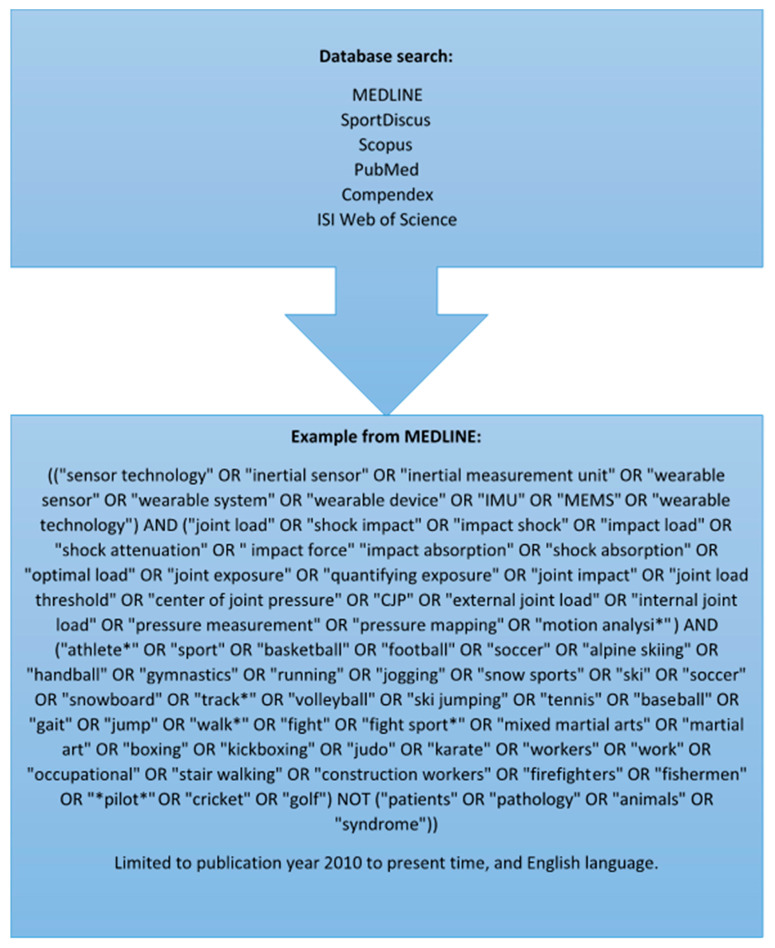
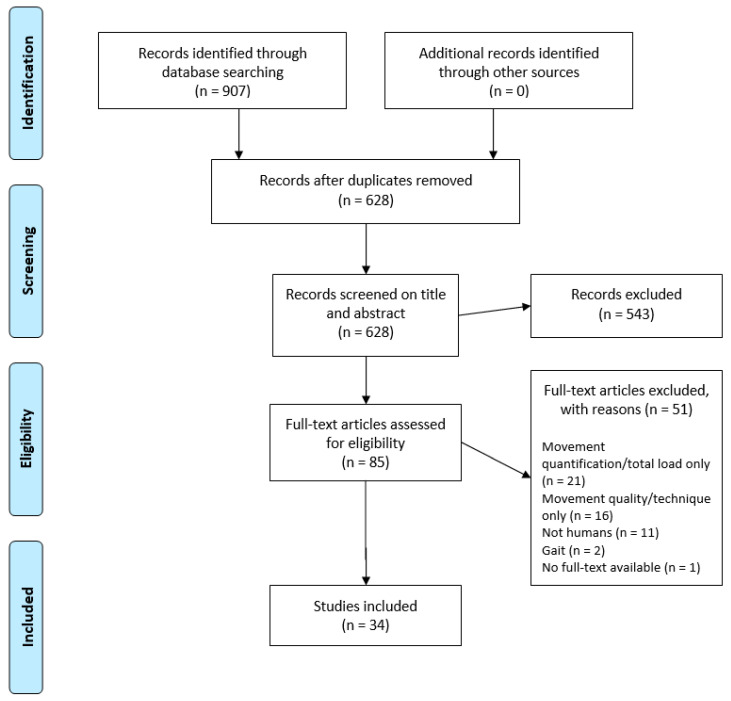
Shock impacts during activity may cause damage to the joints, muscles, bones, or inner organs. To define thresholds for tolerable impacts, there is a need for methods that can accurately monitor shock impacts in real-life settings. Therefore, the main aim of this scoping review was to present an overview of existing methods for assessments of shock impacts using wearable sensor technology within two domains: sports and occupational settings. Online databases were used to identify papers published in 2010-2020, from which we selected 34 papers that used wearable sensor technology to measure shock impacts. No studies were found on occupational settings. For the sports domain, accelerometry was the dominant type of wearable sensor technology utilized, interpreting peak acceleration as a proxy for impact. Of the included studies, 28 assessed foot strike in running, head impacts in invasion and team sports, or different forms of jump landings or plyometric movements. The included studies revealed a lack of consensus regarding sensor placement and interpretation of the results. Furthermore, the identified high proportion of validation studies support previous concerns that wearable sensors at present are inadequate as a stand-alone method for valid and accurate data on shock impacts in the field.
在活动过程中受到的冲击可能会对关节、肌肉、骨骼或内脏器官造成损伤。为了确定可承受冲击的阈值,需要有一种方法能够在实际环境中准确监测冲击。因此,本综述的主要目的是概述使用可穿戴传感器技术在两个领域(运动和职业)中评估冲击的现有方法:运动和职业。我们在线数据库中查找了 2010 年至 2020 年发表的论文,并从中选择了 34 篇使用可穿戴传感器技术测量冲击的论文。在职业环境中没有找到研究。在运动领域,加速度计是使用最多的可穿戴传感器技术,它将峰值加速度解释为冲击的代理指标。在所包括的研究中,有 28 项研究评估了跑步中的足着地、入侵和团队运动中的头部冲击,或不同形式的跳跃着陆或增强式训练动作。所包括的研究表明,在传感器放置和结果解释方面缺乏共识。此外,确定的大量验证研究支持了之前的担忧,即可穿戴传感器目前不能作为一种独立的方法,无法在现场提供关于冲击的有效和准确的数据。