Department of Plant Breeding and Genetics, COA, CCS Haryana Agricultural University, Hisar, 125004, Haryana, India.
Department of Biochemistry, COBS&H, CCS Haryana Agricultural University, Hisar, 125004, Haryana, India.
Planta. 2021 Aug 10;254(3):47. doi: 10.1007/s00425-021-03697-y.
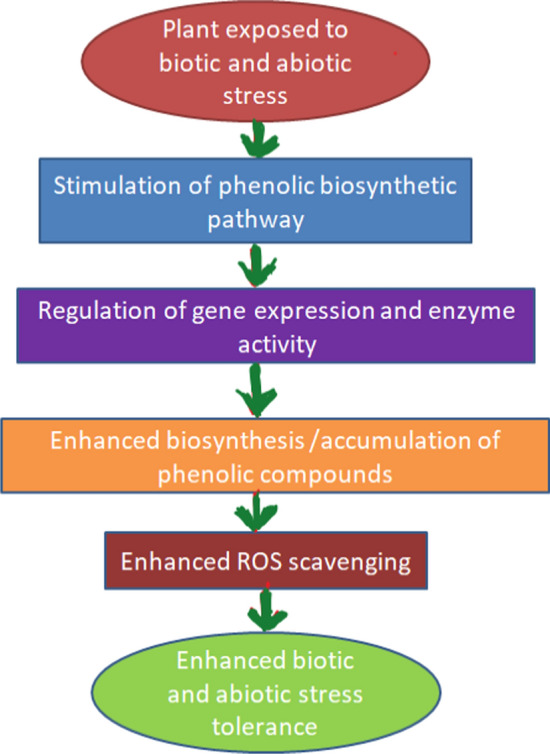
Various phenolic compounds of sorghum are effective in the management of abiotic stress (salt, nutrients) and biotic stress (caused by birds, fungi and aphids). The health and industrial application of phenolics is mainly contributed by inherent antioxidant and nutraceutical potential. In a natural environment, plant growth is affected by various biotic and abiotic stresses. In every ecosystem, the presence of a wide range of harmful biological agents (bacteria, fungi, nematodes, mites, and insects) and undesirable environmental factors (drought, salinity, heat, excessive or low rainfall, etc.) may cause a heavy loss in crop productivity. Being sessile during evolution, plants have evolved multiple defense mechanisms against various types of microbial pathogens and environmental stresses. A plant's natural defense system produces some compounds named secondary metabolites, which include phenolics, terpenes, and nitrogen. The phenolic profile of grain sorghum, the least utilized staple crop, is unique, more diverse, and more abundant than in any other common cereal grain. It mainly contains phenolic acids, 3-deoxyanthocyanidins and condensed tannins. Sorghum polyphenols play a major role in plant defense against biotic and abiotic stresses and have many additional health benefits along with various industrial applications. The objective of this review is to discuss the phenolic compounds derived from grain sorghum and describe their role in plant defense, human health, and industrial applications.
高粱的各种酚类化合物在非生物胁迫(盐、养分)和生物胁迫(由鸟类、真菌和蚜虫引起)的管理中非常有效。酚类物质的健康和工业应用主要归因于其固有的抗氧化和营养潜力。在自然环境中,植物的生长受到各种生物和非生物胁迫的影响。在每个生态系统中,都存在广泛的有害生物制剂(细菌、真菌、线虫、螨虫和昆虫)和不良环境因素(干旱、盐度、热量、过多或过少的降雨等),这些因素可能导致作物生产力大幅下降。在进化过程中,植物已经进化出多种防御机制来抵御各种类型的微生物病原体和环境胁迫。植物的天然防御系统会产生一些被称为次生代谢物的化合物,其中包括酚类、萜类和氮。与任何其他常见谷物相比,粮食高粱(利用最少的主食作物)的酚类物质谱独特、多样且丰富。它主要含有酚酸、3-去氧花青素和缩合单宁。高粱多酚在植物抵御生物和非生物胁迫方面发挥着重要作用,除了具有各种工业应用外,还有许多额外的健康益处。本文的目的是讨论来自粮食高粱的酚类化合物,并描述它们在植物防御、人类健康和工业应用中的作用。