Centre for Mathematical Modelling of Infectious Diseases, London School of Hygiene & Tropical Medicine, London, United Kingdom.
Department of Infectious Disease Epidemiology, Faculty of Epidemiology and Public Health, London School of Hygiene & Tropical Medicine, London, United Kingdom.
PLoS Negl Trop Dis. 2021 Aug 11;15(8):e0009562. doi: 10.1371/journal.pntd.0009562. eCollection 2021 Aug.
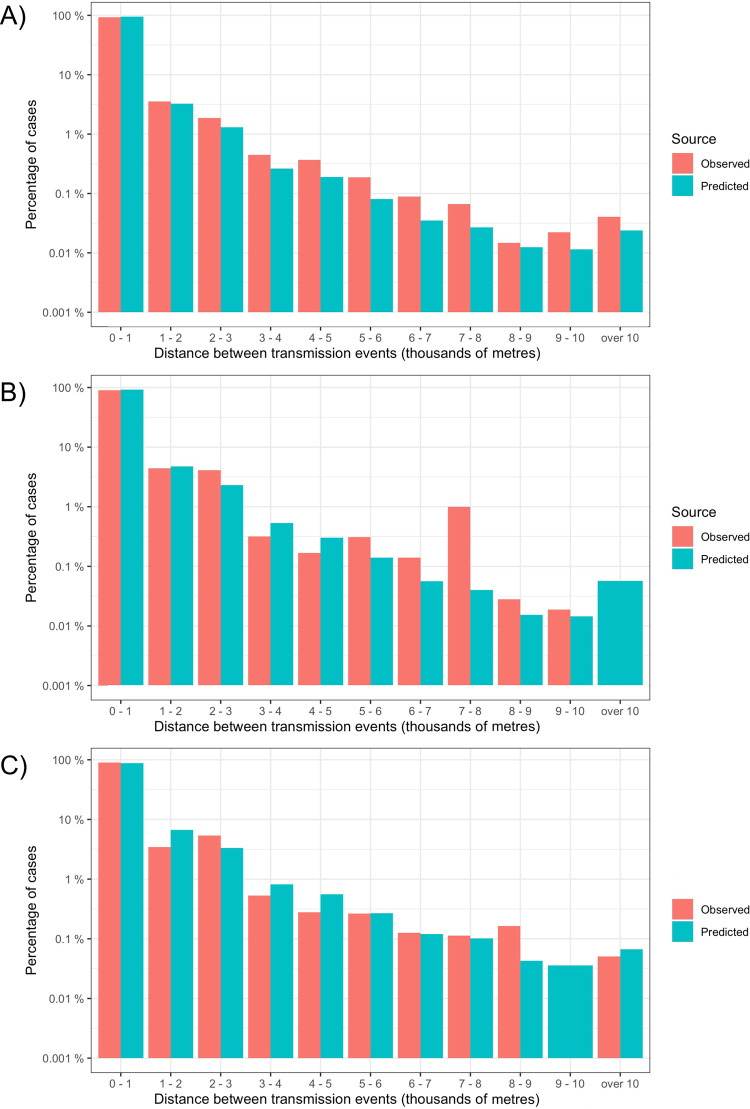
Targeting interventions to areas that have recently experienced cases of disease is one strategy to contain outbreaks of infectious disease. Such case-area targeted interventions (CATI) have become an increasingly popular approach for dengue control but there is little evidence to suggest how precisely targeted or how recent cases need to be, to mount an effective response. The growing interest in the development of prophylactic and therapeutic drugs for dengue has also given new relevance for CATI strategies to interrupt transmission or deliver early treatment.
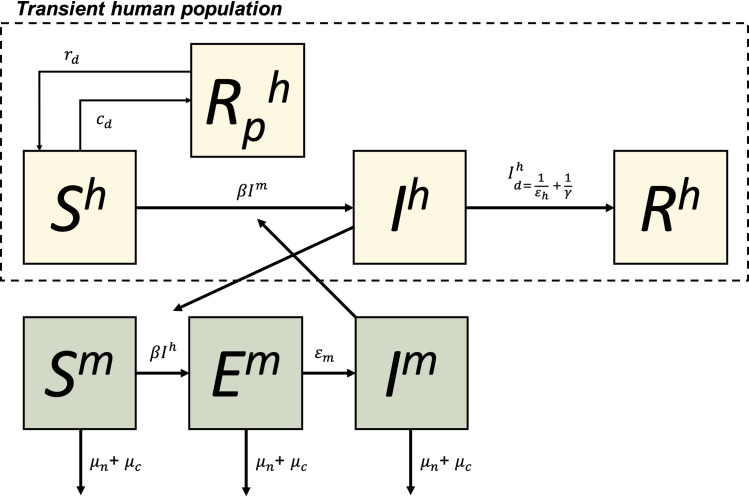
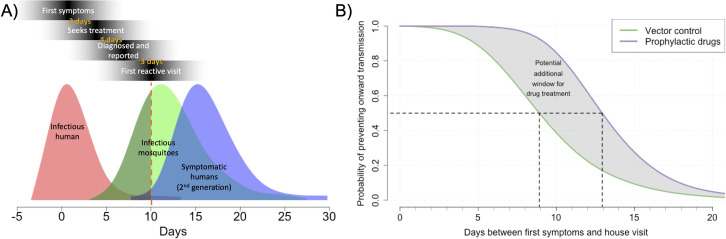
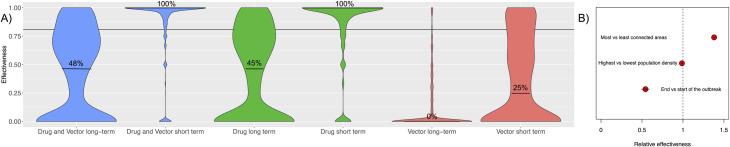
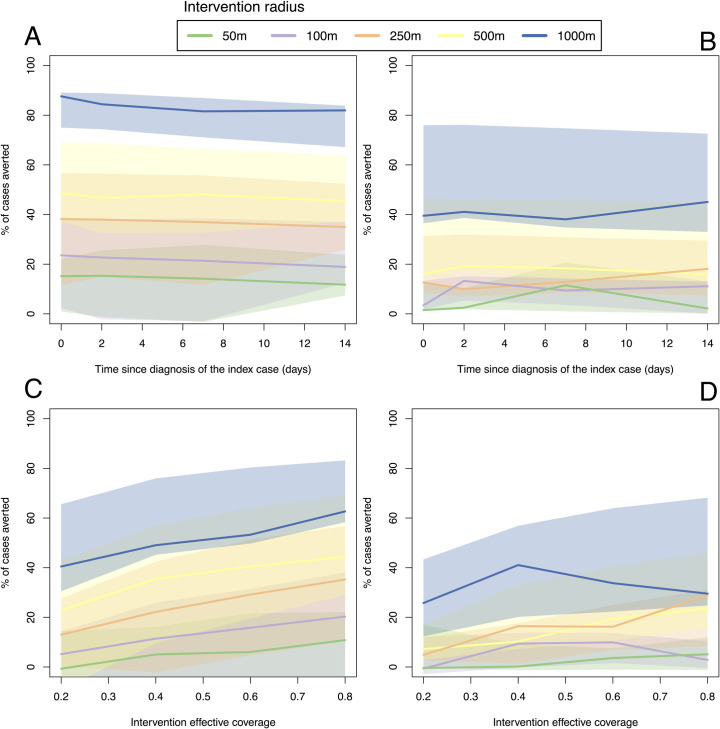
METHODS/PRINCIPAL FINDINGS: Here we develop a patch-based mathematical model of spatial dengue spread and fit it to spatiotemporal datasets from Singapore. Simulations from this model suggest CATI strategies could be effective, particularly if used in lower density areas. To maximise effectiveness, increasing the size of the radius around an index case should be prioritised even if it results in delays in the intervention being applied. This is partially because large intervention radii ensure individuals receive multiple and regular rounds of drug dosing or vector control, and thus boost overall coverage. Given equivalent efficacy, CATIs using prophylactic drugs are predicted to be more effective than adult mosquito-killing vector control methods and may even offer the possibility of interrupting individual chains of transmission if rapidly deployed. CATI strategies quickly lose their effectiveness if baseline transmission increases or case detection rates fall.
CONCLUSIONS/SIGNIFICANCE: These results suggest CATI strategies can play an important role in dengue control but are likely to be most relevant for low transmission areas where high coverage of other non-reactive interventions already exists. Controlled field trials are needed to assess the field efficacy and practical constraints of large operational CATI strategies.
针对近期发生病例的地区实施干预措施是控制传染病爆发的一种策略。针对病例地区的干预措施(CATI)已成为登革热控制的一种越来越受欢迎的方法,但几乎没有证据表明需要针对特定地区进行多么精确的干预,或者需要最近的病例来做出有效的反应。人们对开发预防和治疗登革热的药物越来越感兴趣,这也为 CATI 策略提供了新的相关性,以中断传播或提供早期治疗。
方法/主要发现:在这里,我们开发了一种基于补丁的空间登革热传播数学模型,并将其拟合到来自新加坡的时空数据集。该模型的模拟结果表明,CATI 策略可能是有效的,特别是在密度较低的地区使用时。为了最大限度地提高有效性,即使这会导致干预应用的延迟,也应该优先增加索引病例周围的半径大小。这部分是因为大的干预半径确保个体接受多次和定期的药物剂量或病媒控制,从而提高整体覆盖率。在等效疗效的情况下,使用预防性药物的 CATI 预计比成年蚊子杀灭病媒控制方法更有效,并且如果迅速部署,甚至有可能中断个体传播链。如果基线传播增加或病例检测率下降,CATI 策略会迅速失去其有效性。
结论/意义:这些结果表明,CATI 策略可以在登革热控制中发挥重要作用,但可能最相关的是在低传播地区,这些地区已经存在高覆盖率的其他非反应性干预措施。需要进行对照现场试验来评估大型操作 CATI 策略的现场疗效和实际限制。