Department of Imaging Sciences, University of Rochester Medical Center, Rochester, New York, United States of America.
Department of Public Health, University of Rochester Medical Center, Rochester, New York, United States of America.
PLoS One. 2021 Aug 11;16(8):e0255919. doi: 10.1371/journal.pone.0255919. eCollection 2021.
Hepatic and biliary diseases are prevalent worldwide, but the majority of people lack access to diagnostic medical imaging for their assessment. The liver and gallbladder are readily amenable to sonographic examination, and ultrasound is a portable, cost-effective imaging modality suitable for use in rural and underserved areas. However, the deployment of ultrasound in these settings is limited by the lack of experienced sonographers to perform the exam. In this study, we tested an asynchronous telediagnostic system for right upper quadrant abdominal ultrasound examination operated by individuals without prior ultrasound experience to facilitate deployment of ultrasound to rural and underserved areas.
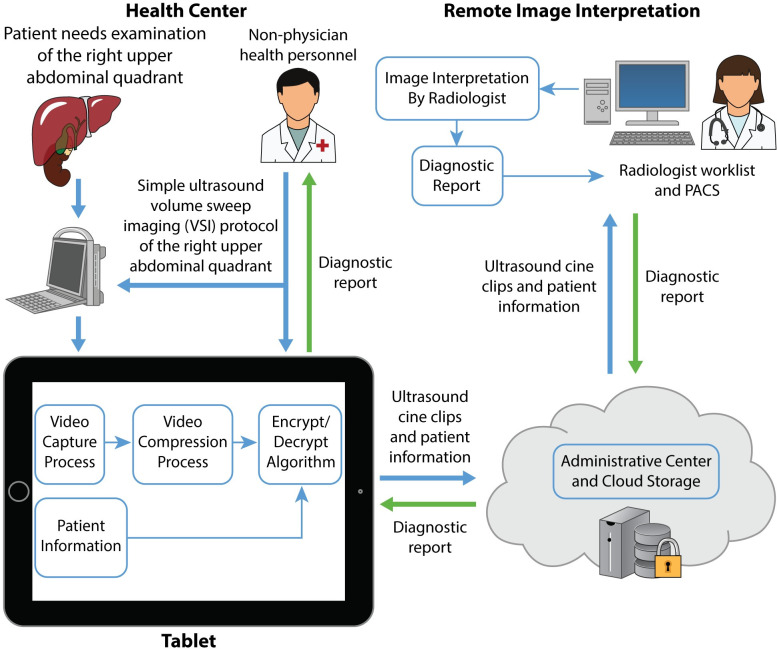
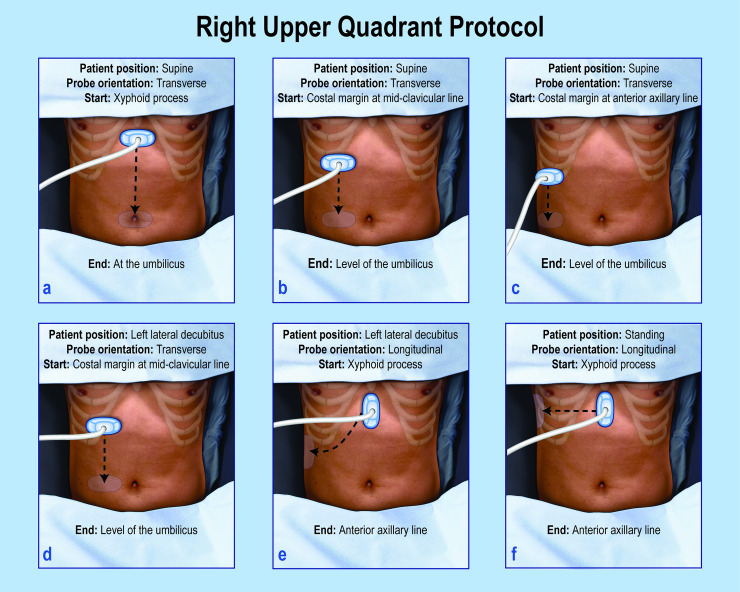
The teleultrasound system utilized in this study employs volume sweep imaging and a telemedicine app installed on a tablet which connects to an ultrasound machine. Volume sweep imaging is an ultrasound technique in which an individual scans the target region utilizing preset ultrasound sweeps demarcated by easily recognized external body landmarks. The sweeps are saved as video clips for later interpretation by an experienced radiologist. Teleultrasound scans from a Peruvian clinic obtained by individuals without prior ultrasound experience were sent to the United States for remote interpretation and quality assessment. Standard of care comparison was made to a same-day ultrasound examination performed by a radiologist.
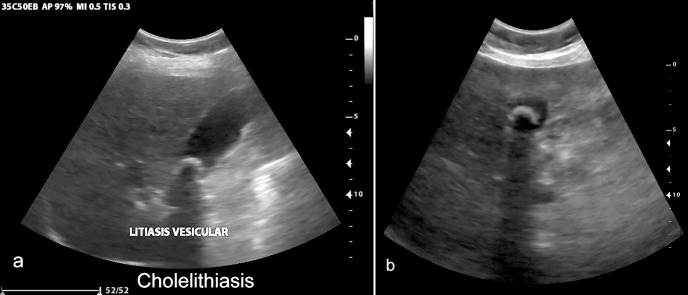
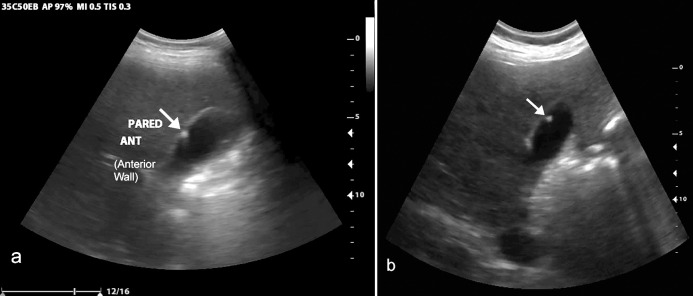
Individuals without prior ultrasound experience scanned 144 subjects. Image quality was rated "poor" on 36.8% of exams, "acceptable" on 38.9% of exams, and "excellent" on 24.3% of exams. Among telemedicine exams of "acceptable" or "excellent" image quality (n = 91), greater than 80% of the liver and gallbladder were visualized in the majority of cases. In this group, there was 95% agreement between standard of care and teleultrasound on whether an exam was normal or abnormal, with a Cohen's kappa of 0.84 (95% CI 0.7-0.98, p <0.0001). Finally, among these teleultrasound exams of "acceptable" or "excellent" image quality, the sensitivity for cholelithiasis was 93% (95% CI 68.1%-99.8%), and the specificity was 97% (95% CI 89.5%-99.6%).
This asynchronous telediagnostic system allows individuals without prior ultrasound experience to effectively scan the liver, gallbladder, and right kidney with a high degree of agreement with standard of care ultrasound. This system can be deployed to improve access to diagnostic imaging in low-resource areas.
肝和胆疾病在全球范围内普遍存在,但大多数人无法获得诊断性医学影像学检查。肝脏和胆囊很容易进行超声检查,超声是一种便携式、具有成本效益的成像方式,适合在农村和服务不足地区使用。然而,由于缺乏经验丰富的超声医师来进行检查,这种成像方式在这些环境中的应用受到限制。在这项研究中,我们测试了一种异步远程诊断系统,用于进行右上腹超声检查,由没有超声检查经验的人员操作,以促进将超声技术应用于农村和服务不足地区。
本研究中使用的远程超声系统采用容积扫查成像技术和安装在平板电脑上的远程医疗应用程序,该平板电脑通过超声机连接。容积扫查成像是一种超声技术,其中一个人使用容易识别的外部身体标志划定的预设超声扫查来扫描目标区域。扫查结果被保存为视频片段,以便以后由有经验的放射科医生进行解释。来自秘鲁诊所的由没有超声检查经验的人员进行的远程超声扫描被发送到美国进行远程解释和质量评估。与由放射科医生进行的当日超声检查进行标准比较。
没有超声检查经验的人员共对 144 名患者进行了扫描。36.8%的检查图像质量被评为“差”,38.9%的检查图像质量被评为“可接受”,24.3%的检查图像质量被评为“优秀”。在可接受或优秀的远程医疗超声检查中(n=91),在大多数情况下,大于 80%的肝脏和胆囊可以被观察到。在这组中,标准护理与远程超声之间关于检查是否正常或异常的一致性为 95%,Cohen's kappa 值为 0.84(95%CI 0.7-0.98,p<0.0001)。最后,在这些可接受或优秀的远程超声检查中,胆囊结石的敏感性为 93%(95%CI 68.1%-99.8%),特异性为 97%(95%CI 89.5%-99.6%)。
这种异步远程诊断系统允许没有超声检查经验的人员有效地扫描肝脏、胆囊和右肾,与标准护理超声检查具有高度一致性。该系统可用于改善资源匮乏地区的诊断成像获取。